
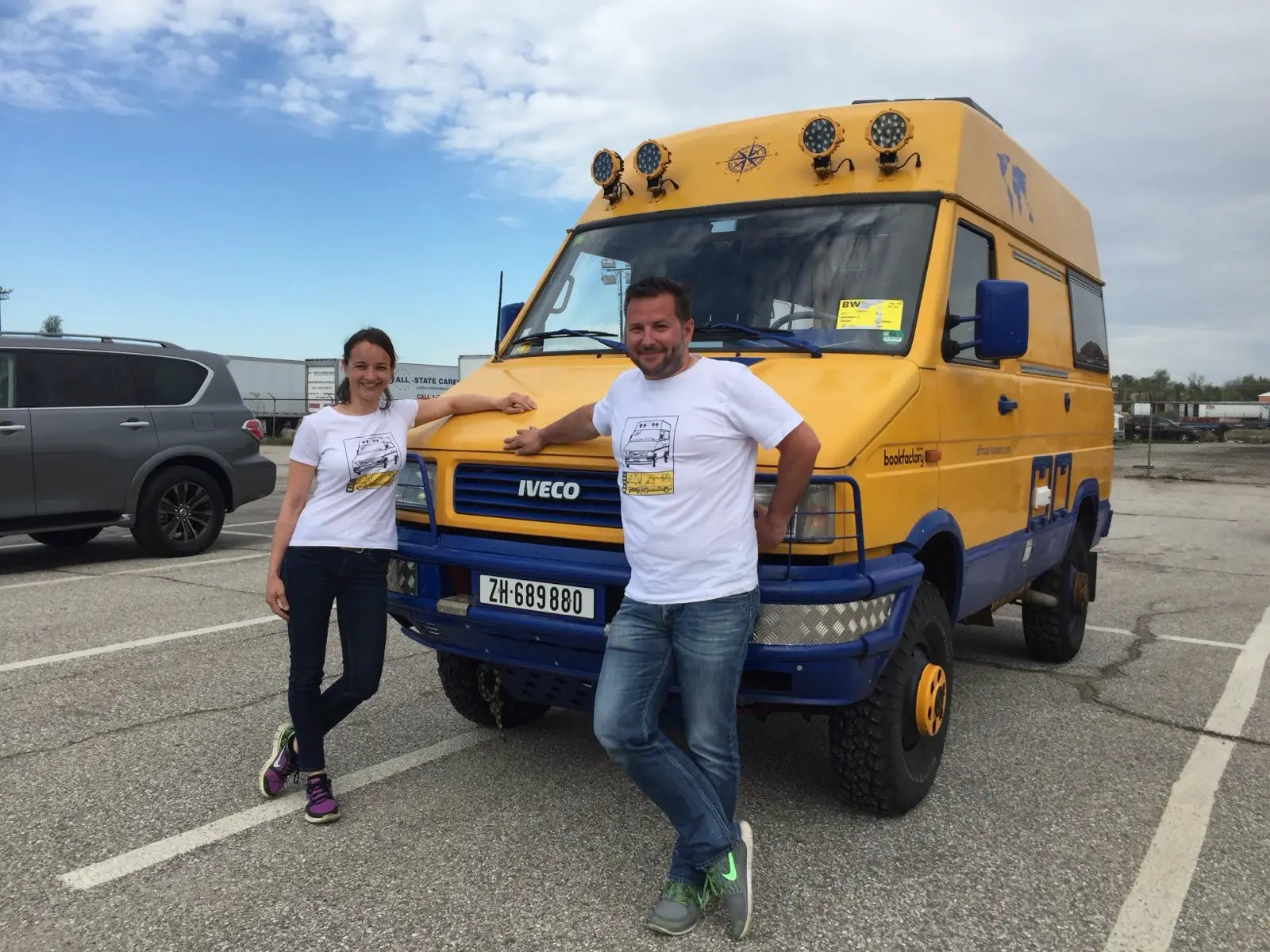
We’re sitting in the waiting area of our shipping agent at the port of Baltimore. Heinz Mueller, the agent we hired, has set off with the papers and the key to pick up Muggl for us. There’s a hint of nervousness in the air. Will everything go smoothly? Will he get through customs without problems? Are the papers in order? Will there be any complaints? Have we accidentally brought something that isn’t allowed? And will he start? Questions upon questions. We have to wait and make do with American filter coffee, while we go to the toilet countless times, until finally the phone rings. He’s here! The excitement is hard to contain, and the walk to the car park seems endless.
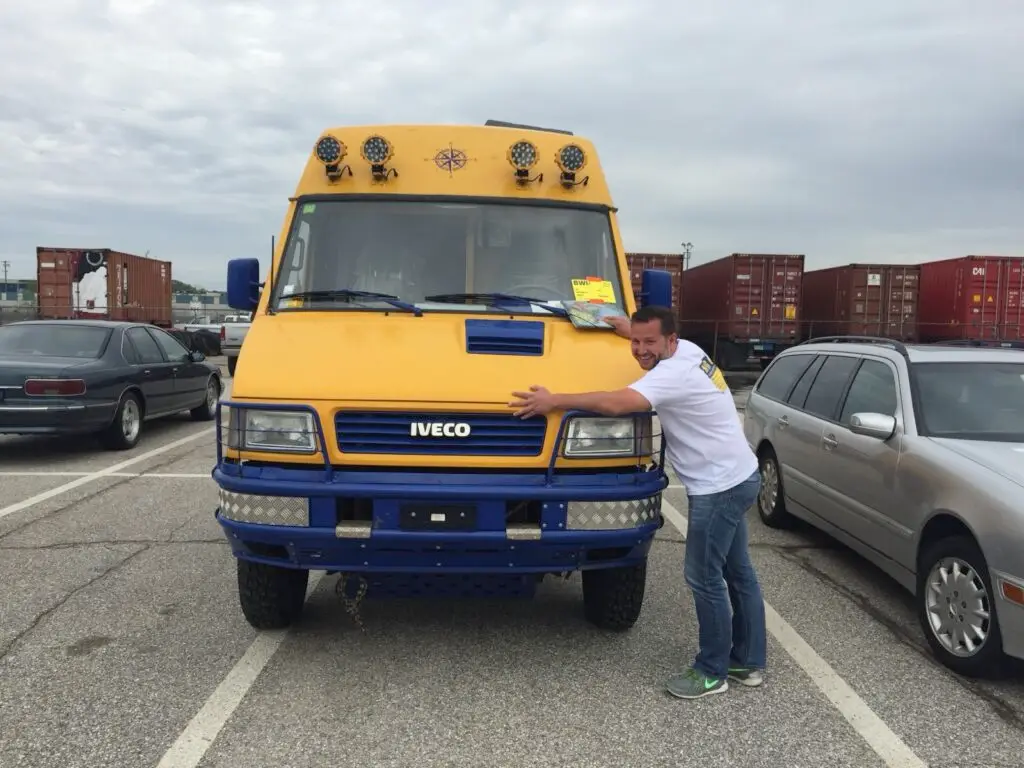
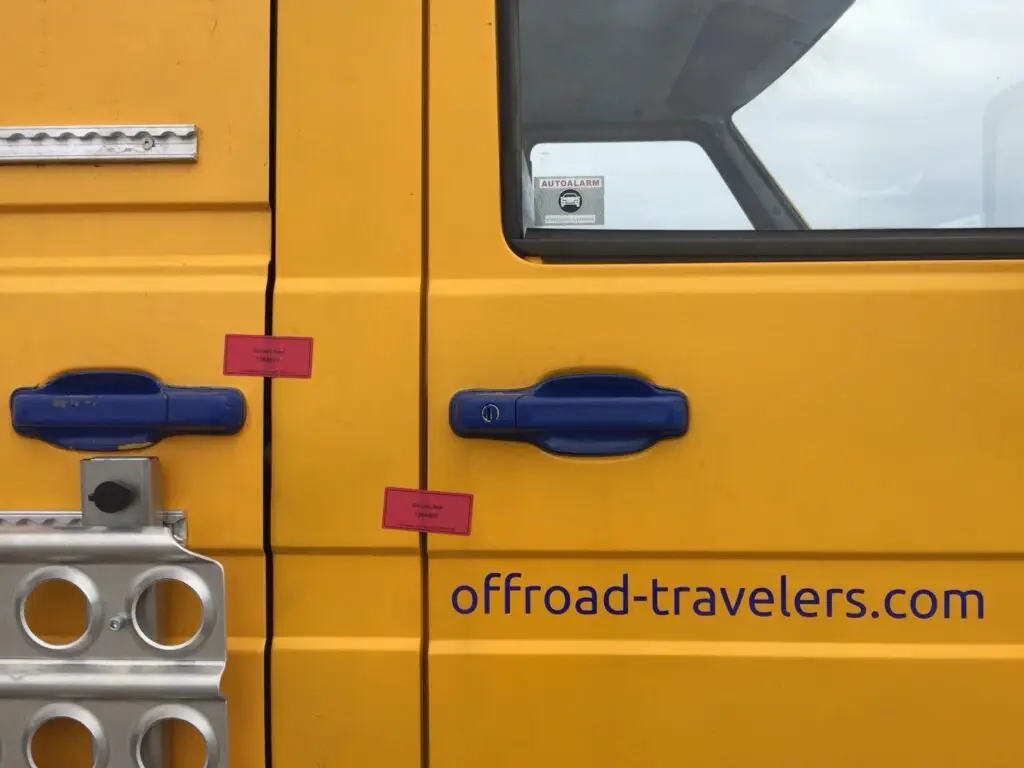
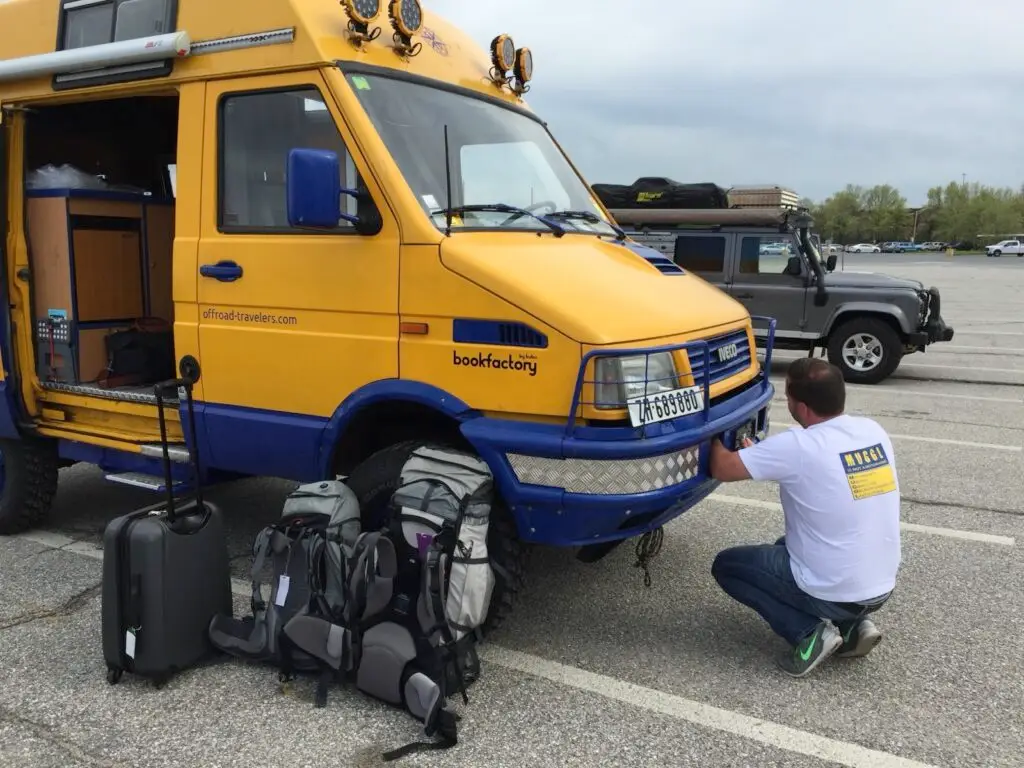
There he is, in all his glory, exactly as we handed him over in Hamburg four weeks ago. The doors and hatches are sealed, and we only find two or three small scratches that look new. But that doesn’t really matter with Muggl, as he’s not the youngest any more. We get him ready to go, stow our luggage and drive to the nearest petrol station on the last drops in the tank. The tank had to be almost empty for the crossing.
The next day it’s time to unpack. Everything that came with Muggl we had packed seaworthy in boxes so nothing would fly around. I can tell you, it’s worse than moving house, because everything has to be stowed so that the things you need most often are easy to reach. As space is limited, everything has to fit together like a giant puzzle. When you move house, you often still have one or two (or even more) boxes standing around weeks later with stuff you haven’t found a place for yet. That’s not possible here! We play Tetris for a day and a half until even the last little item has found its place. In the first few days we still rearrange things until we’ve worked out what’s most practical where. We had completely underestimated that!
The only thing now keeping us from a relaxed road trip is the squealing V-belt. Muggl got a new one at the last check before departure, which squealed a bit at first but then stopped. Now it’s happily squealing away again, which is pretty embarrassing, especially in the small towns we drive through. We already stand out enough with our colours. We decide to look for the smallest roadside garage (and there are lots of them) and have the belt tightened. At first we’re met with astonished faces: “What’s that? We’ve never seen anything like it.” One immediately pulls out pen and paper, notes down the model and type and googles it first. Americans simply google everything or watch YouTube videos. But the guys still manage it quite quickly and say they probably won’t see one like that again. We drive on, happy that we’re finally no longer the loudest on the road.
We continue north, and as we mostly drive on country roads, we pass Amish farms and horse-drawn buggies, spontaneously join a hot rod/vintage car meet and visit Mormon farmers’ markets. We work our way up to Canada pretty quickly, as the eastern USA isn’t very camper-friendly. Campsites are rare, and when you find one, it’s either not open yet or incredibly expensive. Free camping is hard to find, and we still have to work out where you’re allowed to and where not, and how to find such places. We’re told it gets much better in the West. There are more state forests and national forests where you can camp for free, plus BLM land – public land that belongs to everyone and that everyone may use.
So until we finally reach the West, which will take a while, we spend our nights in the car parks of supermarkets, restaurants, petrol stations, truck stops and, if necessary, on a campsite. Or in Marc’s guest room – and here’s how that happened: we’re driving through Pennsylvania when we miss a turn and have to turn around. As we turn, we see a small park with a diner next to it. Because it looks so nice, I go in and ask whether we can spend the night in the park. Linda, the owner of the diner, says the park isn’t a good idea, because the sheriff does his rounds there in the evening and might send us away. But we’d be very welcome in her car park. Fine, we’ll do that. We take a short walk in the park and then have a bite to eat in the diner. Linda asks what we’re doing and where we’re from. When we say we’re travelling and come from Germany, she’s thrilled. She immediately has to call her brother-in-law, whose fiancée is working in Germany until July and will then retire. Ten minutes later Marc is there. We chat, and he invites us to his place for a beer or a coffee and to his guest room, so we can have a shower in the morning too. Linda also invites us to dinner. We’re overwhelmed by American hospitality!