
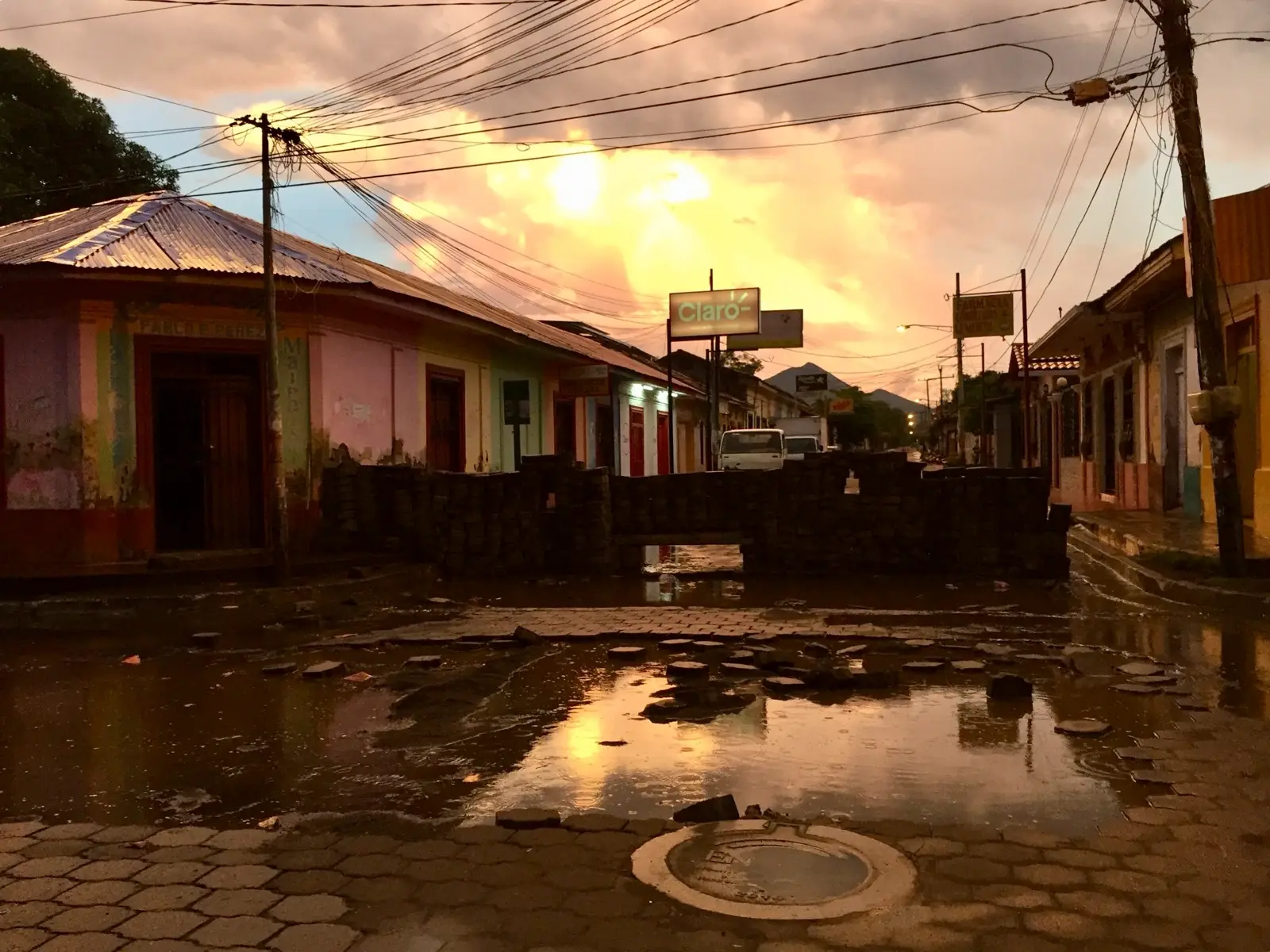
Rain, rain, rain ...
The incessant rain slows our drive through Costa Rica towards the Nicaraguan border. We still have 150 kilometres ahead of us and are making only slow progress. Finally we spot a small roadside restaurant and take the opportunity for a break. The owner kindly directs us to park under the canopy so we stay dry getting in and out. We order something to eat and hope the rain will ease. But it doesn’t get any better – it’s pouring buckets, no, bathtubs, torrents, whole waterfalls. At this moment we think of a friend who is also travelling in Costa Rica and assured us a few days ago: “The rainy season here isn’t that bad at all.” I wonder whether he’ll change his mind after this night.
Meanwhile the animals are also seeking shelter in the restaurant: grasshoppers, spiders, geckos – everything is fleeing the rain. The English say “it’s raining cats and dogs”, but in Costa Rica you could safely say “it’s raining elephants and hippos”. It really beats everything we’ve experienced so far. Eventually we can finally drive on and reach La Cruz around 11:30 pm, only 20 kilometres from the Nicaraguan border. We had actually wanted to be here six hours earlier.
But it wasn’t only the rain that held us up. Customs had delayed our onward journey by refusing to release the spare part we had ordered from Germany. Express shipping or not, the Costa Ricans couldn’t have cared less! The parcel sat at customs for over a week, and Manuel, who works at the Iveco garage in San José and is responsible for import and export, had to go to the customs office five times before he finally got it.
Our ignition lock had been causing problems again and again for some time. Sometimes we couldn’t switch Muggl off, even with the key removed. As we didn’t want to break down somewhere in Nicaragua, we decided to replace it. In the end it worked out at the last minute: 20 minutes before our deadline, Manuel arrived beaming with the parcel. Fitting it took only about 15 minutes. Crazy really – days of waiting and then the part is replaced in 15 minutes!
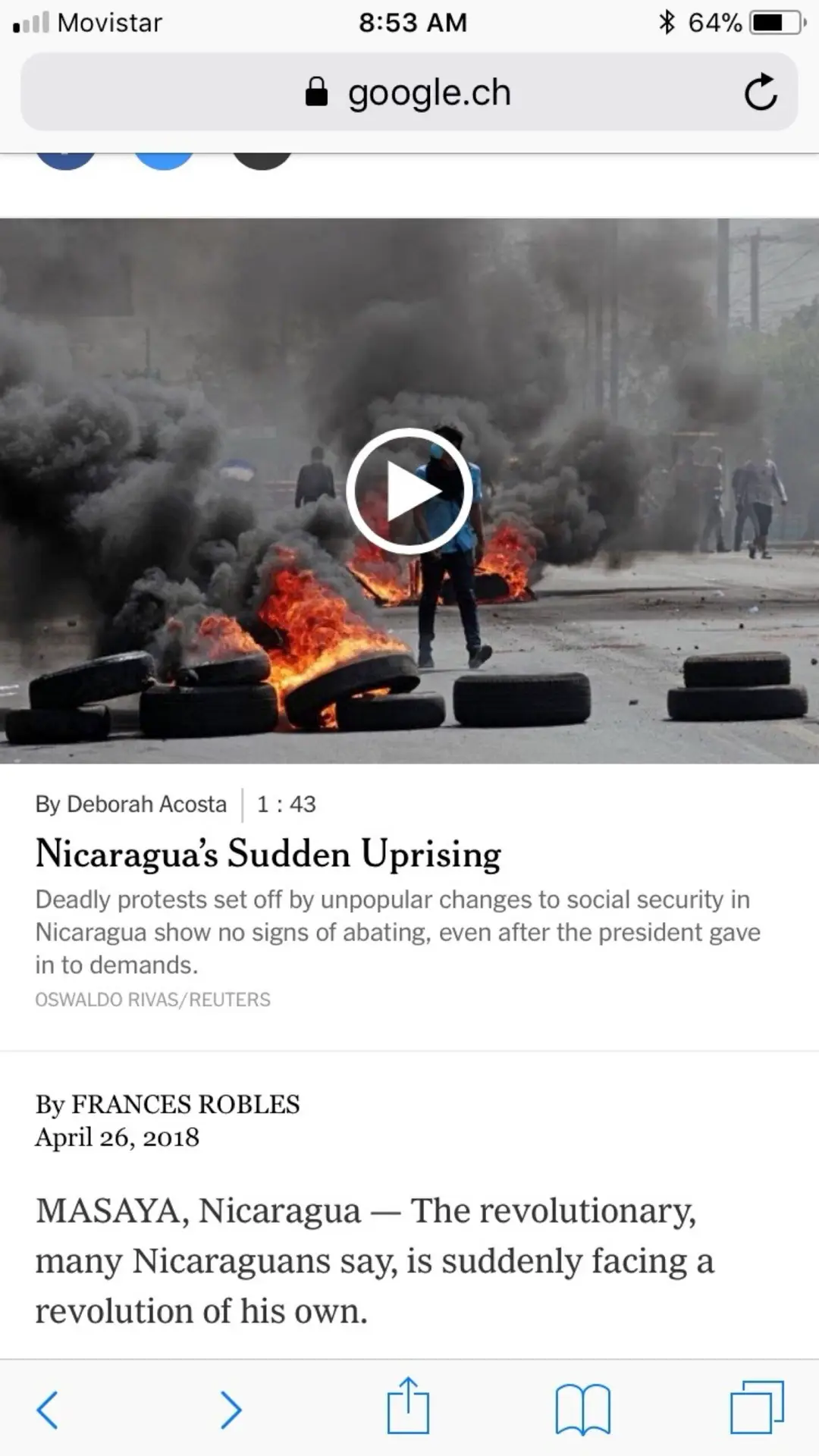
It’s Thursday morning, 21 June, and we’re waiting in a petrol station car park in La Cruz for our compañeros. We won’t cross Nicaragua alone. The tanks are full, water and food stocked up. While waiting I ask lorry drivers coming from the north how the drive through Nicaragua was. “Difficult,” they answer. We shouldn’t drive alone under any circumstances and should preferably join a Costa Rican truck convoy. You can recognise them by their number plates and big yellow plates with the country code CR on all sides of the trucks. They would take us between them and have their alternative routes. Not a bad idea! For weeks I’ve been working on a route through the crisis-hit country, based on reports from other travellers, news and traffic reports.
Shortly before 12 noon we’re ready to go and reach the border 20 minutes later. We get out of Costa Rica quickly, and entering Nicaragua isn’t really difficult. A bit chaotic and disorganised, but that seems to be normal here. We first have to wake up the man at the counter where we pay for the fumigation. The woman with whom we take out the insurance for Muggl is crocheting calmly, and the inspector has to be fetched from his extended lunch break. People here are relaxed, no sign of revolution. Nobody scares us or asks whether we’re sure we want to go to Nicaragua. Aiden and Joanna take a little longer at the border because they have a dog with them. Semuc, the Mexican, has to be properly registered, because a four-legged friend has a passport too. Around half past two, after some waiting and a lunch break, we’re finally done. That day we only drive about 10 more kilometres to a small beach on Lake Nicaragua, where we enjoy the sunset with meatballs and pasta and go to bed early. Aiden has organised an escort for us, so the alarm goes off at half past four! I can’t remember the last time I got up that early. Quickly drink coffee, stow everything and off we go … almost! Because around half past midnight it poured for an hour and softened the ground. A stream ran past Muggl. The water has seeped away, but the ground is still muddy. Aiden gets stuck and can’t get back up the slight incline in reverse. So we hitch Muggl up behind and pull. We’re always amazed at how easily he can pull much heavier vehicles.
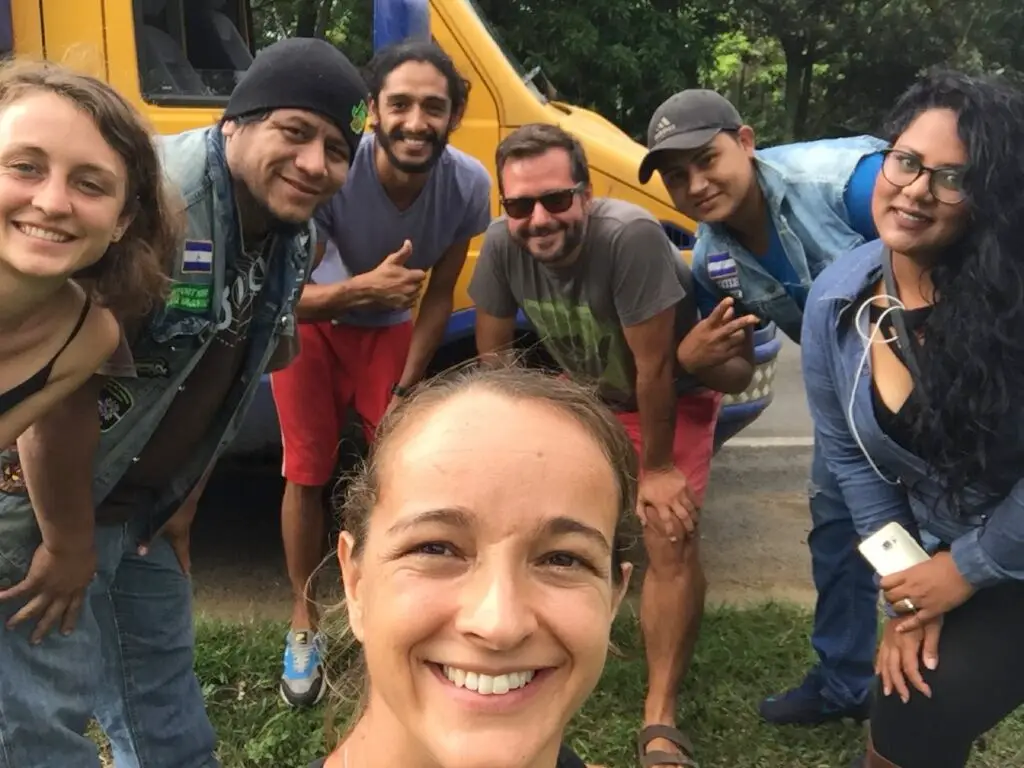
5:15 am – 15 minutes late we arrive at the Puma petrol station in Rivas, where we meet our first “guide”. The man is standing next to a motorbike and waves to us. He introduces himself as Roni and greets us warmly. We follow him for about 15 kilometres, zigzagging through three surrounding villages, because in Rivas there are two roadblocks (called tranques) set up by supporters of the student movement to block transport traffic. Aiden is in a WhatsApp group of Nicaraguans who guide tourists through the country and help them with detours. Roni is one of them. The evening before we had received the message that a barricade had been removed by government supporters, but shortly afterwards the information that it had been put back up. The detour goes smoothly, and Roni says goodbye even more warmly than he welcomed us. He won’t take the beer we want to give him. We should save it for the next one.
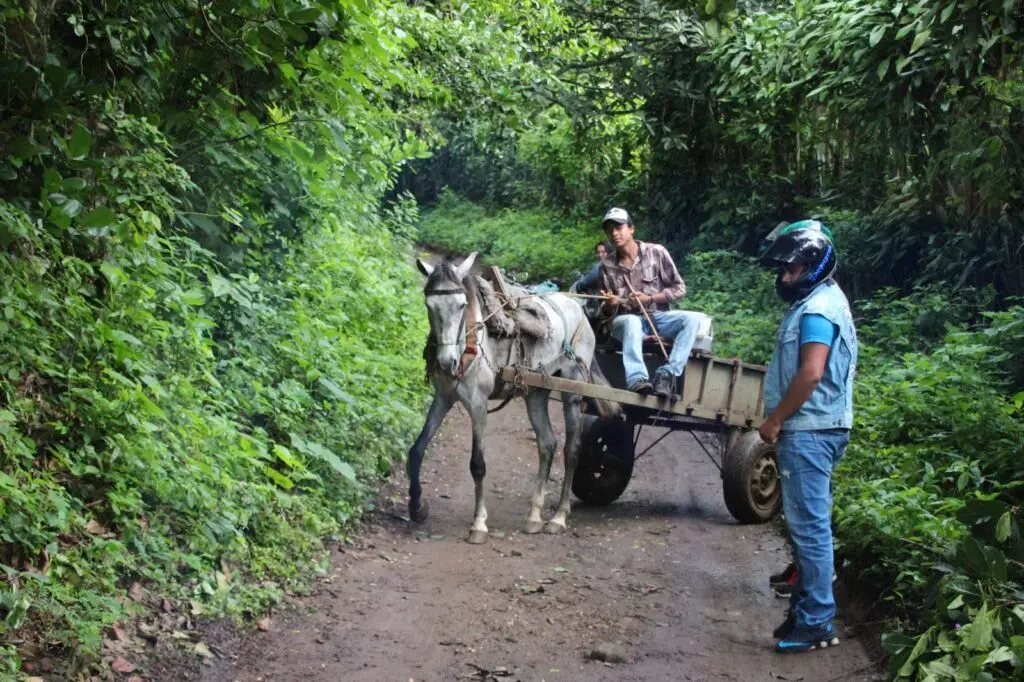
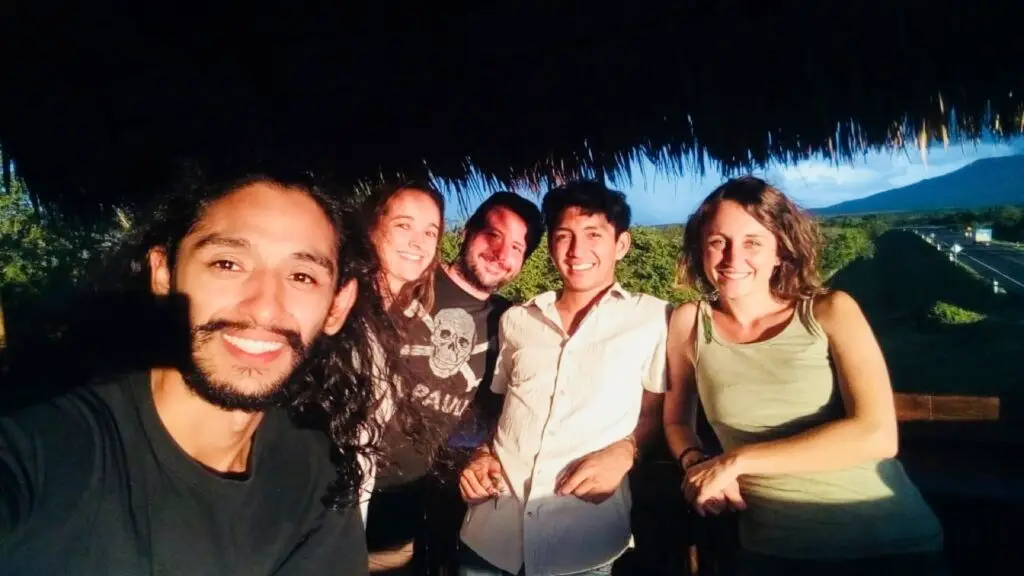
7:25 am – we meet the next “guides” 53 kilometres further on at the entrance to El Rosario. What a surprise, there are three of them: Frank, the vice-president of the Nicaraguan motorcycle club “Güegüenses Nicaragua”, together with Jorge and Betsy. The three accompany us for 18 kilometres to just before San Marcos along narrow farm tracks, where at one point a horse cart even has to be lifted aside so we can get through. We have to manage the last 135 kilometres of today’s stage alone. So we go through our onward route with Frank, and he thinks we shouldn’t have any further problems. 8:25 am – we say goodbye, take souvenir photos and get rid of our beer.
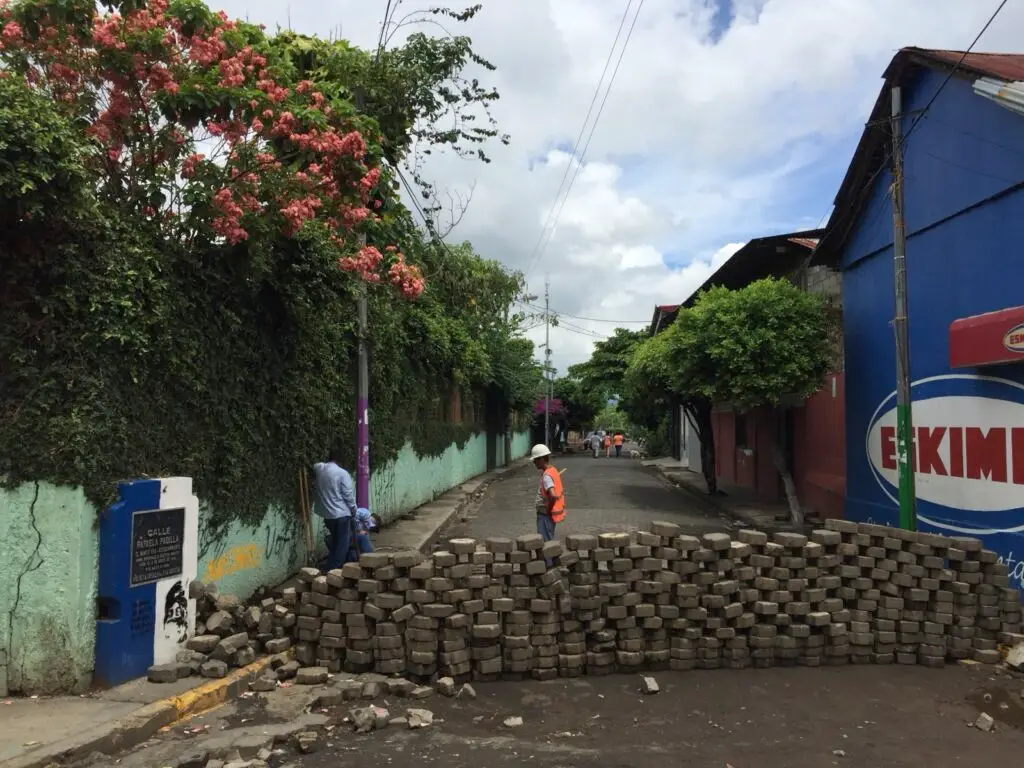
Shortly after San Marcos we pass two police checkpoints that have been taken over by masked, armed young men. Later someone tells us that they don’t belong to the student movement but are just exploiting the situation. We’re not stopped at either. The first ones wave us through, and the second ones just stand by the road watching the traffic.
10:28 am – 90 kilometres later we’re stuck in a queue at the entrance to La Paz. Street vendors walk along the line, and we ask what’s going on. Roadworks? An accident? It’s actually a tranque, a roadblock. A woman says we could drive to the front and pay 20 or 30 córdobas (54–82 euro cents) or simply wait. They let vehicles through every hour. We decide to drive past the lorries and pay if necessary. When we get to the front, two of the “blockers” come towards us. When they read “Turista + Alemania” on our windscreen, the barricade is immediately cleared aside and we’re allowed through without paying. La Paz is a small town, and we decide to drive through the village rather than take the bypass, as we suspect more roadblocks there. Almost out of town, our journey is delayed again to feed an almost starving puppy. He’s so busy with a mango that he only notices the bowl of food and me when I push it under his nose. He wags his tail like crazy and eats quickly. The mango is instantly uninteresting or serves as dessert. We always take time for things like that!
11:14 am – after about six hours and 263 kilometres we reach Malpaisillo, where we stay with Jimmy, a friend of Aiden and Joanna. Jimmy is 22, recently dropped out of university and opened a bar. He proudly shows us his new floor made of black sand. We hadn’t expected to make such good progress. We could actually have driven the rest too, but the stopover at Jimmy’s was arranged, and he’s happy we’re here. So we settle in and almost feel as if we’re doing something forbidden. We hide in a bar during the day, let the owner fill us in on the situation in the country and wait for the next morning to set off early again. In the afternoon Jimmy takes us on a little tour of the town. It’s more of a village, and even this small place recently got a tranque, a roadblock that serves more as a memorial to show solidarity with the students. As we’ve already covered most of the country and it’s only 77 kilometres to the border the next day, we don’t start quite so early. The north of the country is less densely populated and very flat, so it’s mainly used for farming, Jimmy explains.
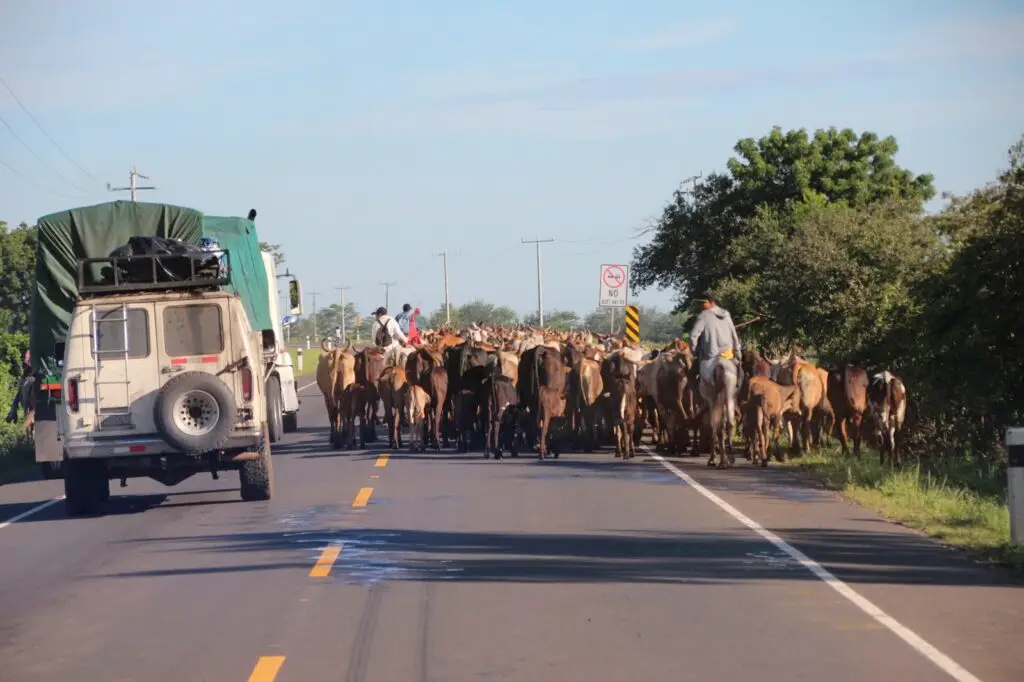
6:30 am – our only roadblocks that day are three herds of cattle, which are quickly gone again. The drive goes smoothly and without any sign of tranques. As always there’s a queue of lorries before the border, and the street vendors are already there too. One tries to tell us that the police probably won’t let us through. But we want to see that for ourselves and, as always, drive past the long queue.
8:09 am – we reach the car park in front of the border building. No police in sight anywhere, neither on the way to the border nor at the border. In fact we didn’t see a single police officer in the whole of Nicaragua, anywhere! Which the Nicaraguans are of course now taking advantage of. A young lad explains to us that they’re all driving without a licence now. Well, if that’s all! The police are under the government’s thumb and are suspected of shooting students and setting houses on fire, which also cost people their lives. So they too are the enemy.
Our conclusion on driving through Nicaragua:
The Nicaraguans went to great lengths for us and were friendly and helpful. We never felt unsafe or afraid. Of course there may be black sheep, like those young men who took over the two police checkpoints. I’ll call them hooligans – and you get those in Germany or Switzerland at football matches, without any revolution. Life here goes on largely as normal. Work continues at roadworks, men put up power lines or mow the verges next to the highways. Heavy traffic is running too, albeit on detours. Neither on entering nor on leaving did we feel that anything was wrong. For weeks beforehand we had monitored the situation, heard and read reports from other travellers, followed newspapers, news and various forums. But in the end it always depends on the people on the ground, because tomorrow everything can be completely different again.