Muggl is filled up with diesel and water, food and drinks are restocked. We’re ready for the outback! On 7 July we drive onto the Dempster Highway, which runs from Dawson City to Inuvik, Canada’s northernmost town. This lonely, wide road is unpaved and used mainly by big trucks as a transport route.
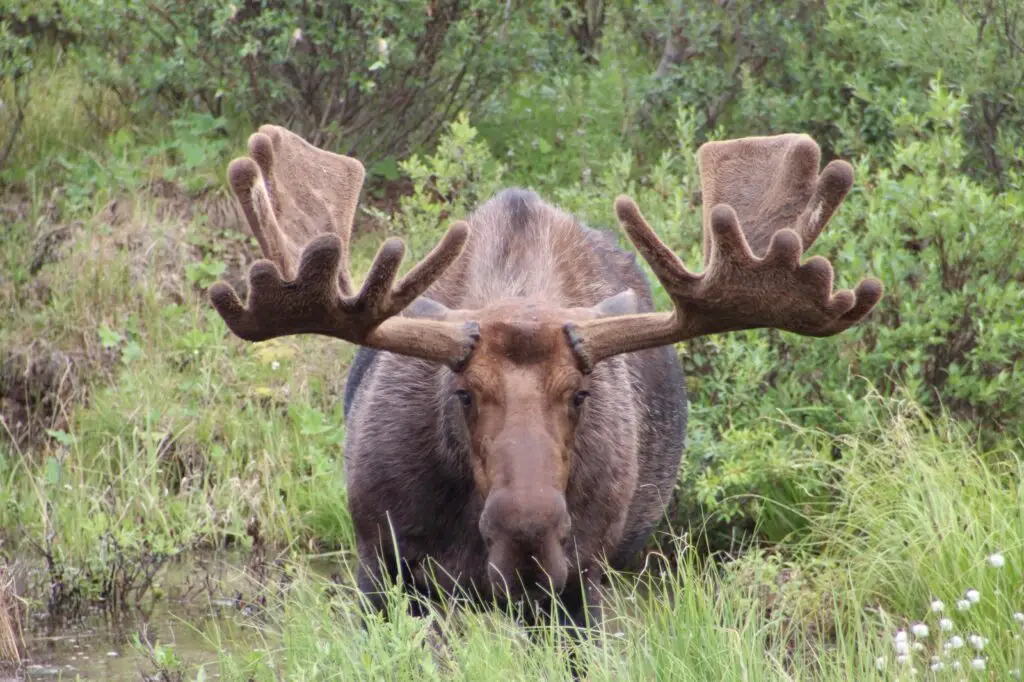
On the way to our first stage destination we finally see our first moose. The names here are a bit confusing: the huge animal with the rounded antlers that Germans call “Elch” is called a moose in the USA and Canada. “Elk” there refers to a large species of deer that’s hard to find. The ratio of animals actually seen to warning signs along the road is about 1 to 1 million. We were starting to think they didn’t exist at all and the signs were just there for fun. As we drive past a pond next to the road, I see a mound of fur and think: they’ve got big beavers here! When I spot the second animal, I realise it’s a moose. I shout: “Stop! Moose!” Christoph stops immediately and reverses. What I took for a giant beaver were actually just the shoulder blades of a moose that had just dived down to eat seaweed. So there are two of these mysterious animals in all their size and glory in front of us. You don’t really want to get out – it doesn’t look like it, but apparently they can be pretty fast.
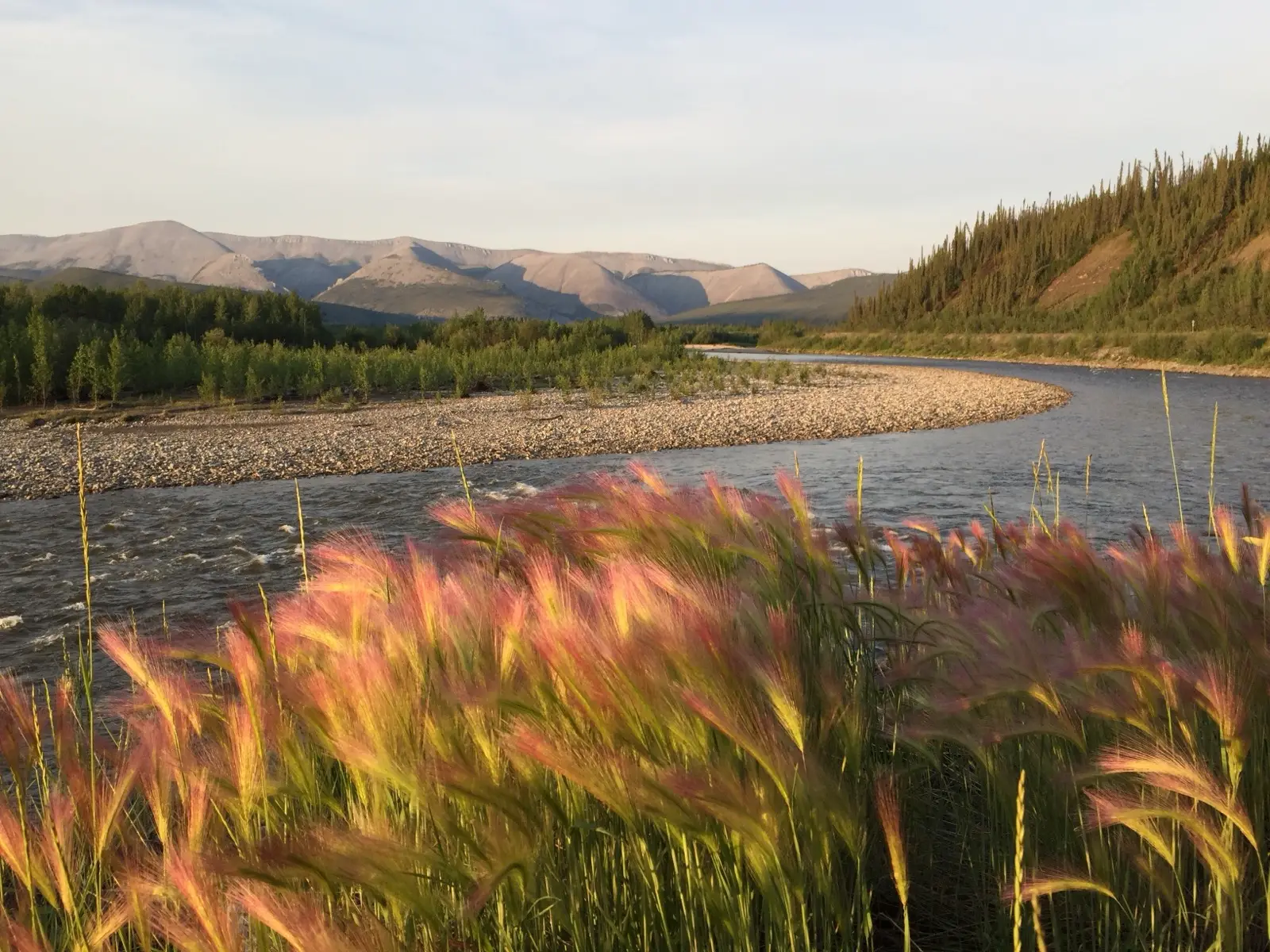
On this Friday we drive 160 km before looking for a spot to spend the night in a dry riverbed. It’s already late, but still hot and light. Summer in Canada means it doesn’t get dark – not at all. At best there’s a bit of dusk between 1 and 2 am, and that’s it. We saw the last car hours ago, and this “evening” only one more truck drives past us. As it doesn’t get dark, the mosquitoes don’t go to bed either. We still don’t have a mosquito screen on the sliding door, as we’ve been pretty lucky with the little beasts so far. I quickly cut the net to size and attach it to the door with Velcro. Now we can open everything up for a through-draught, and it’s more or less bearable.
We hadn’t expected summer in Canada to be so hot, but the locals tell us this summer is also unusually hot and sunny. Because of the heat and drought, Canada has big problems with wildfires. When we look north, the sky is orange-pink. As it doesn’t get dark, you can read a book here without light until midnight and don’t get tired at all. After a few weeks it feels like permanent jet lag and is pretty exhausting. So at 11:30 pm we’re still sitting in Muggl reading. Absolute silence around us – until I hear a noise. It slowly gets closer and I wonder what it could be. It sounds like stones or sticks clattering and doesn’t stop. As always, Christoph hears nothing, and I peer out of every window. Although it’s still almost as bright as day, I see nothing. Picture a sunny late afternoon in midsummer, around half past four – that’s what half past eleven at night is like in July in Canada!
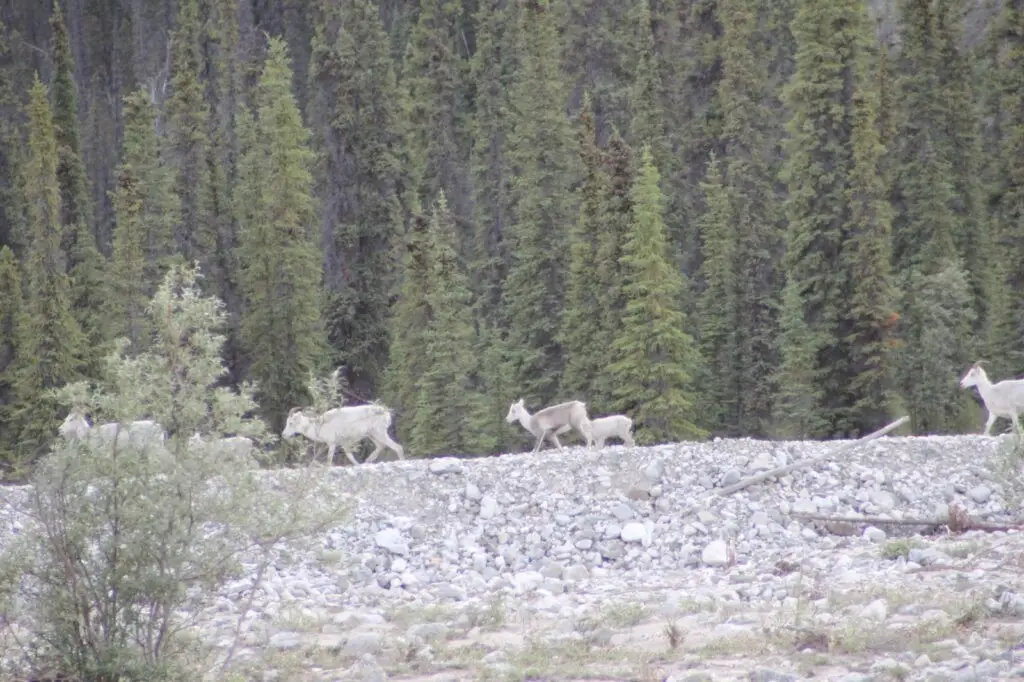
The noise gets closer, and I remember that other travellers saw a wolf here last year. The tension rises, because the noise is coming straight towards us. It’s now so loud that I can tell something is walking on stones, and it must be big, because it’s getting really loud. Christoph still hears nothing, and I don’t understand how anyone can’t hear the racket! I’m getting pretty excited and curious about what’s coming towards us. Just as Christoph is about to declare me crazy, I see what’s causing the noise and have to laugh out loud. Goats! A whole herd of little goats – tiny ones, slightly bigger ones, old ones, young ones, and lots of them. I couldn’t count them, but they march past Muggl one after another about five metres away. I really hadn’t expected that, especially as this kind of goat isn’t actually found here. The people we told about it afterwards didn’t know anything about goats like that here either. Anyway, after all the excitement we go to bed and decide to get up and drive on whenever we wake up the next morning. That turned out to be 3 am.
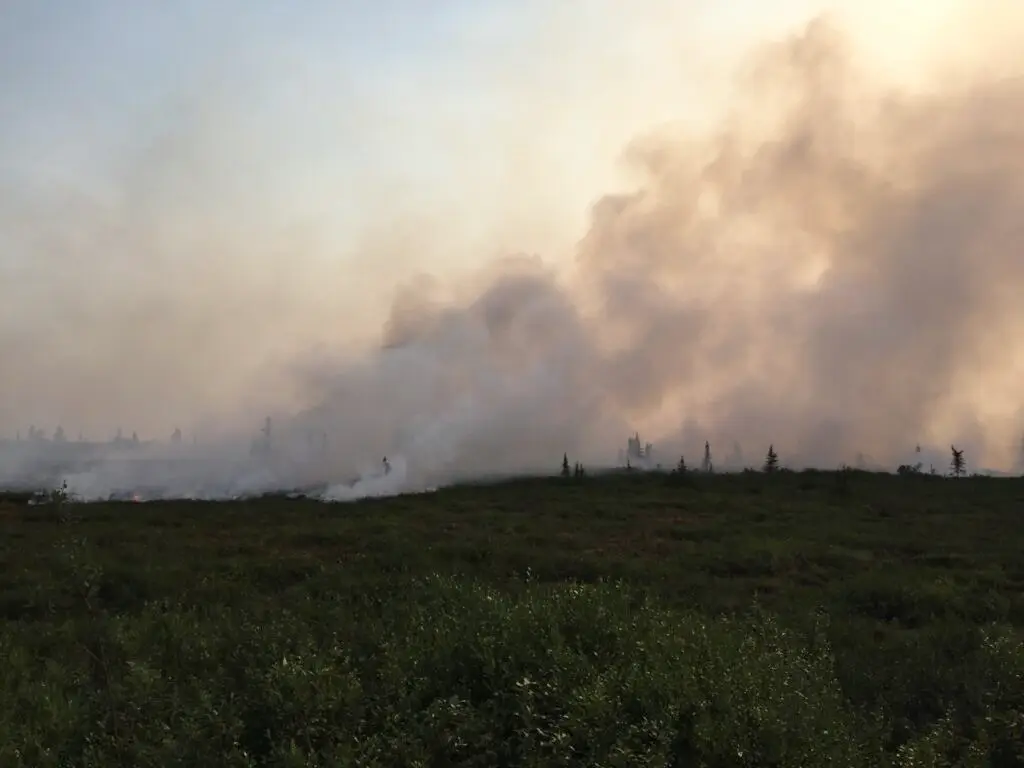
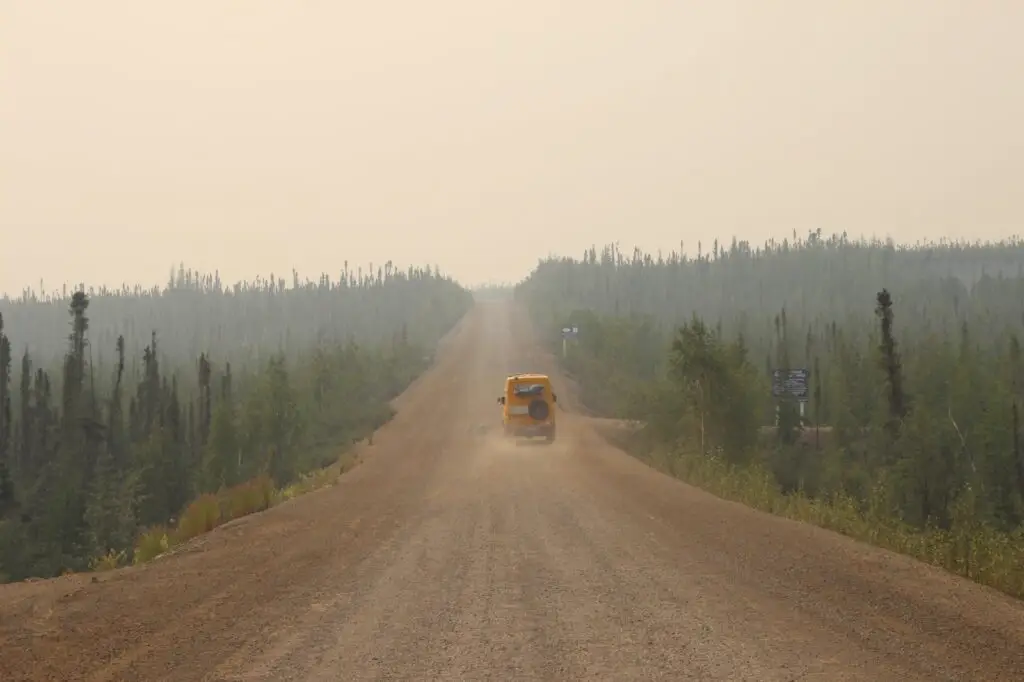
But we don’t get far, because about 40 km further on the road is closed because of wildfires – or more precisely, tundra fires, as there isn’t much forest left this far up. The vegetation this far north is quite different. Next to the roadblock there’s an entrance to a large gravel area. Two big trucks and a car are waiting there. We recognise one of the trucks as the last one we saw drive past us the evening before. So the road must have been closed for a while. We had heard that fires had broken out along the Dempster Highway and that it was sometimes closed from the north, especially at night, to prevent accidents due to poor visibility. We decide to wait two hours at most, have breakfast first and then take a nap. About an hour and a half later the road is open and we drive on. Hundreds of kilometres of gravel road lie ahead of us. To our right we see burnt little spruce trees. They don’t grow very tall here anyway; all that’s left is a black stalk. They look like oversized burnt matches. The wind is coming from the west and blowing the smoke away from us. We have good visibility, but decide not to drive all the way to Inuvik, because we can’t assess the risk of getting stuck there should the wildfires spread. Our final destination that day is the Arctic Circle, which is also the northernmost point of our trip. There we take a souvenir photo of the three of us (the two of us and Muggl) at the sign, and then we head back quickly.
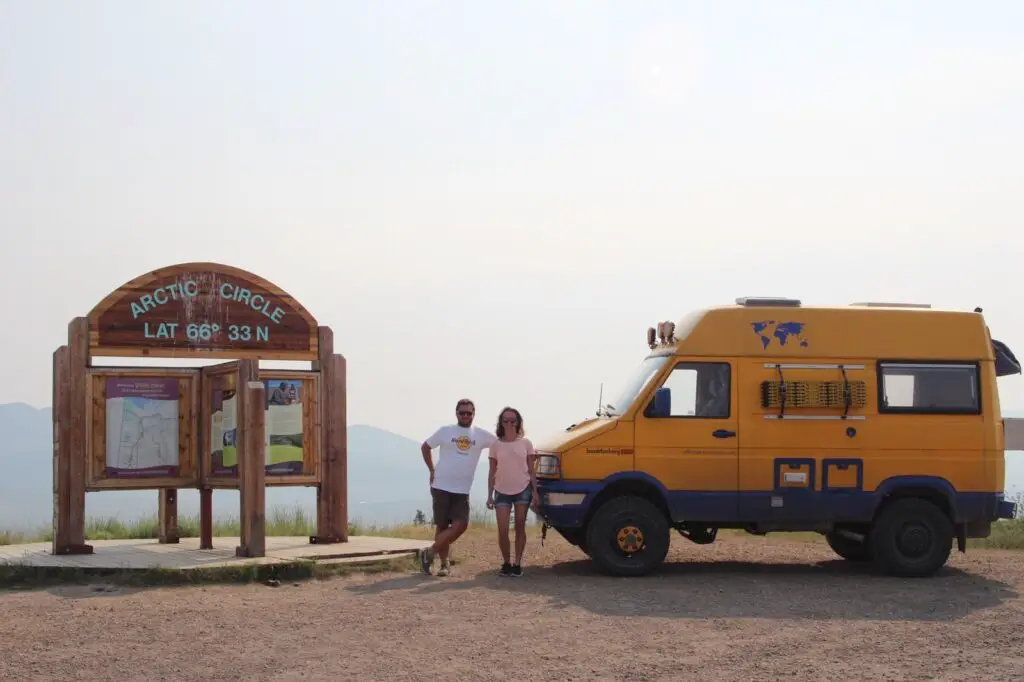
The return journey is less relaxed, because in the meantime the wind has turned and is now blowing the smoke straight across the highway. We see nothing, absolutely nothing. At times we work our way back at walking pace. We have the windows closed, and still we feel we can’t breathe properly. Fortunately we soon leave the dense smoke behind, but because of another change in wind direction the whole 400 km of our way back are pretty smoky. That day we drive almost 700 km and are glad to be able to breathe reasonably fresh air again at the end of the highway. We didn’t need most of our supplies, apart from the fuel, but you never know what will happen when you drive lonely roads in Canada.