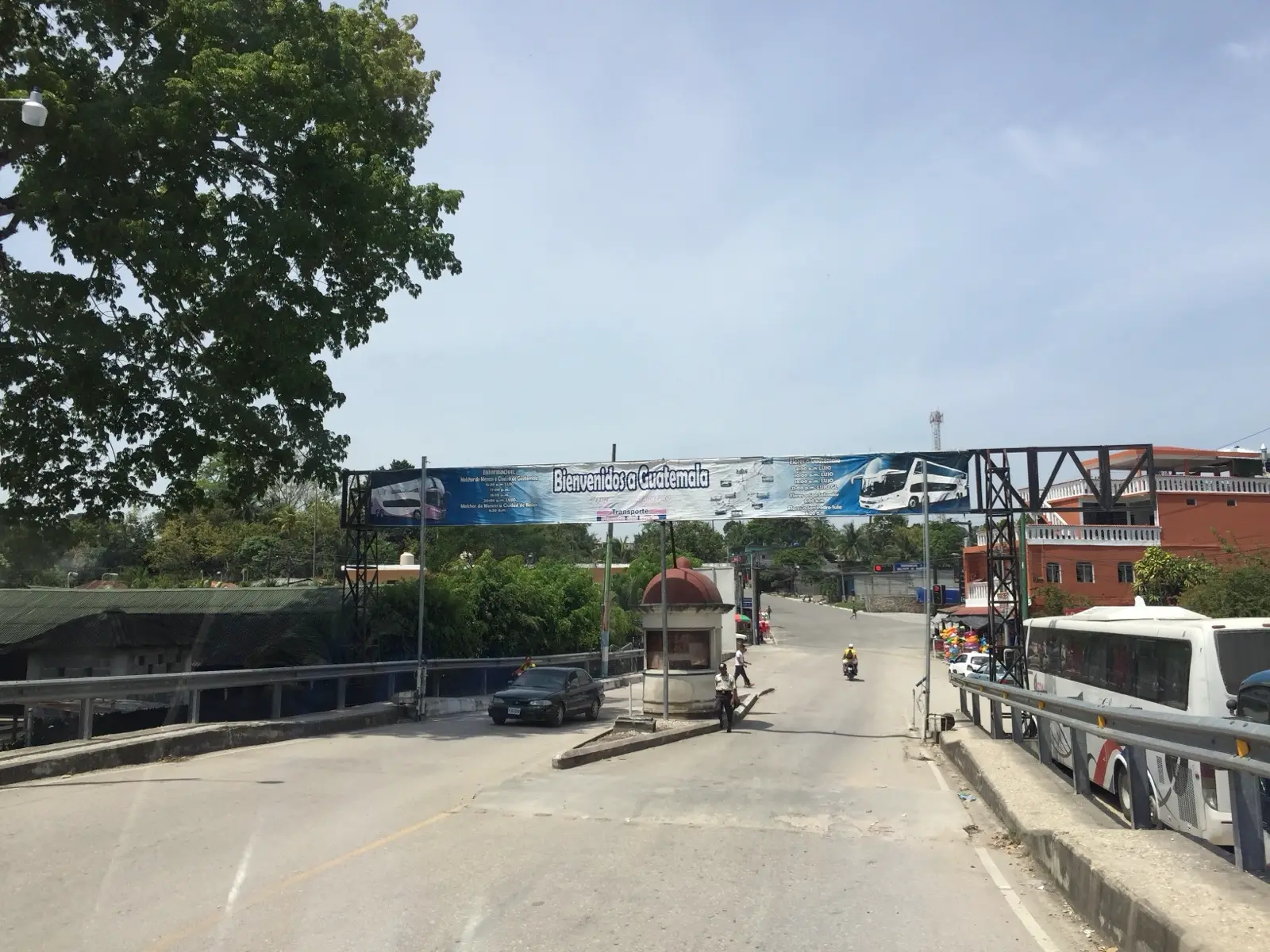
On 20 February we travel from Chetumal, Mexico, to Belize. On the way to the border we stop at a police check. A policewoman says we were driving too fast. I ask about the speed, but she doesn’t answer and just laughs. Christoph never drives fast while Muggl is still cold. I ask again how much too fast we were, but get no answer. A colleague joins her and repeats the statement. Everyone laughs, which surprises us, as we had expected a more serious check. Nobody tells us how fast we were driving. When I ask what happens now, the policewoman steps out from behind her colleague with a laser gun in her hand. Aha, they’ve got new toys and love playing with them. Nobody wants money from us. They give us a slip of paper and tell us to drive carefully and watch the speed limits. Mexicans are just big kids. At first we think a fine on our last day in Mexico is really the last thing we need.
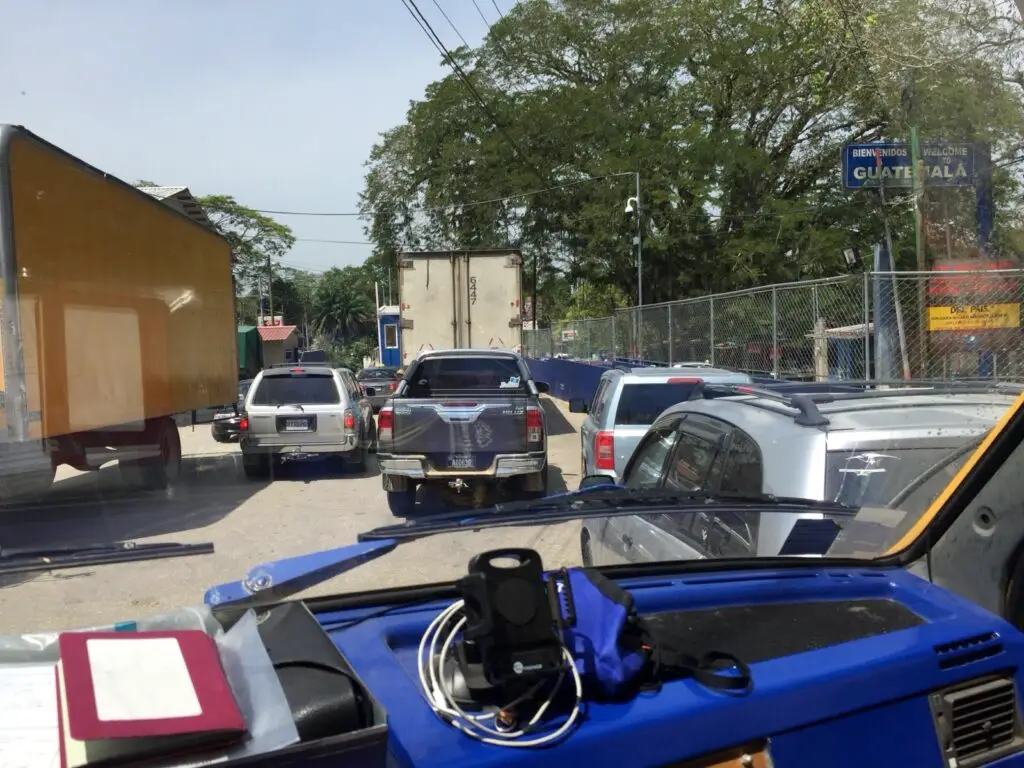
At the border we quickly check out of Mexico. Hardly on the Belizean side, everything is different. People look indigenous but speak English with a Caribbean slang. An official greets us and explains where we have to go and that our vehicle will be checked last. We quickly get visas for us and for Muggl. During the vehicle inspection I realise with horror that I forgot to hide the eggs. The official takes them from us, as they’re not allowed. “Sorry,” he says. He patiently explains that they don’t allow eggs from abroad because of bird flu. “But don’t worry, we have eggs in Belize.” Thank God, I think. I don’t want to be responsible for another outbreak of bird flu.
100 metres after the border we buy the insurance for Muggl and off we go. In Orange Walk, the first town on our route, we buy eggs and Belizean beers. Then we drive to Crooked Tree, to a small campsite by a river that is more of a lake because of the heavy rain. The dirt track along the bank is partly under water, but that doesn’t stop us from setting up camp for the next three days. Even if the water keeps rising, Muggl will just get wet feet. I caught a cold diving in Mexico, so we use the quiet days to let me recover. It still rains occasionally, but the water doesn’t rise any further, so we get out again with almost dry feet.
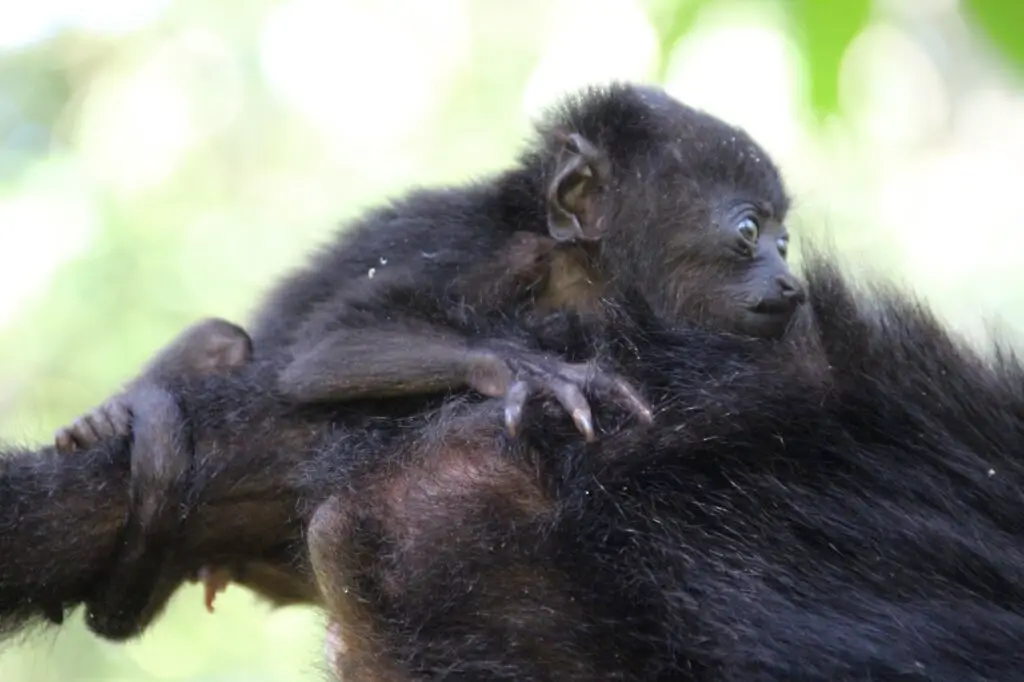
On we go to Bermudian Landing and the Community Baboon Sanctuary, a reserve for howler monkeys. The very next morning Robert gives a guided tour. He has been working to protect the howler monkeys and their habitat for over 40 years. It doesn’t take long for a family of howler monkeys to appear. Six or seven monkeys hide in the trees, including two mothers with babies on their backs. Robert lures them closer by picking a big leaf from a bush and holding it up. And they really do come towards us. We watch up close as the little monkeys try to grab the leaves and eat them. That was really worth it!
Belize has a lot of wildlife to offer, especially wild cats. As they’re hard to find in the wild, we decide to go to the zoo. The Belize Zoo only houses Belizean animals that were injured or separated from their mothers as youngsters. “Problem jaguars” that came too close to people also find a home here. That raises the question of who’s getting too close to whom, but at least the animals don’t have to be shot.

The night tour at the zoo is said to be great, but there’s no group we can join that day. So we visit the zoo during the day and are thrilled. It gives a good insight into Belize’s diverse wildlife. The ocelot fascinates me most. The four-eyed opossum and the kinkajou don’t show themselves. So a night tour after all?
The Tropical Education Center (TEC), which belongs to the zoo, offers camping. We had read that it’s supposed to be great. And the TEC really is super nice. There are hiking trails, a pond with a crocodile, a pool with a huge mosquito-net house, hot showers and very nice people. Here we meet Frank, a Canadian who has been cycling through Guatemala and Belize for four months. He has adopted a puppy that sought refuge at the zoo. Frank tells us about a remote island he wants to visit again soon. The island is in the Caribbean, surrounded by crystal-clear water, and has no electricity, no cars and no restaurants. You can only get there on a Sunday and back the following Saturday. That sounds tempting. The island has been family-owned for many years, and the family deliberately keeps it simple. There are rainwater showers and composting toilets, huts on the beach or over the water.
I find an old website with dreamy pictures. You can dive there too. We spontaneously decide to come along and make a reservation. In the meantime we go to Caye Caulker, a touristy island with Caribbean charm. Muggl parks in the old harbour of Belize City and we take the water taxi. As soon as you arrive, you feel relaxed. The island’s motto is “go slow”. As my cold won’t go away despite all the medication, we decide to just snorkel. With Caveman we find a great agency that offers us a super tour. We see manatees, seahorses, eagle rays, southern stingrays, a loggerhead turtle, green sea turtles, nurse sharks, moray eels and colourful fish. We’re so thrilled that we book a half-day tour for the next day straight away. We can warmly recommend Caveman!
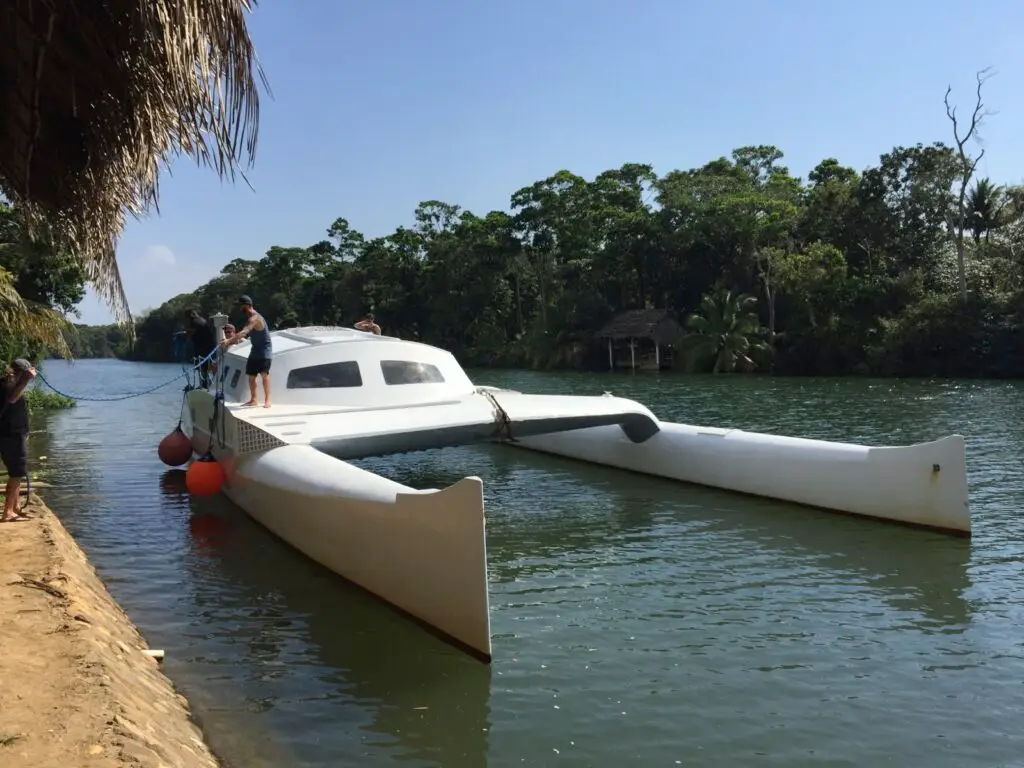
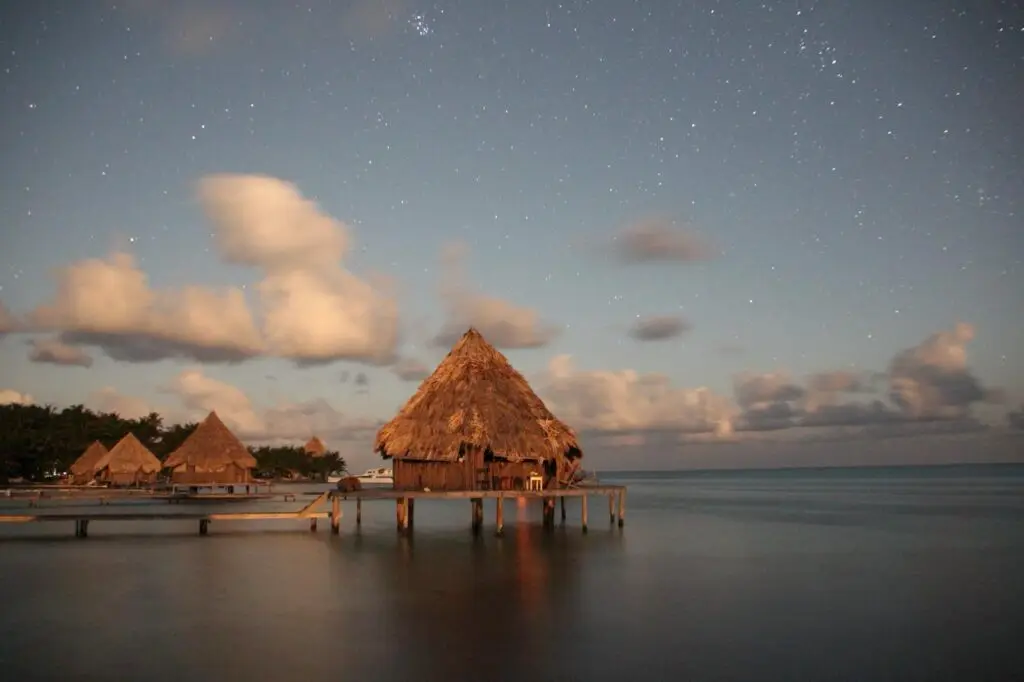
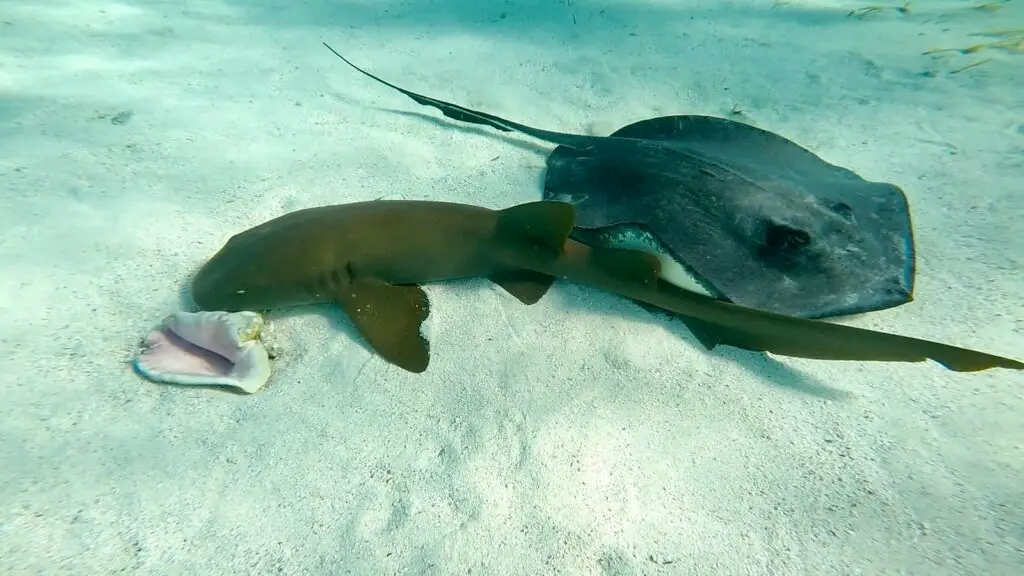
After three days we return and meet Frank with Biscuit and his buddy Matt, who has come over from Canada. On Sunday 4 March we set off. We wait on the bank of the Sittee River for the catamaran that will take us to Northeast Caye. It arrives an hour late. We load our luggage, provisions and drinking water onto the catamaran. The trip takes three hours. We sail out of the Sittee River onto the open sea, past islands, until finally there are none left. The sun is shining and Matt gets sunburnt despite sun cream. When we arrive, we can’t believe our eyes: turquoise water, white sand, palm trees, round bamboo huts on stilts in the water, reached by jetties. We’ve booked a beach cabin but wonder whether we should ask for an upgrade. After a welcome with drinks and watermelon, it’s time for the cabin numbers. We’ve already received a hand-drawn site plan and search excitedly for cabin no. 7. YES! It’s a cabin over the water. We’ve been given a free upgrade! We spend the following week diving, snorkelling and cracking coconuts. They have a station for opening coconuts and a grater to scrape out the flesh. We squeeze the fresh coconut flakes through a cloth and make our own coconut milk for coffee and White Russians. Because there’s no fridge, we didn’t bring much beer, but all the more rum. On the first night the sea glows. It looks almost like fireflies in the water – it’s called bioluminescence. We watch stingrays and nurse sharks from our “front door” as they swim under our cabin or sleep beneath it. The island isn’t big; you can walk around it in about 40 minutes. It’s full of coconut palms and we can eat and drink as many coconuts as we like. The guys go spearfishing now and then, so every so often fresh fish ends up on our plates.
If you walk around the island, you inevitably come across a small shipwreck. In 2012, 25 Cubans accidentally landed on Northeast Caye in it. They had been at sea for 15 days and had travelled almost 1,000 kilometres across the Caribbean Sea. The boat was home-made, powered by a small Slovenian lorry engine. It’s a miracle that everyone arrived safely, even two pregnant women. Three days before reaching Northeast Caye the engine broke down and they were only driven by the current. On the island they were given food and drink and allowed to call their families. Belize doesn’t take in refugees, so the fishermen took the refugees to Honduras. Time flies and we have to go back. Frank, Biscuit and Matt are staying another week; for us the journey continues. On Saturday 10 March we say goodbye to the three of them and the rest of the islanders and go back to Hopkins, where Muggl has been waiting for us.
That same day we drive on to Placencia, which Christoph in particular doesn’t like. On the way we pass showy villas built mainly by American and Canadian retirees that don’t fit in there at all. We drive back a bit towards Hopkins and decide to look for a free spot on the beach to camp. On the edge of the village of Seine Bight we find one. As always, we introduce ourselves to the people and ask whether we may spend the night there. The neighbour Lauren and her son Brian come to meet us and it’s no problem. Brian even speaks a little Swiss German – he was with a Swiss woman and has two children there. He shows us where they live, and we find a bunch of puppies in their “garden”, which here is simply the sandy beach. He also gives us a little tour of the village, where we meet a relative or two of his and end up in the bar where the locals buy bitters. Bitters are pickled roots whose liquid is diluted with rum and water and is said to help against various ailments. We’ve ended up in an entirely Black village.

At half past six he brings us back as it slowly gets dark. We’re tired from the long boat trip in the sun and all the driving, so we go to bed early. At two o’clock there’s a knock: it’s Brian, a little tipsy. He wants to show us how beautiful the moon is and that there’s a disco nearby where the whole village is gathered. We’re the only white people, which makes us a little uneasy, but otherwise nobody minds. In the disco there’s an MC who interrupts the Caribbean music with rap. Half an hour later Brian brings us back to Muggl. The next morning we just want to quickly say goodbye to the family – which was to prove our undoing.