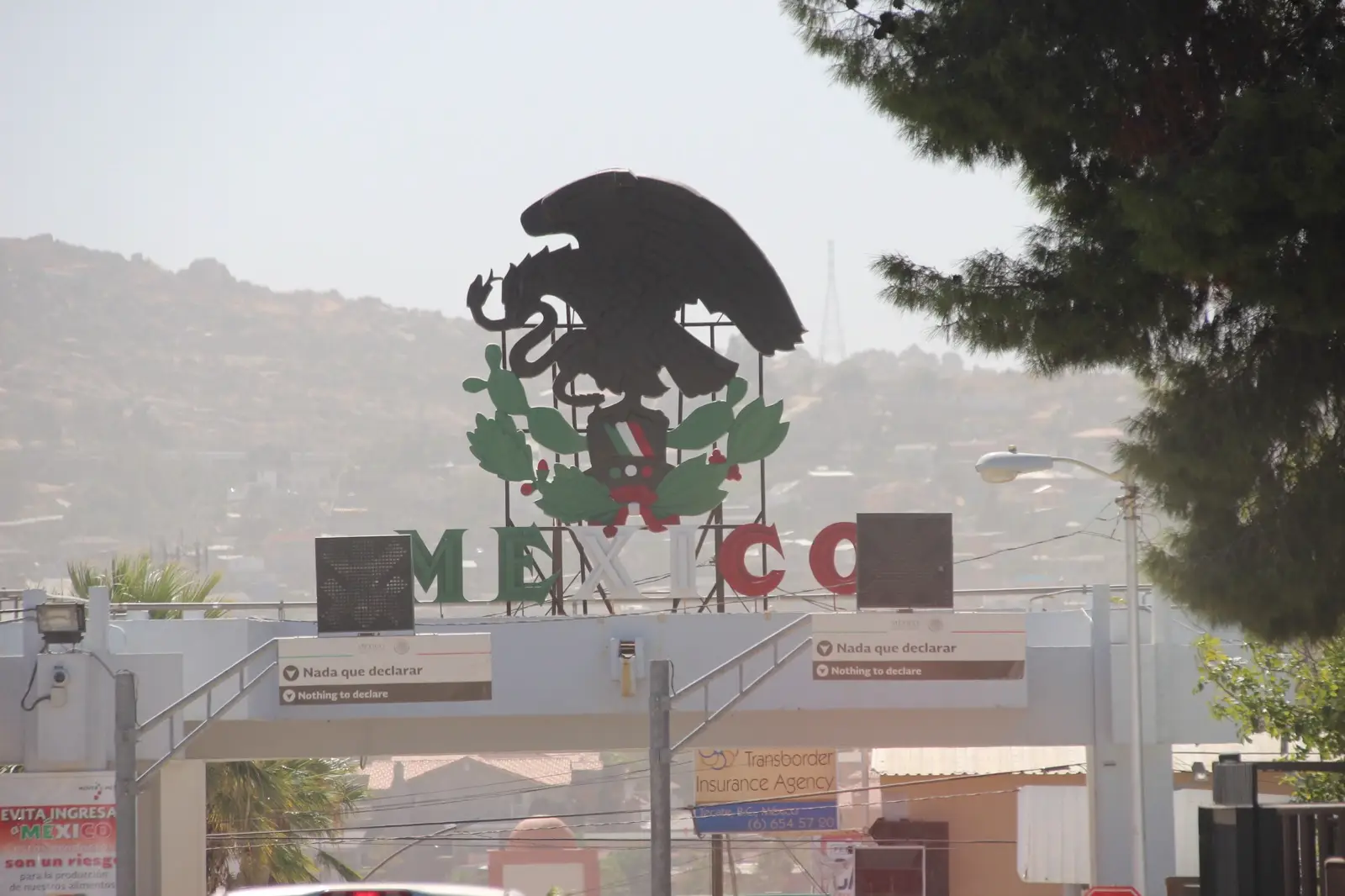
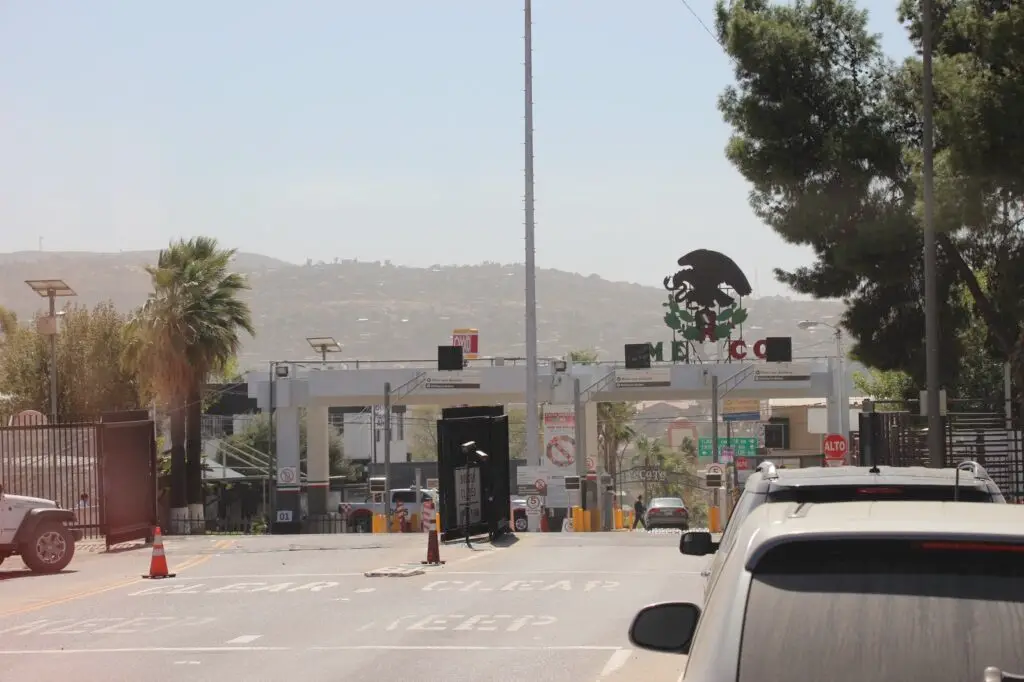
Border Crossing from Chetumal, Mexico, to Corozal, Belize

Berichte Nordamerika & Mexiko – Foto 4

20.02.2018 Adiós Mexico, welcome Belize. On Tuesday morning we set off from Chetumal for the border. Hardly out of town, we run into a police check. The policewoman explains, laughing, that we were driving too fast. Only 40 km/h applies in town, she says in Spanish. I ask how fast we were going, but get no answer. Great, we think, that’s all we needed on our last day! A colleague joins her and asks whether we speak English. Yes, we answer, and he too explains that we were too fast. He doesn’t tell us our speed either. Somehow they all find it funny, and soon we’re laughing along. Nobody wants money from us; they just tell us to drive more slowly. Then they send us on our way. We suspect they’ve just been given the new laser guns and are therefore having so much fun with them. Mexicans are a bit like big kids.
Grenzübertritt von Chetumal Mexiko nach Corazal Belize – Offroad Travelers

A few minutes later we reach the border. There we check out and have our passports stamped. As we had left Mexico in the meantime and flown to Cuba, we have to pay the tourist fee of 533 pesos per person again. Then we look for the office to check out our camper. But the woman at the counter has no idea what we’re talking about. Within 12 months we have to send a document about the export of our camper to the USA to confirm that we’ve left the NAFTA countries. She can’t issue us a corresponding document.

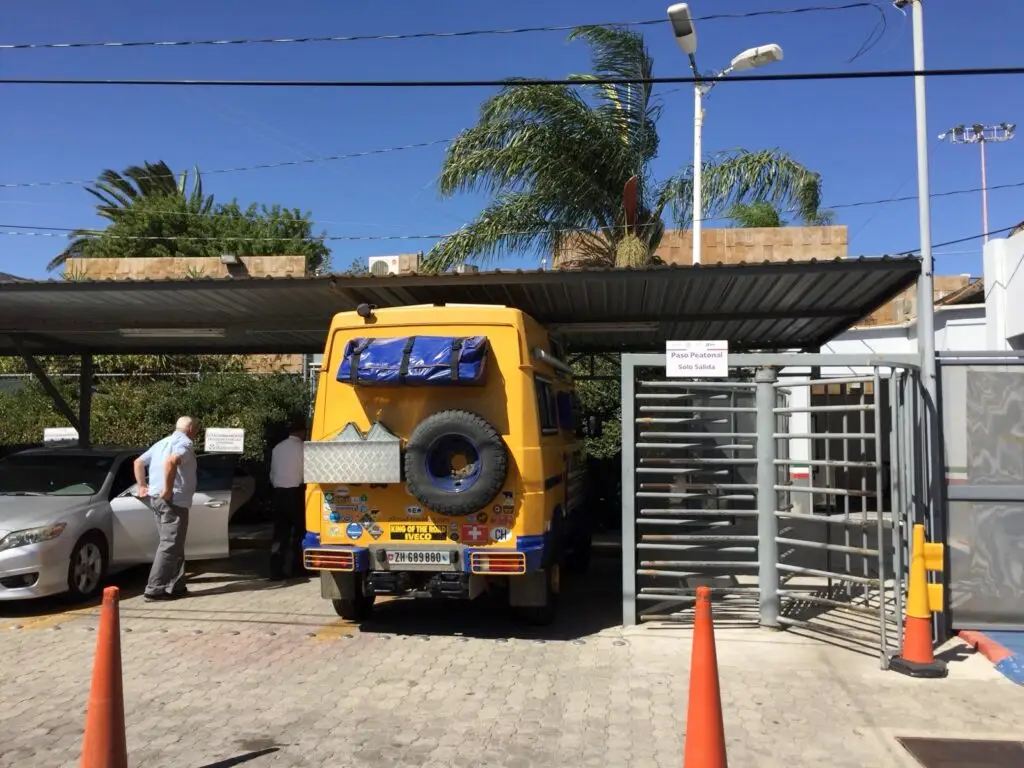
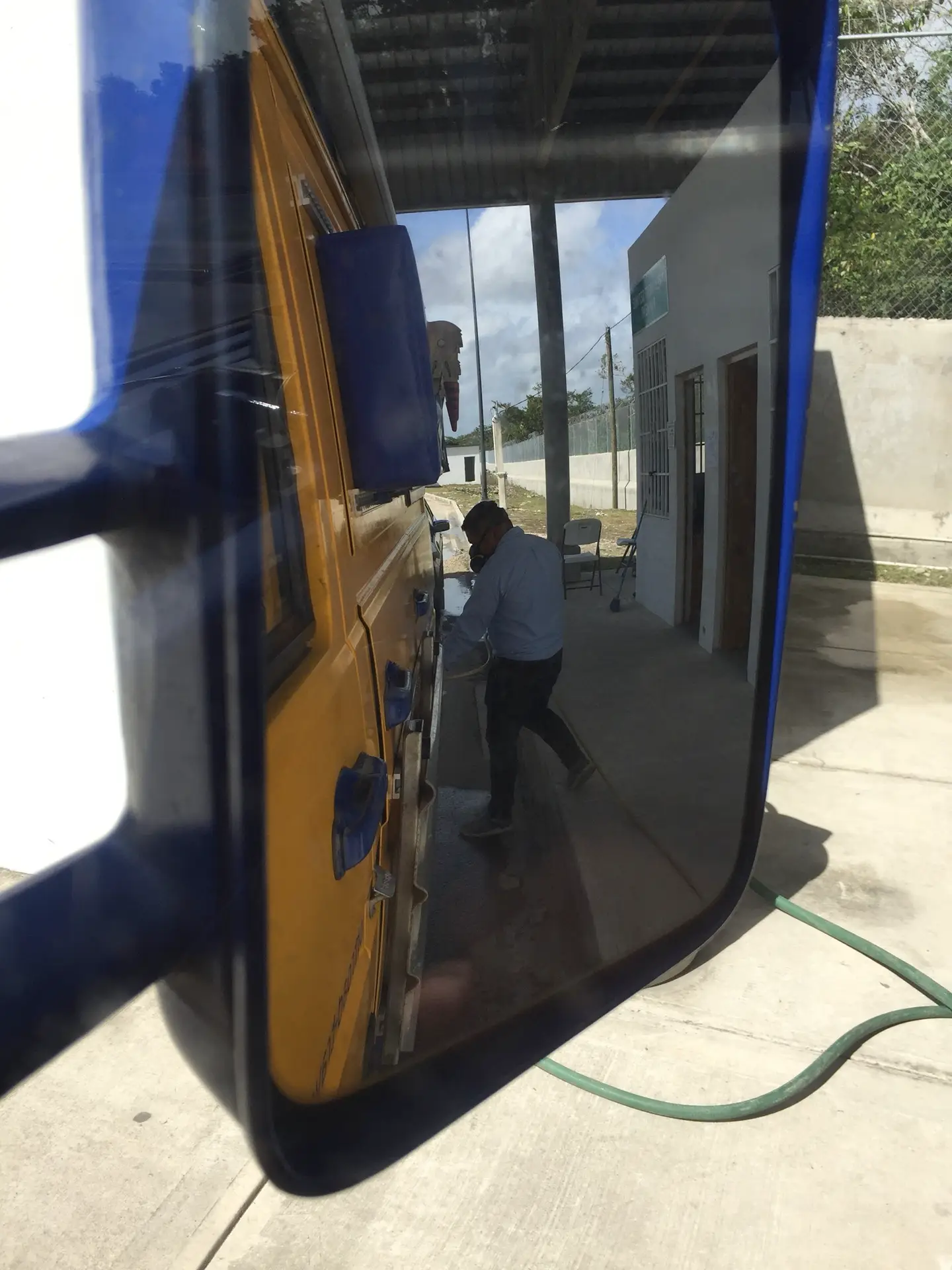
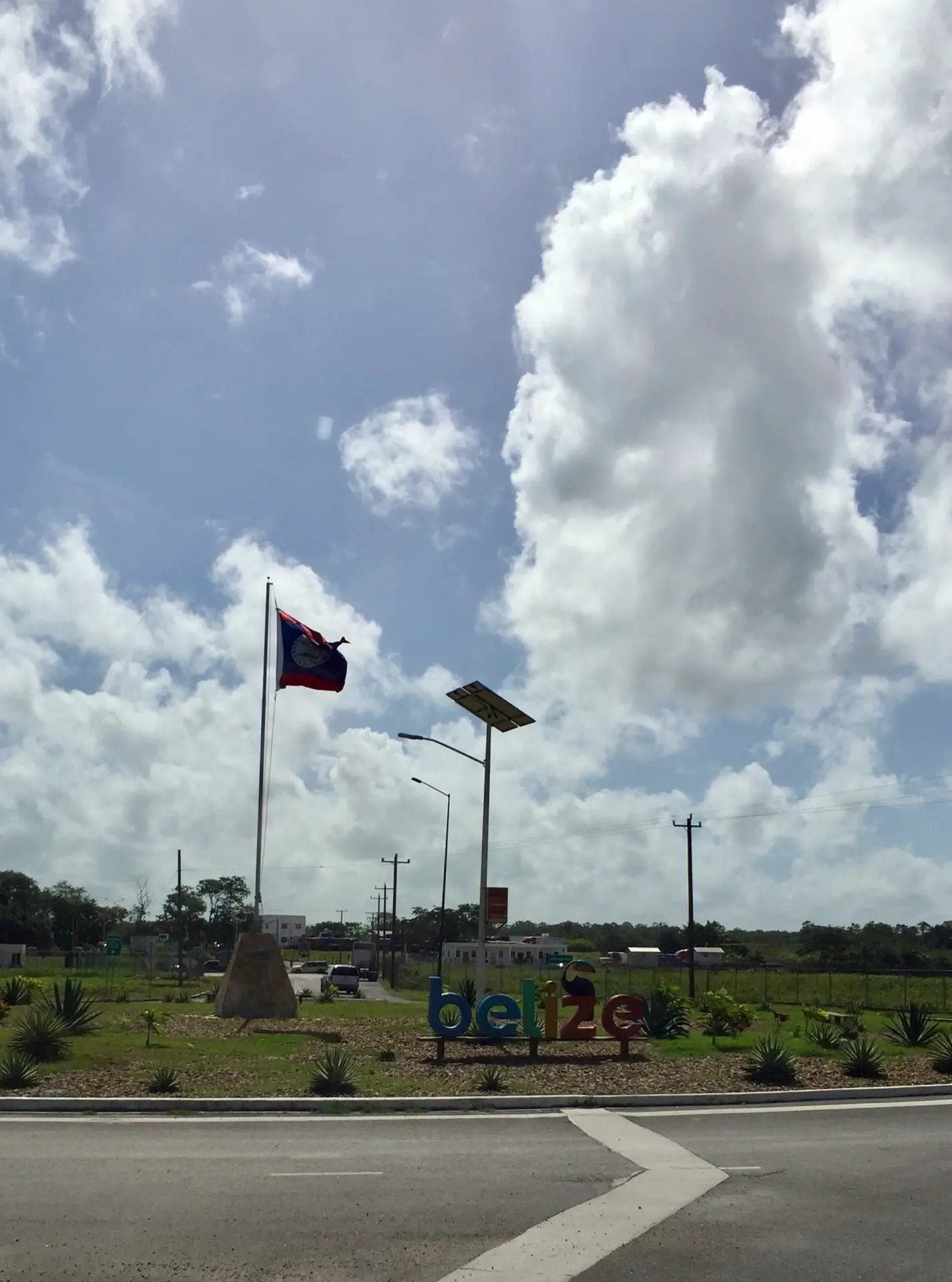
Well, if she doesn’t know what we want, we’ll rely on the Belizeans. On to the disinfection station. Yes, you read that right: we have to close the windows and Muggl is sprayed with disinfectant. The whole thing costs 10 Belize dollars or 5 US dollars or 100 pesos, and we get a receipt that we have to show later. On to immigration, where a very friendly young border official greets us in the car park with a handshake and the words “Welcome to Belize”. He explains that we can leave the car here and should follow him into the immigration office. There he shows us where to fill in the entry form, get our stamp and where Muggl gets his papers. As soon as we enter the building we’re handed a map of Belize with sights, natural highlights and activities. Very friendly people, the Belizeans.
Grenzübertritt von Chetumal Mexiko nach Corazal Belize – Foto 2

The officer at the immigration counter first asks: “Who is this lucky guy?” In such a serious setting it always takes a moment to get the humour. The officer jokes with us and calls Christoph a “lucky guy” because he’s lucky enough to travel with me. Finally someone recognises it! 😉

He asks where we want to go. We say we want to go to Crooked Tree, a village between Orange Walk Town and Belize City. He warns us about the cashew wine in the area – it gets you drunk. Of course, it’s wine. When you wake up the next day thinking you’ve slept it off, the sun reactivates the alcohol and you get drunk again. That sounds wild. Let’s see whether we find cashew wine somewhere.

We don’t have to give fingerprints or look grimly into a camera. The officer asks how long we want to stay and enters 30 days in our passports. How uncomplicated! At the next counter Muggl also gets his “residence permit” in the form of a paper with his details and the length of stay. Like us he gets 30 days, and this document is now his “passport”, says the officer. It costs 30 US dollars, and I hope it’s enough for the Americans to accept Muggl’s entry into Belize as his exit from Mexico.
Grenzübertritt von Chetumal Mexiko nach Corazal Belize – Foto 3

Next they inspect our fridge. Damn! I forgot to hide the eggs. As we hadn’t heard of anyone having their car searched so far, we had dared to stow food in such a way that you’d have to unpack everything to find it. The fifth official explains calmly: “You know, we once had bird flu, and since then no poultry products may be imported. But don’t worry, we have eggs in Belize.” Well, that’s fine then, and I don’t want to be responsible for a mass epidemic. Nobody would have been interested in packaged sausage, travellers who entered Belize at the same border about two weeks before us had told us. Today it’s different. You have to declare it, but since our pack of salami and the ham have the TIF seal, they turn a blind eye. This seal certifies that the food was inspected and approved in Mexico. Luckily he doesn’t see the cheese sausages right at the bottom of the cool box. They don’t have a seal, and losing them would have been really bad for me personally.

The USDA seal from the USA is also recognised, and food with this seal may be imported but must also be declared. Apart from the cool box they didn’t want to see anything – no cupboard, no drawer. They also ask about alcohol. We have a few cans of beer with us, which is no problem. We say nothing about tequila, rum and wine. To rice, fruit and vegetables I say no. We couldn’t find out exactly what and how much you’re allowed to bring into Belize. As far as we know, you definitely mustn’t bring fruit, vegetables, poultry products such as eggs, chicken and turkey meat, fresh meat, grain, flour or rice. One litre of spirits per person is allowed; I don’t know exactly how much beer per person is allowed. Tinned meat is OK. We can live with the loss of the eggs, and it was our own fault anyway.

So, the border formalities are done. Now we just need insurance and we’re good to go. About 200 metres after the border, in a white square building, is the insurance office. Four weeks of liability insurance for our Muggl costs 60 Belize dollars or 30 US dollars, and we get a sticker that we have to put on the windscreen on the driver’s side.

All done! Belize, here we come……

Border Crossings Between the USA and Canada

USA & Kanada – Foto 37

Border on Route 221 at Lacolle, QC, towards Montréal

The first border we crossed was on Route 221 at Lacolle, QC, towards Montréal. It was Sunday 23 April 2017. This border crossing is small and apparently little used, as the border officer’s surprised reaction showed. He asked in astonishment: “What are you doing here?” Our answer: “We want to go to Canada.” There was great interest in our vehicle; a colleague came over to take a look. Our passports were checked, and we answered questions about how many of us there were and whether we were carrying alcohol, tobacco, weapons, pets or animal products. The officers were curious and also asked about the shipping: cost and duration.

They sent us off with: “Welcome to Canada and enjoy!”

Grenze an der Route 221 in Lacolle QC in Richtung Montréal – Offroad Travelers

Border from Canada to the USA – Port Huron

On 29 April 2017 we returned to the USA via Point Edward into Michigan. We were asked how many of us there were, whether we had weapons, and about our insurance – both car and health insurance. He didn’t want to see the papers. He didn’t ask about food, but about our destination. Finally he asked whether we spoke Spanish and said, reassured, “very good” when I answered “yes”.

After five minutes we were through.

Grenze von Kanada nach USA - Port Huron – Offroad Travelers

Border between Canada's Waterton NP and the USA's Glacier NP

On 22 June we travelled from Glacier National Park to Waterton National Park at Chief Mountain. It’s actually the same park: two-thirds is in the USA and called Glacier, one-third in Canada and called Waterton. The same questions again: how many are we, are we carrying weapons, what are our travel plans? They also asked about firewood. Yes, we had some with us and had to hand it over.

We were through in a few minutes.

Border from Canada to Alaska / Poker Creek

On 10 July 2017, a foggy morning, the border officer greeted us with: “Hello, how are you?” She asked whether there were two of us and whether we had pets, weapons or tobacco with us. She didn’t ask about food. She admired our world map in the cab and asked whether we were travelling “all over the world”. We said, for now just North to South America. She asked about our jobs and disappeared with our passports.

Three minutes later she happily handed back our passports and said she had given us a “special stamp”: “because you made it :-)” A caribou now adorns our passports.

Border from Alaska to Canada / Beaver Creek

At Beaver Creek, done in five minutes: questions about weapons, animal products and the length of our stay. The officer wanted to know how to ask in German: “How long do you want to stay in Canada?” We gave a short language lesson and were sent off with “Willkommen in Kanada”.

Border from Canada (BC) to Alaska / Dalton Cache

At Dalton Cache the officer rolled out of the building into the booth. Apparently not many people come by here on Sundays. “Where are you from?” – “Germany.” “What is this? A Mercedes?” – “No, an Iveco, he is Italian.” “You German guys driving an Italian vehicle? Seriously?!” The officer had a sense of humour. He asked whether we had any food from Canada with us. We said no. As a farewell he said: “Enjoy Canada and Tschüss.” Yes, he really said “Tschüss!”

Through in five minutes again.

Grenze Kanada BC - Alaska /Dalton Cache – Offroad Travelers

Border from Alaska to Canada / Fraser

On 3 August 2017 at Fraser: a young officer and the following conversation:

“Where do you live?” – “Switzerland.” “Vehicle shipped over?” – “Yes.” “Where did you start?” – “Baltimore.” “When do you fly home?” – “Next year August.” “How many days will you stay in Canada?” – “About three weeks.” “Are you working while traveling or just took time off?” – “No work, please! We took time off.” “Have you more than 10,000 cash with you?” – “Unfortunately not!” “Doing everything with credit card?” – “Yes.” “Enjoy your time in Canada!” – “Thank you.”

Grenze Alaska - Kanada /Fraser – Offroad Travelers

Border from Victoria, Vancouver Island, Canada, to the USA / Port Angeles, Washington

On 26 August 2017 from Victoria, Vancouver Island, to Port Angeles, Washington, USA, by ferry: this time the border crossing took a little longer. Time was running short. We were supposed to leave the USA for Mexico on 3 October. As our vehicle had arrived late, our insurance was valid until 10 October. We planned to ask for a two-week extension at the border. Border control took place in Victoria harbour while we were waiting for the ferry. The first questions were: “How many travelers?” “Where do you live?” “What are you doing for work?” “How long do you wanna stay in the US?”

Then it’s our turn. We say that we have to be out by 3 October and still want to travel down the coast to Mexico. Could he extend our visa by two weeks because we spent too much time in Alaska? I add that the summer there was particularly beautiful this year because it was so hot, so there were hardly any black flies and mosquitoes. He briefly lifts his sunglasses, grins and says: “Good to know.” Hesitantly he then asks whether we can confirm our jobs, employers and place of residence, and sends us into the office. We pack papers and laptop and go in. Again they ask us the same questions, and we explain our request again.

The officer sends us outside and makes us wait. I think he wants to deal with the other travellers first because we’re holding up the traffic. When nobody else is queuing, he calls us back in and asks more questions: where we entered the USA, when we were where and for how long. You really have to think about that when you don’t even know what day of the week it is. He wants to know whether we shipped our vehicle here, what vehicle we drive, what the shipping cost and how long it took. He also wants to know how much we saved for the trip, or what our budget is. We wait patiently while he deals with other travellers in between. He says it will cost 6 dollars per person and we can pay by credit card. We’re delighted, and even more so when he says he has now given us another six months. He staples a slip into our passports and says we have to hand it in when we leave for Mexico. He doesn’t know whether we could then immediately get a third six months – that’s at the officer’s discretion. We pack our documents back up; he didn’t look at them.

When we’ve stowed everything away, we look at our passports and notice with astonishment that they say “Germany (West)”… That was 28 years ago now!

Border Crossing from the USA to Tecate, Mexico

Informationen zu Mexiko – Foto 24

On 9 October we’re finally off to Mexico! We cross the border at Tecate, as many travellers recommend this crossing as easy and uncomplicated. At the border we drive until someone stops us. A young official asks whether we speak Spanish. Christoph says: “No.” I answer: “Un poco.” He asks us to open the sliding door, takes a quick look inside and asks for the vehicle registration and chassis number. Christoph searches, the official waits patiently, but when Christoph finds the papers, he doesn’t even want to see them. At least we now know where they are. The official says goodbye with “Adiós” and leaves.

Grenzübertritt von USA nach Tecate Mexiko – Foto 2

But where do we get our visa, and how do we get rid of the white slip they stapled into our passports when we entered Washington? I ask him, and he sends us back to the USA. He explains where we have to park and walk. We drive around the corner and park under a corrugated-iron roof that our vehicle only just fits under. Another official directs us in and says we may only park for 20 minutes. We had no idea it would take 1.5 hours. We walk back into the USA, where they remove the slip, then back towards Mexico into an office in front of the station where the official had asked about the chassis number. We fill in a form with our name, date of birth, passport number, reason for travel and destination in Mexico. The official sends us to the bank and kindly explains where we have to go next. The “bank” is two counters where we pay for the visa. Then back to the official, who gives us the stamp with a residence permit for 180 days.

At the same time he offers us honey and salsa. It takes me a moment to understand, as I hadn’t expected anyone to try to sell us something. I translate it for Christoph, and we have to stifle our laughter. The situation is so funny that we actually buy honey and salsa. Then he sends us to the pharmacy to make copies, because we need a copy of the visa to import the car. So off to the pharmacy right next to the border jungle. Then back to the “bank” to pay for our vehicle’s permit. The form has to be filled in twice because the clerk made a typo. Check carefully so that an O instead of a 0 doesn’t become your undoing! Our vehicle may now stay for 10 years. We’re jealous!

Grenzübertritt von USA nach Tecate Mexiko – Offroad Travelers

Now we just need car insurance. The agencies are in town, and we leave the border jungle. In the insurance agent’s office we feel as if we’re at a bazaar. We need insurance for a motorhome. She writes 379 US dollars on a piece of paper. If we hadn’t known from other travellers what they had paid, we wouldn’t have been surprised. We only need liability, not comprehensive. The price drops to 279 US dollars. Still too much! We say that friends paid less. She keeps searching and finally offers us insurance for 227 US dollars for six months. A bargain compared with the US insurance at 1,270 US dollars.