We get stopped at a police check for the first time in southern Mexico – of all days, on the day we want to leave for Belize! On Baja California there were a few military checkpoints and on the mainland some police checkpoints too. Mostly we were waved through, occasionally asked where we were coming from and where we were going. Sometimes a particularly curious police officer wanted to take a look inside our camper, Muggl. But we only experienced a real police check after about 40,000 kilometres. Nothing in the USA, nothing in Canada!
They've got a new toy
It’s Tuesday morning, 20 February. In Chetumal we’ve prepared for today’s border crossing into Belize and are driving south on Avenida Insurgentes when a policewoman stops us. “Great”, we think, “that’s all we needed.” On the very last day they get us, and I brace myself for negotiations with corrupt police officers. The young officer says we were going too fast, grinning as she says it. I ask how fast we were going, but get no answer. I can’t imagine we were speeding, unless this wide avenue were absurdly a 30 zone. I’d believe anything of the Mexicans. We’ve only driven about four kilometres, and Christoph always warms Muggl up very slowly. So I ask again how much over the limit we were. Again no answer. The policewoman seems very amused, and somehow I had imagined a Mexican police check differently.
A police officer steps out from behind her, also grinning, and says we were driving too fast – but he doesn’t tell us how fast either. It all seems very strange to me. When the officer steps aside, I see the policewoman again, holding a laser gun that she’s aiming at the next vehicle. Now it all makes sense: they’ve just been given new laser guns and think the new toy is great fun. We’re handed a slip of paper asking us to please respect the speed limits in built-up areas, and they wish us a good journey and a nice day. We’re speechless but happy at the same time, and leave Mexico without having met a single one of the infamous corrupt police officers.
They do exist after all
In Belize, Guatemala, El Salvador and Honduras the police leave us completely alone. Although there was a lot of police presence and many checks in Guatemala, tourists are of no interest whatsoever. We actually meet the first corrupt police in Nicaragua, and I’m a little surprised that despite the unrest in the country they still have time to rip off tourists! It’s Wednesday morning, 16 May, and we’re leaving León heading south. At the edge of town two police officers stop us. One comes to the window and says we drove over a solid line. Of course, I say, you have to here, otherwise you can’t change lanes – and we want to go to Granada, not León, because that’s where we’ve just come from. A short back-and-forth discussion; he wants 20 US dollars from us and waves a yellow slip of paper meant to make the whole thing look official. I say we have no cash and ask for a bank payment slip, then of course we’d pay our fine properly. He walks away and briefly discusses with his colleague, then we’re waved on. Nice try.
We immediately warn the other overlanders we met in León, because they want to head the same way the next morning – and sure enough, one of them gets caught too. They tried it with 100 US dollars. Must be the Sprinter. Muggl’s age and the fact that he’s already so scratched and dented work in our favour here, lowering the bribe somewhat. But the two of them do as we did, ask for a payment slip and are sent on their way. When we drive back through Nicaragua six weeks later, with the crisis further advanced, not a single police officer is to be seen anywhere. The police are under the total control of the dictatorial government and therefore enemies of the population, so the police no longer dare to go out on the streets.
The next time the police pay us a visit is on 23 May, on a rainy night at Playa Coyote on the Nicoya Peninsula in Costa Rica. We had a lovely sunny day at the beach, and when it starts to rain around half past seven and it’s already dark, we go to bed. Shortly after nine – it feels like the middle of the night to us because we’ve already been asleep – a police siren with additional disco lighting wakes us up. It feels a little frightening when the police visit you with the full programme. I get out, and Christoph first says to me: “You’ll handle it.” “Are you crazy? You’re coming out with me,” I reply.
The younger of the two officers is very nice and asks whether everything is OK, who we are, what we’re doing and how long we plan to stay. Another, rather grim-looking older officer asks for our passports and disappears with them. We stand under Muggl’s awning and chat with the young officer, who tells us that he has been to Hamburg before – but in autumn, which must have been quite a temperature shock for him! The grim one comes back and lectures us on how dangerous it is here and that robberies and robbery-murders keep happening all over the country. I refrain from saying that we’ve already survived five months in Mexico and almost two in Guatemala. The young officer has already questioned us thoroughly and explains to him that we’ll be leaving tomorrow morning. The grim one asks whether we have any weapons or drugs. We say no, and apparently he believes us, because we’re not searched. He gives us back our passports and mumbles a goodbye before disappearing behind Muggl. The young officer says goodbye with a handshake and wishes us a good night and a good onward journey.
And the next one follows right away in Costa Rica. On 4 June we’re camping with other overlanders in the middle of San José, at the end of a road behind a Walmart surrounded by green meadows. We’ve only been parked for an hour, it’s already dark, when five police officers arrive on three motorbikes. And I say: “Good that they’re coming now and not knocking us out of bed in the middle of the night.” They ask where we’re from and want to see our IDs. It isn’t good that we’re parked here, they say; we should rather move over to the Walmart car park, where there’s a security guard – that would be safer. We had already decided the Walmart wasn’t an option for us, and I reply that we’d rather stay here because it’s much quieter and not as brightly lit as the Walmart car park. Besides, there are two of us. They’re not thrilled, but they let us park here and disappear again. We actually have a very quiet night, and in the morning around seven a new team comes by, this time four officers on two motorbikes, to check that we’re still alive and all present. “Is everything OK?” they ask. “Yes, everything’s great,” we answer. One of the officers even says goodbye with “Auf Wiedersehen” and “Gute Reise” in German!
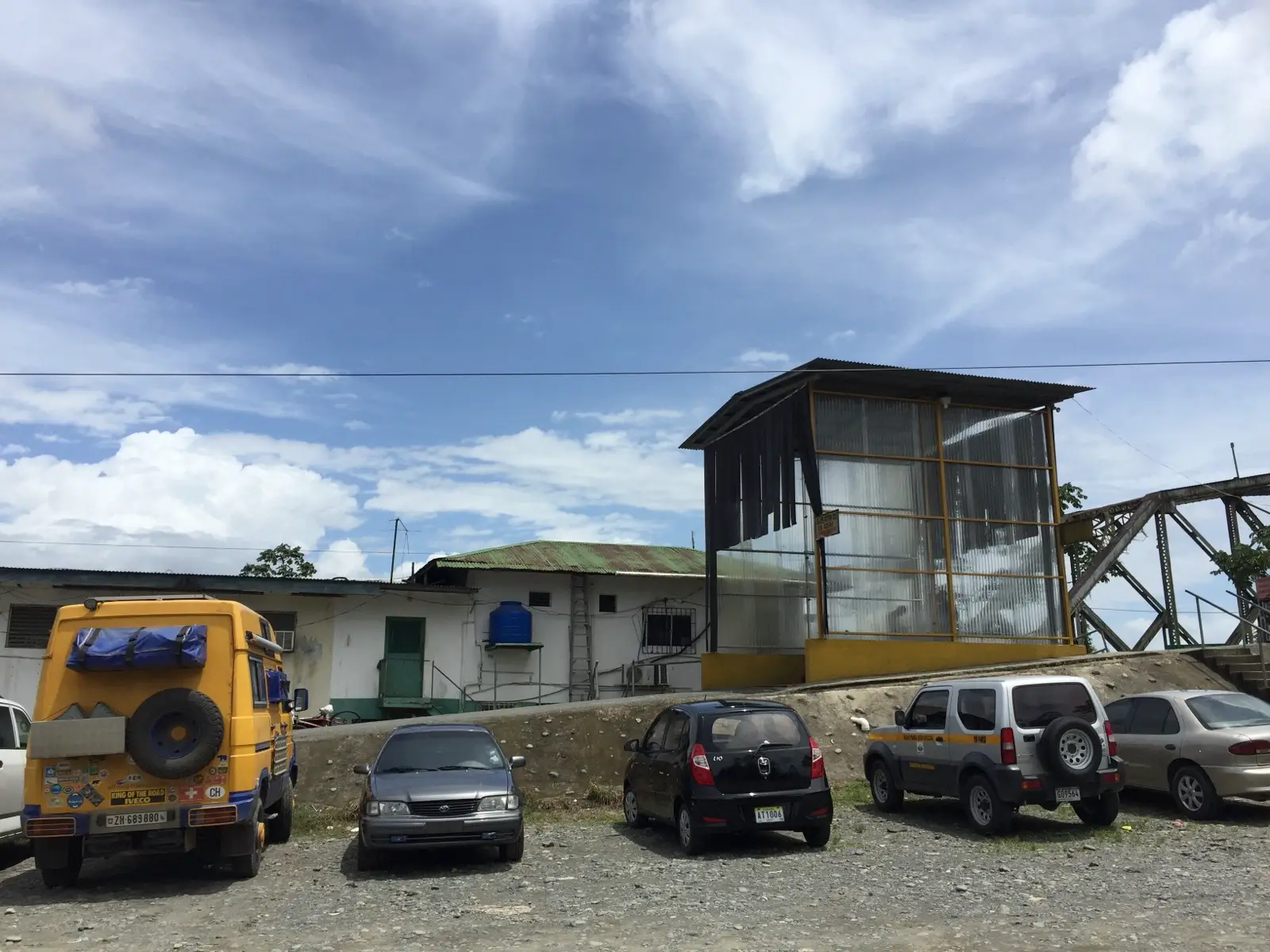
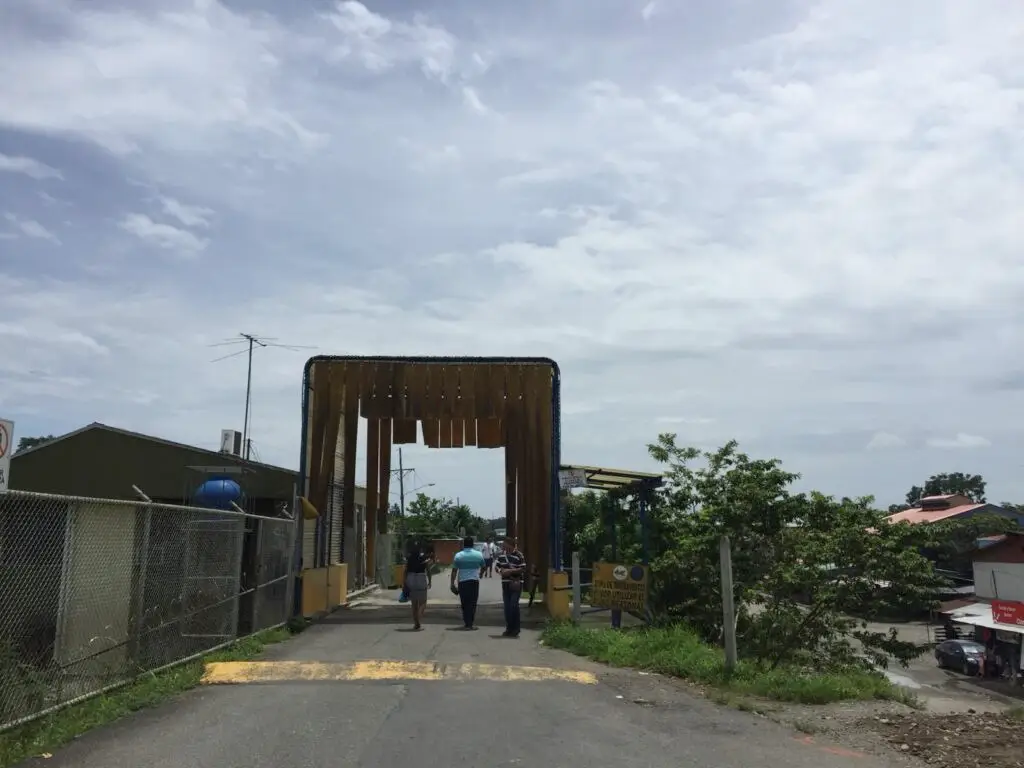
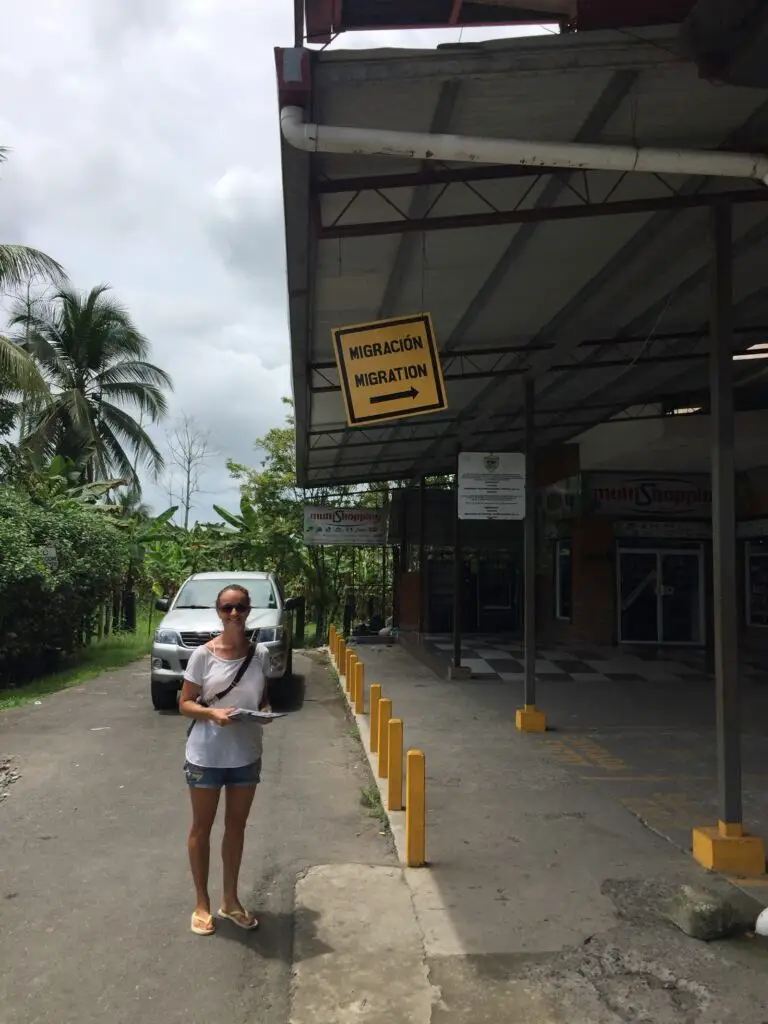
The next and last time it’s our turn in Panama, just a few kilometres after the border. Panama is very strict about speed limits, and strangely, many roads outside towns have a maximum speed of only 40 km/h! That almost became our undoing about 15 minutes after the border. We were “lasered” at 67 km/h. Yes, you read that right, the traffic police in Panama use laser guns! That was supposed to cost 50 US dollars. The officer sees in Christoph’s passport that we only entered today and asks how long we’ve been here. “20 minutes at most,” we say. “Ohhh,” he replies, says he has to write us a ticket and explains that we have until we leave the country to pay it – and starts writing. We’re disappointed in ourselves for not paying attention, and about the pointlessness of a 40 km/h limit on this dead-straight, well-built road. The officer disappears briefly, and I think at that moment he got the OK from his colleagues – there were three or four officers in total – to let us go, because when he comes back he explains that he won’t issue us a ticket, but we should watch the speed limits! We can hardly believe it, are speechless at first and thank the friendly officer profusely for treating us so kindly on our first day in Panama.
On the way back through Costa Rica, Nicaragua, Honduras and Guatemala there are no police or military checks. Only in Mexico does it get fun again. On the drive from La Mesilla to San Cristóbal de las Casas in Chiapas – that’s 176 km – we pass three military checkpoints, one police check and a very modern police checkpoint. The three military checks are, as we’re used to from Baja California, curious young men who simply want to see what a camper looks like inside. The police check just looks us over from outside and waves us through without asking anything. At the modern, still very new-looking checkpoint that everyone has to pass through, we feel as if we’re at a toll station. You drive up to the barrier, where you have to press a buzzer that randomly decides whether you’ll be checked or can drive on. A green or red light shows whether you’ll be checked or not. Ours lights up red, of course. “Great,” we think, and an above-average-sized Mexican (probably the tallest Mexican of all time) asks us to open the sliding door. But there are only the usual routine questions we always get: where from? Where to? Pets? Tobacco? … etc. From such a professional, even almost threatening-looking checkpoint, I had almost expected them to make us empty half the car, but nothing. Here too we’re sent off with “Buen viaje”.
Our conclusion
Apart from the situation in Nicaragua, we’ve had only positive experiences with the police and military. People treated us in a friendly and polite way, which may also have had something to do with our camper. I can imagine it being different with a newer and/or larger vehicle, as the experience of our travel friends in the Sprinter showed – 100 US dollars were demanded from them for the same “offence”. All the same, we’d recommend always going into the vehicle with anyone who wants to get in. In theory you don’t have to let them in at all, but we just think it could make us look suspicious if we said no. Police officers and soldiers ALWAYS asked whether they could look inside or come in, though no police officer ever came in – only soldiers. We also always showed laminated copies of our IDs and driving licences. Only once did a police officer in Mexico notice and want to see the original. Seeing it was enough for him; he didn’t take it. That was our experience. But we’ve also heard stories of travellers who had to “buy back” their original documents or had something planted on them during a check. You should be careful in general, but in our experience there’s no need to be afraid. I always start every encounter with a little joke, which usually lightens the mood right from the start. By the way, that also helps at border crossings – and of course it’s easier if you speak a bit of Spanish.