The Police, Your Friend and Helper

Berichte Nordamerika & Mexiko – Foto 5

We get stopped at a police check for the first time in southern Mexico – of all days, on the day we want to leave for Belize! On Baja California there were a few military checkpoints and on the mainland some police checkpoints too. Mostly we were waved through, occasionally asked where we were coming from and where we were going. Sometimes a particularly curious police officer wanted to take a look inside our camper, Muggl. But we only experienced a real police check after about 40,000 kilometres. Nothing in the USA, nothing in Canada!

They've got a new toy

It’s Tuesday morning, 20 February. In Chetumal we’ve prepared for today’s border crossing into Belize and are driving south on Avenida Insurgentes when a policewoman stops us. “Great”, we think, “that’s all we needed.” On the very last day they get us, and I brace myself for negotiations with corrupt police officers. The young officer says we were going too fast, grinning as she says it. I ask how fast we were going, but get no answer. I can’t imagine we were speeding, unless this wide avenue were absurdly a 30 zone. I’d believe anything of the Mexicans. We’ve only driven about four kilometres, and Christoph always warms Muggl up very slowly. So I ask again how much over the limit we were. Again no answer. The policewoman seems very amused, and somehow I had imagined a Mexican police check differently.

A police officer steps out from behind her, also grinning, and says we were driving too fast – but he doesn’t tell us how fast either. It all seems very strange to me. When the officer steps aside, I see the policewoman again, holding a laser gun that she’s aiming at the next vehicle. Now it all makes sense: they’ve just been given new laser guns and think the new toy is great fun. We’re handed a slip of paper asking us to please respect the speed limits in built-up areas, and they wish us a good journey and a nice day. We’re speechless but happy at the same time, and leave Mexico without having met a single one of the infamous corrupt police officers.

They do exist after all

In Belize, Guatemala, El Salvador and Honduras the police leave us completely alone. Although there was a lot of police presence and many checks in Guatemala, tourists are of no interest whatsoever. We actually meet the first corrupt police in Nicaragua, and I’m a little surprised that despite the unrest in the country they still have time to rip off tourists! It’s Wednesday morning, 16 May, and we’re leaving León heading south. At the edge of town two police officers stop us. One comes to the window and says we drove over a solid line. Of course, I say, you have to here, otherwise you can’t change lanes – and we want to go to Granada, not León, because that’s where we’ve just come from. A short back-and-forth discussion; he wants 20 US dollars from us and waves a yellow slip of paper meant to make the whole thing look official. I say we have no cash and ask for a bank payment slip, then of course we’d pay our fine properly. He walks away and briefly discusses with his colleague, then we’re waved on. Nice try.


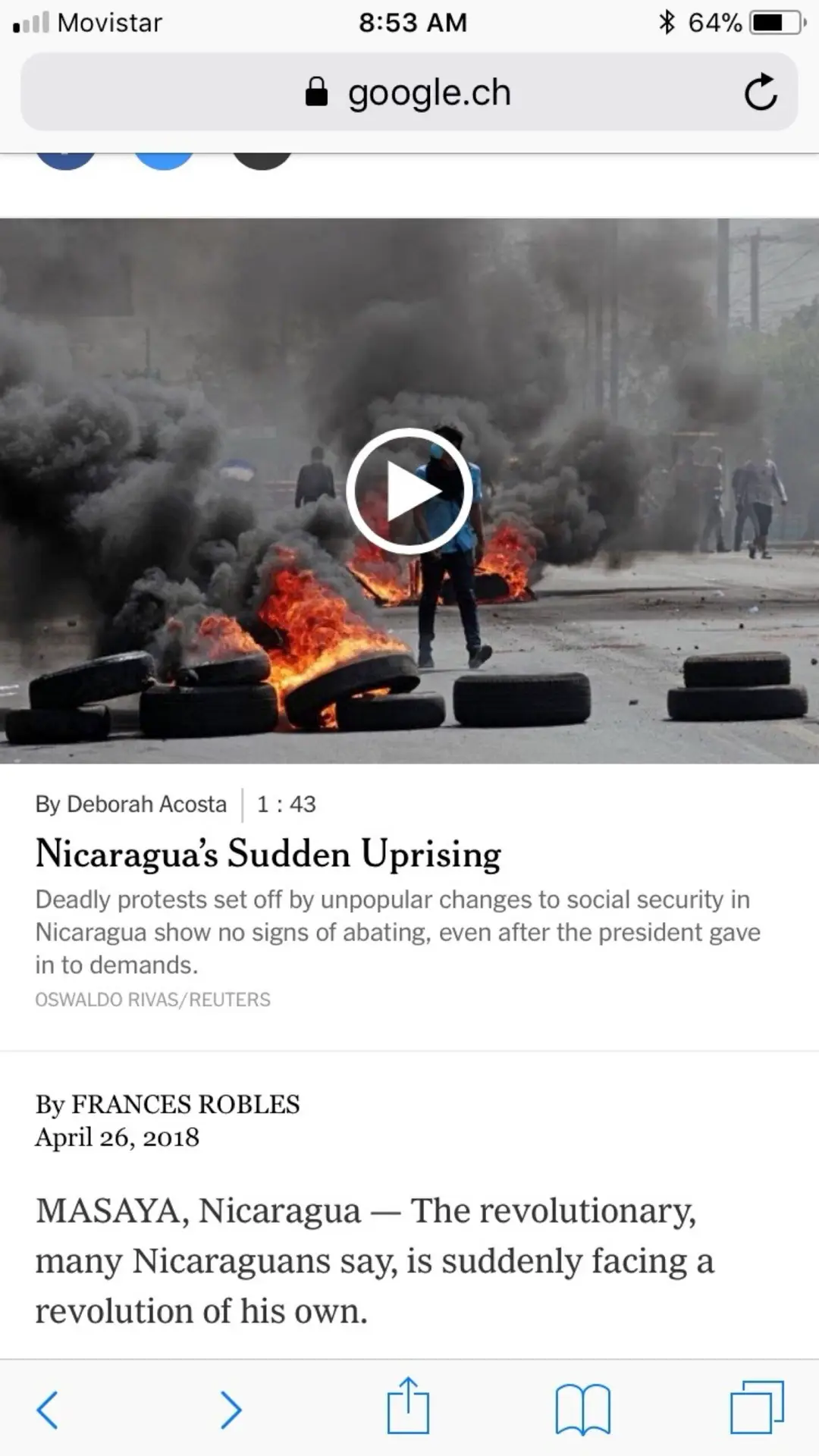
We immediately warn the other overlanders we met in León, because they want to head the same way the next morning – and sure enough, one of them gets caught too. They tried it with 100 US dollars. Must be the Sprinter. Muggl’s age and the fact that he’s already so scratched and dented work in our favour here, lowering the bribe somewhat. But the two of them do as we did, ask for a payment slip and are sent on their way. When we drive back through Nicaragua six weeks later, with the crisis further advanced, not a single police officer is to be seen anywhere. The police are under the total control of the dictatorial government and therefore enemies of the population, so the police no longer dare to go out on the streets.

The next time the police pay us a visit is on 23 May, on a rainy night at Playa Coyote on the Nicoya Peninsula in Costa Rica. We had a lovely sunny day at the beach, and when it starts to rain around half past seven and it’s already dark, we go to bed. Shortly after nine – it feels like the middle of the night to us because we’ve already been asleep – a police siren with additional disco lighting wakes us up. It feels a little frightening when the police visit you with the full programme. I get out, and Christoph first says to me: “You’ll handle it.” “Are you crazy? You’re coming out with me,” I reply.

The younger of the two officers is very nice and asks whether everything is OK, who we are, what we’re doing and how long we plan to stay. Another, rather grim-looking older officer asks for our passports and disappears with them. We stand under Muggl’s awning and chat with the young officer, who tells us that he has been to Hamburg before – but in autumn, which must have been quite a temperature shock for him! The grim one comes back and lectures us on how dangerous it is here and that robberies and robbery-murders keep happening all over the country. I refrain from saying that we’ve already survived five months in Mexico and almost two in Guatemala. The young officer has already questioned us thoroughly and explains to him that we’ll be leaving tomorrow morning. The grim one asks whether we have any weapons or drugs. We say no, and apparently he believes us, because we’re not searched. He gives us back our passports and mumbles a goodbye before disappearing behind Muggl. The young officer says goodbye with a handshake and wishes us a good night and a good onward journey.

And the next one follows right away in Costa Rica. On 4 June we’re camping with other overlanders in the middle of San José, at the end of a road behind a Walmart surrounded by green meadows. We’ve only been parked for an hour, it’s already dark, when five police officers arrive on three motorbikes. And I say: “Good that they’re coming now and not knocking us out of bed in the middle of the night.” They ask where we’re from and want to see our IDs. It isn’t good that we’re parked here, they say; we should rather move over to the Walmart car park, where there’s a security guard – that would be safer. We had already decided the Walmart wasn’t an option for us, and I reply that we’d rather stay here because it’s much quieter and not as brightly lit as the Walmart car park. Besides, there are two of us. They’re not thrilled, but they let us park here and disappear again. We actually have a very quiet night, and in the morning around seven a new team comes by, this time four officers on two motorbikes, to check that we’re still alive and all present. “Is everything OK?” they ask. “Yes, everything’s great,” we answer. One of the officers even says goodbye with “Auf Wiedersehen” and “Gute Reise” in German!

The next and last time it’s our turn in Panama, just a few kilometres after the border. Panama is very strict about speed limits, and strangely, many roads outside towns have a maximum speed of only 40 km/h! That almost became our undoing about 15 minutes after the border. We were “lasered” at 67 km/h. Yes, you read that right, the traffic police in Panama use laser guns! That was supposed to cost 50 US dollars. The officer sees in Christoph’s passport that we only entered today and asks how long we’ve been here. “20 minutes at most,” we say. “Ohhh,” he replies, says he has to write us a ticket and explains that we have until we leave the country to pay it – and starts writing. We’re disappointed in ourselves for not paying attention, and about the pointlessness of a 40 km/h limit on this dead-straight, well-built road. The officer disappears briefly, and I think at that moment he got the OK from his colleagues – there were three or four officers in total – to let us go, because when he comes back he explains that he won’t issue us a ticket, but we should watch the speed limits! We can hardly believe it, are speechless at first and thank the friendly officer profusely for treating us so kindly on our first day in Panama.

On the way back through Costa Rica, Nicaragua, Honduras and Guatemala there are no police or military checks. Only in Mexico does it get fun again. On the drive from La Mesilla to San Cristóbal de las Casas in Chiapas – that’s 176 km – we pass three military checkpoints, one police check and a very modern police checkpoint. The three military checks are, as we’re used to from Baja California, curious young men who simply want to see what a camper looks like inside. The police check just looks us over from outside and waves us through without asking anything. At the modern, still very new-looking checkpoint that everyone has to pass through, we feel as if we’re at a toll station. You drive up to the barrier, where you have to press a buzzer that randomly decides whether you’ll be checked or can drive on. A green or red light shows whether you’ll be checked or not. Ours lights up red, of course. “Great,” we think, and an above-average-sized Mexican (probably the tallest Mexican of all time) asks us to open the sliding door. But there are only the usual routine questions we always get: where from? Where to? Pets? Tobacco? … etc. From such a professional, even almost threatening-looking checkpoint, I had almost expected them to make us empty half the car, but nothing. Here too we’re sent off with “Buen viaje”.

Our conclusion

Apart from the situation in Nicaragua, we’ve had only positive experiences with the police and military. People treated us in a friendly and polite way, which may also have had something to do with our camper. I can imagine it being different with a newer and/or larger vehicle, as the experience of our travel friends in the Sprinter showed – 100 US dollars were demanded from them for the same “offence”. All the same, we’d recommend always going into the vehicle with anyone who wants to get in. In theory you don’t have to let them in at all, but we just think it could make us look suspicious if we said no. Police officers and soldiers ALWAYS asked whether they could look inside or come in, though no police officer ever came in – only soldiers. We also always showed laminated copies of our IDs and driving licences. Only once did a police officer in Mexico notice and want to see the original. Seeing it was enough for him; he didn’t take it. That was our experience. But we’ve also heard stories of travellers who had to “buy back” their original documents or had something planted on them during a check. You should be careful in general, but in our experience there’s no need to be afraid. I always start every encounter with a little joke, which usually lightens the mood right from the start. By the way, that also helps at border crossings – and of course it’s easier if you speak a bit of Spanish.

Border Crossing from Nicaragua to Honduras at Guasaule

Berichte Zentralamerika – Foto 4

Nicaragua to Honduras at Guasaule

On Saturday 23 June 2018 we actually didn’t want to cross here again – entering Nicaragua had taken so long back then, and the good 3.5 hours are still all too fresh in our memory. But it’s now the shortest route out of the country, and since we’re still travelling with Aiden and Joanna, we decide to take the shortest and least complicated route. As so often, we drive past a long queue of lorries and join the line just before the faded light-blue “Bienvenidos” (welcome) arch. Lorry drivers are very patient people, and in Central America they have to be. An inspector at a small hut wants to see our passports and the TIP. We park on the right, once again in front of the light-blue building that houses immigration and customs – let the ordeal begin!

Of course we first get the wrong queue and are sent to the other end of the room, just like at the supermarket, where you always pick the slowest line. Fortunately the queues aren’t long and things move quickly. Somehow everything seems better organised today, and more booths are staffed. We pay $4 and are checked out in the system – unfortunately there’s no stamp. Next we have to find a vehicle inspector again, which turns out to be easy this time, because like last time he’s wearing a light-blue polo shirt with an orange high-vis vest. As we get closer, we recognise him as the nice man from back then who inspected Muggl when we entered. A police officer comes along, and they take a look inside the car, including the cool box. The police officer takes notes, and in a few minutes we’re done.

As always, the last stop – customs, where we stamp Muggl out – is back in the building. The woman this time is very friendly, and we’re done quickly here too. We can hardly believe it and wonder whether we’ve forgotten something, but after 45 minutes everything is done. On the bridge between the borders, a young woman from the tourist office briefly asks us about our travel plans: which regions we want to visit, what activities we’ve planned, where we intend to stay overnight, how long we want to stay and finally how old we are.


The Honduran side of this border is very run-down. A huge gravel area with potholes so big that a mid-size car could disappear in them lies opposite the immigration building. Everything is crammed with lorries, so we have to park there too. As soon as we drove in we were besieged by border helpers who want to help us with the paperwork, and young lads who probably want to become one some day offer to watch our cars – all for a propina (tip), of course. We politely decline, say we have a dog who keeps watch, and join the long queue in front of the officials’ booths. It goes quickly; a young official deals with us, and after about 20 minutes we’re done here.

Customs, where we get the papers for Muggl, is at the back of the row of booths. Without us noticing, Aiden has already wangled something, and we don’t have to queue there but are waved into an office behind the booths. A woman sits at a desk there and greets us kindly. Here we all do the TIP for our vehicles. She needs two copies each of the vehicle registration, Christoph’s passport and driving licence, and fills in a form. Finally she stamps Christoph’s passport. We also have to pay $35 for the three months (there’s nothing shorter). We’re back in the land of copies. Next I have to make copies of the form she issued (1x) and of the stamp in Christoph’s passport (2x) in a small hut opposite the building. Getting there is like running the gauntlet, as I have to pass through three rows of lorries queuing towards Nicaragua, cross the car park and dodge countless puddles. When I get back, she takes the copies and hands us our TIP. Oh, it would often be so much easier if they just put a photocopier in there. In Honduras car insurance isn’t compulsory, so we don’t even bother looking for an insurance office – that would be a waste of time, we’ve learned that much. Total time: surprisingly only about 1 hr 40 min.

Border Crossing from Costa Rica to Nicaragua at Peñas Blancas

Berichte Zentralamerika – Foto 5

Costa Rica – Nicaragua at Peñas Blancas

On 21 June 2018 at midday we meet Joanna and Aidan, our compañeros with whom we want to travel through Nicaragua, in La Cruz, 20 km before the Nicaraguan border. At 12:15 pm we arrive at the border and first have to pay our $8 tourist tax at a small kiosk to the right of it. Then we pass the queue of lorries that has formed on the right past the border and park opposite the immigration building, where we check out of Costa Rica. There we can also make a copy of the TIP straight away and then – how could it be otherwise – have to go 300 m back to the building where we got the insurance and the TIP when we entered. At the same counter the reactivated TIP is suspended again, as we don’t yet know whether Nicaragua will let us in and out again to the north, or whether in the worst case we’ll have to come back. But that’s all no problem; the woman at the counter is very nice and quick, so we’re back outside after a few minutes.

Costa Rica - Nicaragua bei Peñas Blancas – Foto 2

Off to Nicaragua – but first, as always, we have to pass the last Costa Rican, who is usually positioned a few metres from the border and checks that we really have done everything and have every stamp. We get closer to the Nicaraguan border; a man wants to see our passports and explains that we now have to drive through the fumigation, then park on the left and pay for the fumigation in the building next to customs. All clear! It’s not so confusing for us here because we’ve been here before. By chance we park exactly where we parked last time and go to immigration first. A more or less friendly, plump young woman first has to plug in her mobile phone and then rummages around under the desk. She asks for our passports, asks (mumbling heavily) what we do for a living and at which border crossing we want to leave. We don’t know the latter yet, because we don’t yet know how and where we’ll get through the country. We pay $24 and are now officially in crisis-hit Nicaragua.

Costa Rica - Nicaragua bei Peñas Blancas – Offroad Travelers

Now it’s Muggl’s turn. Behind the building we stop at the seguro (insurance) counter. A woman is interrupted in her crocheting, and the insurance certificate for 30 days and $12 is quickly issued. As we’re already on the other side of the building and there was no vehicle inspector in sight at the front, we immediately look for the person we have to pay the fumigation to, but the counter is empty. We ask the woman next door, who sits at customs, and she says he should actually be there. She comes out from behind her desk, goes to the fumigation counter and knocks hard on the glass. A man in the glass booth jumps up, and all four of us are very amused, as we’ve already walked past it three times. The fumigation costs $3, and the sleepy man issues the corresponding document.

Now comes the hardest part: we have to find the vehicle inspector, but once again there’s nobody there. People are very helpful; someone says he’ll look for him for us, someone else says he’s on his lunch break. Well, those are the best conditions! But after about 15 minutes someone actually comes to us with the vehicle inspector in tow. He first hands us a piece of paper and turns around again. I just think: “Nooo, please don’t go away!” I fill in the form, and luckily the inspector is back. He takes a quick look at Muggl from outside and then asks if he can get in. Sure, we have nothing to hide. A brief look is enough for him; he asks whether we have a drone, which we deny, and we’re sent off with a “Buen viaje”. Now just customs, where we have to show the insurance, passport and driving licence and finally get Muggl’s TIP. Total: 2 hrs 15 min. Totally relaxed, and no sign at all of the unrest in the country.

Border Crossing from Honduras to Nicaragua at Guasaule

Organisation & Planung – Foto 4

Checking out of Honduras goes smoothly. We park our vehicle in front of a blue building where it is checked out. On the other side of the road we get our exit stamp at immigration. After just 15 minutes everything is done, and we continue towards the bridge. A lorry driver waiting in the queue advises us to simply drive past. That means we first have to cross a small hill and switch to the oncoming lane so we don’t have to wait. An official in front of the bridge checks that we’ve completed all the formalities and that our documents have the exit stamp for us and our vehicle, Muggl.

The Nicaraguan side seems chaotic – and it is! First a gatekeeper gives us a declaration document, which is important so that you don’t have to go back to the very start of the queue. An official checks our passports, followed by a female official who asks whether we applied for anything beforehand. We say no, as we didn’t know about anything. Next we go to fumigation, where we pay three dollars and Muggl gets sprayed a little.

Now it gets really exhausting: at immigration we’re dealt with straight away, but need various copies: two of the passport photo page, two of the page with the Honduran stamps, one of the vehicle registration and one of Christoph’s driving licence. We get the copies quickly in a small copy shop opposite. We bring our papers back, hand over our passports and wait. After half an hour another official comes back with our documents and complains that the copies are too small. We had copied both passports on one sheet and cut the pages apart to save paper. In the end he accepts it, but we copied the wrong stamp page of Christoph’s passport, so back to the copy shop.

When I come back, the official is still sorting the papers and staples Christoph’s and mine together separately. Then the questioning begins: occupation, marital status, age, vehicle make and type, colour and number plate, how much cash we have on us (after deducting the immigration fee, 26 dollars), how long we want to stay, where we’re going in Nicaragua and where afterwards. He even wants to know when we left Germany, when we entered the USA and how long we were there. He notes everything on the copies of our passports – now I understand why he wanted so many pages!

After the interrogation he disappears behind a glass door with all the documents, including our passports. He points out our passports to a colleague, who just shrugs. We feel like the first Germans ever to enter Nicaragua – there’s no recognisable system! At some point he comes back with a new form, sits down in an empty customs booth and fills it in. I suspect he’s transferring the answers he first scribbled on the copies of our passports onto the form.

15 minutes later he leads us outside and points to an elderly gentleman in an orange high-vis vest who will inspect our vehicle together with a police officer. He says we’re almost done – I don’t believe him! We wait another 10 minutes until the gentleman is free. At least he has a sense of humour – the first person with a sense of humour we’ve met today. He doesn’t want to check the chassis number; he and a young police officer who has joined us in the meantime are curious. I open the sliding door, the elderly gentleman looks around and asks: “What’s that lying in the hammock?” We have a little pink pig in a hammock above the bed. I say: “Oh dear, it doesn’t have a passport.” He laughs. They want to know whether we have a drone and look at my camera. They ask what Christoph does for a living and whether we’re reporters. The police officer looks in the cool box and the wardrobe and wants to look in the bag under the seat where the Dutch oven is stowed.

Inspection done, but far from finished. 1.5 hours have passed since we first went to make copies. During the waiting times, when the official kept disappearing with our documents, I wrote this report. We went to get money twice, once córdobas and once US dollars – better not tell him that, it would mess up all his notes. We wait another 20 minutes until the official we first saw finally processes our immigration. We pay 24 dollars (12 dollars per person) and after 3 hours we’re done! Wait, no, we still have to go to customs to check Muggl in and to the station where luggage is normally scanned, and explain that we have no luggage.

Grenzübertritt Honduras nach Nicaragua bei Guasaule – Offroad Travelers

Done? No, because for Nicaragua, unlike Guatemala, El Salvador and Honduras, car insurance is compulsory again. So off to the neighbouring building, where the bank is. There the insurance clerk has simply moved her office outdoors and sits at a small table in the shade. It takes 5 minutes to issue the insurance certificate, and for 12 US dollars it’s valid for 30 days.

Total time: 4 hours and 15 minutes, 3.5 of them at the Nicaraguan border.

Driving Through the Nicaraguan Revolution

Zentralamerika – Foto 26

Rain, rain, rain ...

The incessant rain slows our drive through Costa Rica towards the Nicaraguan border. We still have 150 kilometres ahead of us and are making only slow progress. Finally we spot a small roadside restaurant and take the opportunity for a break. The owner kindly directs us to park under the canopy so we stay dry getting in and out. We order something to eat and hope the rain will ease. But it doesn’t get any better – it’s pouring buckets, no, bathtubs, torrents, whole waterfalls. At this moment we think of a friend who is also travelling in Costa Rica and assured us a few days ago: “The rainy season here isn’t that bad at all.” I wonder whether he’ll change his mind after this night.

Meanwhile the animals are also seeking shelter in the restaurant: grasshoppers, spiders, geckos – everything is fleeing the rain. The English say “it’s raining cats and dogs”, but in Costa Rica you could safely say “it’s raining elephants and hippos”. It really beats everything we’ve experienced so far. Eventually we can finally drive on and reach La Cruz around 11:30 pm, only 20 kilometres from the Nicaraguan border. We had actually wanted to be here six hours earlier.

Regen, regen, regen ... – Foto 2

But it wasn’t only the rain that held us up. Customs had delayed our onward journey by refusing to release the spare part we had ordered from Germany. Express shipping or not, the Costa Ricans couldn’t have cared less! The parcel sat at customs for over a week, and Manuel, who works at the Iveco garage in San José and is responsible for import and export, had to go to the customs office five times before he finally got it.

Our ignition lock had been causing problems again and again for some time. Sometimes we couldn’t switch Muggl off, even with the key removed. As we didn’t want to break down somewhere in Nicaragua, we decided to replace it. In the end it worked out at the last minute: 20 minutes before our deadline, Manuel arrived beaming with the parcel. Fitting it took only about 15 minutes. Crazy really – days of waiting and then the part is replaced in 15 minutes!

It’s Thursday morning, 21 June, and we’re waiting in a petrol station car park in La Cruz for our compañeros. We won’t cross Nicaragua alone. The tanks are full, water and food stocked up. While waiting I ask lorry drivers coming from the north how the drive through Nicaragua was. “Difficult,” they answer. We shouldn’t drive alone under any circumstances and should preferably join a Costa Rican truck convoy. You can recognise them by their number plates and big yellow plates with the country code CR on all sides of the trucks. They would take us between them and have their alternative routes. Not a bad idea! For weeks I’ve been working on a route through the crisis-hit country, based on reports from other travellers, news and traffic reports.

Regen, regen, regen ... – Foto 4

Shortly before 12 noon we’re ready to go and reach the border 20 minutes later. We get out of Costa Rica quickly, and entering Nicaragua isn’t really difficult. A bit chaotic and disorganised, but that seems to be normal here. We first have to wake up the man at the counter where we pay for the fumigation. The woman with whom we take out the insurance for Muggl is crocheting calmly, and the inspector has to be fetched from his extended lunch break. People here are relaxed, no sign of revolution. Nobody scares us or asks whether we’re sure we want to go to Nicaragua. Aiden and Joanna take a little longer at the border because they have a dog with them. Semuc, the Mexican, has to be properly registered, because a four-legged friend has a passport too. Around half past two, after some waiting and a lunch break, we’re finally done. That day we only drive about 10 more kilometres to a small beach on Lake Nicaragua, where we enjoy the sunset with meatballs and pasta and go to bed early. Aiden has organised an escort for us, so the alarm goes off at half past four! I can’t remember the last time I got up that early. Quickly drink coffee, stow everything and off we go … almost! Because around half past midnight it poured for an hour and softened the ground. A stream ran past Muggl. The water has seeped away, but the ground is still muddy. Aiden gets stuck and can’t get back up the slight incline in reverse. So we hitch Muggl up behind and pull. We’re always amazed at how easily he can pull much heavier vehicles.

Regen, regen, regen ... – Foto 3

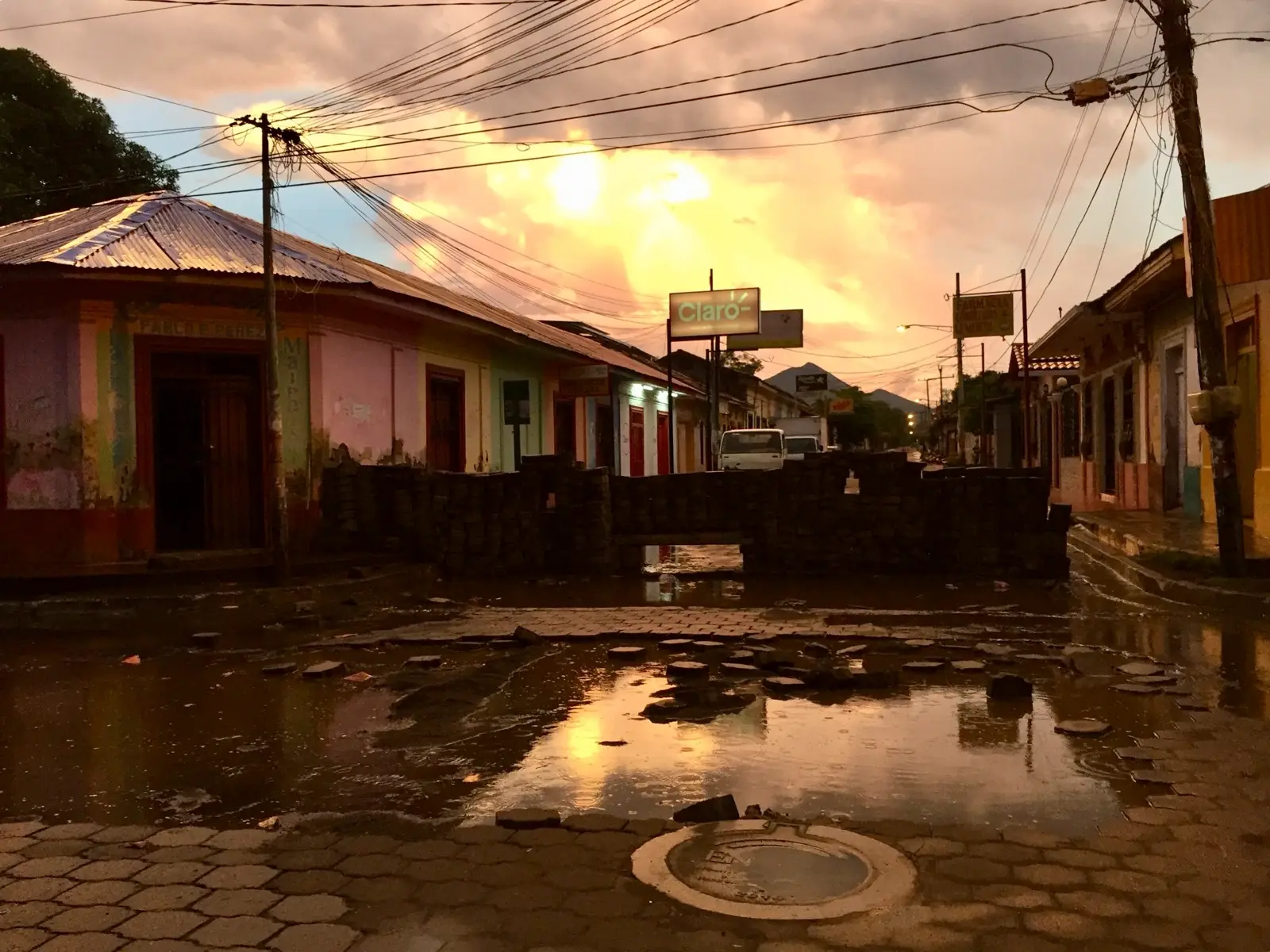
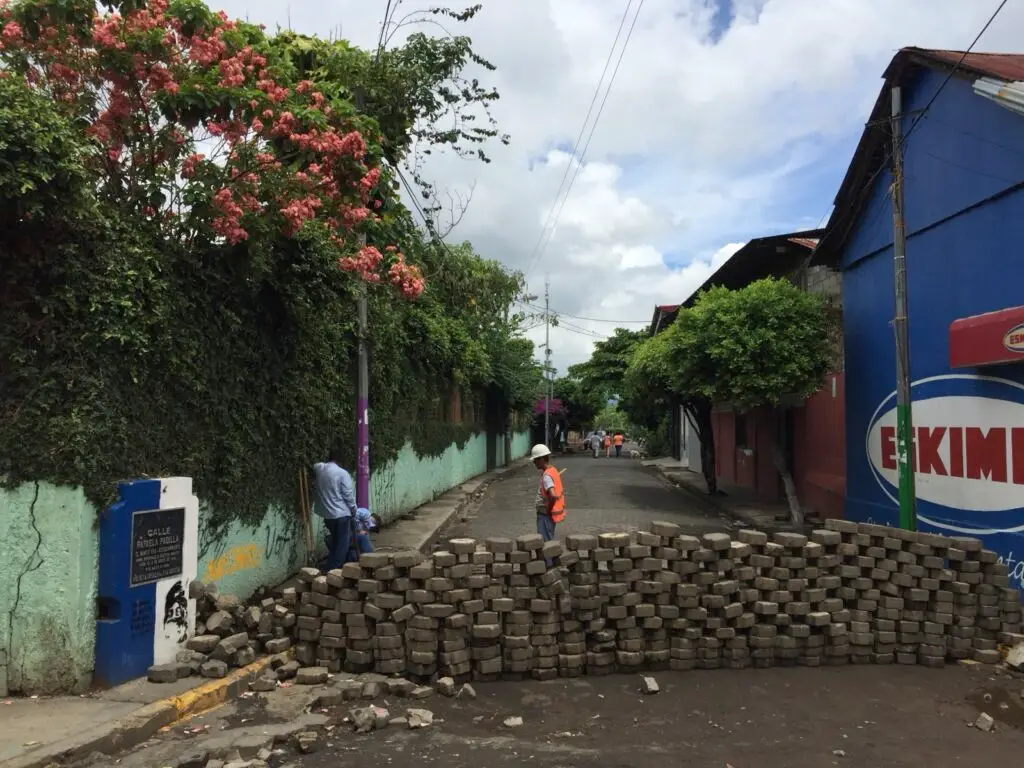
5:15 am – 15 minutes late we arrive at the Puma petrol station in Rivas, where we meet our first “guide”. The man is standing next to a motorbike and waves to us. He introduces himself as Roni and greets us warmly. We follow him for about 15 kilometres, zigzagging through three surrounding villages, because in Rivas there are two roadblocks (called tranques) set up by supporters of the student movement to block transport traffic. Aiden is in a WhatsApp group of Nicaraguans who guide tourists through the country and help them with detours. Roni is one of them. The evening before we had received the message that a barricade had been removed by government supporters, but shortly afterwards the information that it had been put back up. The detour goes smoothly, and Roni says goodbye even more warmly than he welcomed us. He won’t take the beer we want to give him. We should save it for the next one.

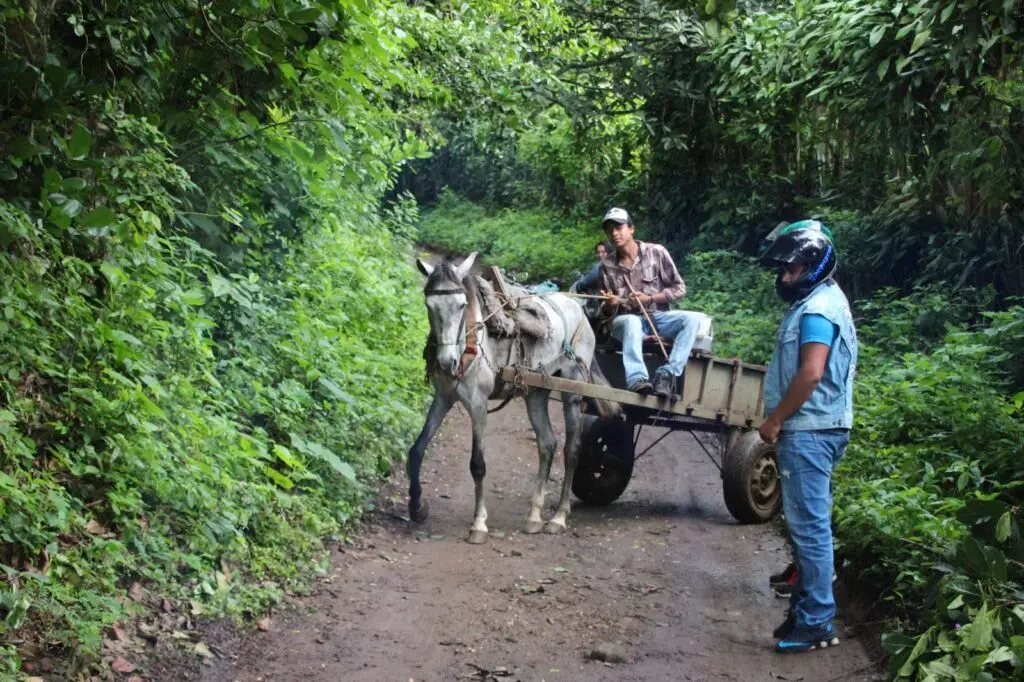
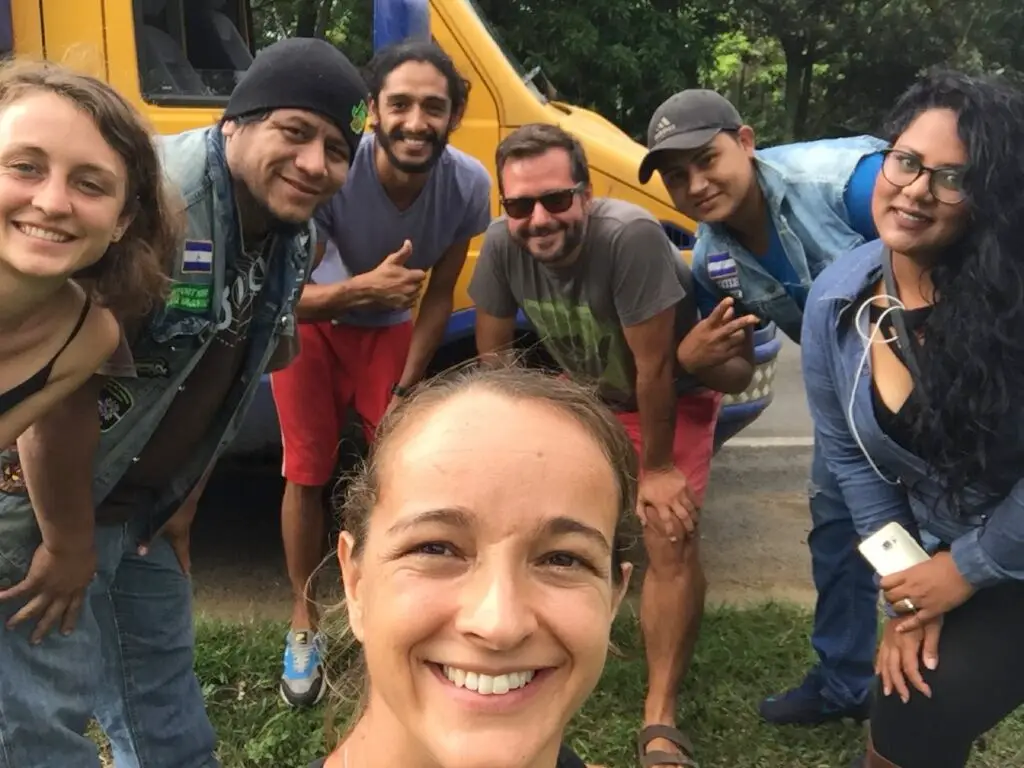
7:25 am – we meet the next “guides” 53 kilometres further on at the entrance to El Rosario. What a surprise, there are three of them: Frank, the vice-president of the Nicaraguan motorcycle club “Güegüenses Nicaragua”, together with Jorge and Betsy. The three accompany us for 18 kilometres to just before San Marcos along narrow farm tracks, where at one point a horse cart even has to be lifted aside so we can get through. We have to manage the last 135 kilometres of today’s stage alone. So we go through our onward route with Frank, and he thinks we shouldn’t have any further problems. 8:25 am – we say goodbye, take souvenir photos and get rid of our beer.

Regen, regen, regen ... – Foto 6

Shortly after San Marcos we pass two police checkpoints that have been taken over by masked, armed young men. Later someone tells us that they don’t belong to the student movement but are just exploiting the situation. We’re not stopped at either. The first ones wave us through, and the second ones just stand by the road watching the traffic.

10:28 am – 90 kilometres later we’re stuck in a queue at the entrance to La Paz. Street vendors walk along the line, and we ask what’s going on. Roadworks? An accident? It’s actually a tranque, a roadblock. A woman says we could drive to the front and pay 20 or 30 córdobas (54–82 euro cents) or simply wait. They let vehicles through every hour. We decide to drive past the lorries and pay if necessary. When we get to the front, two of the “blockers” come towards us. When they read “Turista + Alemania” on our windscreen, the barricade is immediately cleared aside and we’re allowed through without paying. La Paz is a small town, and we decide to drive through the village rather than take the bypass, as we suspect more roadblocks there. Almost out of town, our journey is delayed again to feed an almost starving puppy. He’s so busy with a mango that he only notices the bowl of food and me when I push it under his nose. He wags his tail like crazy and eats quickly. The mango is instantly uninteresting or serves as dessert. We always take time for things like that!

Regen, regen, regen ... – Foto 5

11:14 am – after about six hours and 263 kilometres we reach Malpaisillo, where we stay with Jimmy, a friend of Aiden and Joanna. Jimmy is 22, recently dropped out of university and opened a bar. He proudly shows us his new floor made of black sand. We hadn’t expected to make such good progress. We could actually have driven the rest too, but the stopover at Jimmy’s was arranged, and he’s happy we’re here. So we settle in and almost feel as if we’re doing something forbidden. We hide in a bar during the day, let the owner fill us in on the situation in the country and wait for the next morning to set off early again. In the afternoon Jimmy takes us on a little tour of the town. It’s more of a village, and even this small place recently got a tranque, a roadblock that serves more as a memorial to show solidarity with the students. As we’ve already covered most of the country and it’s only 77 kilometres to the border the next day, we don’t start quite so early. The north of the country is less densely populated and very flat, so it’s mainly used for farming, Jimmy explains.

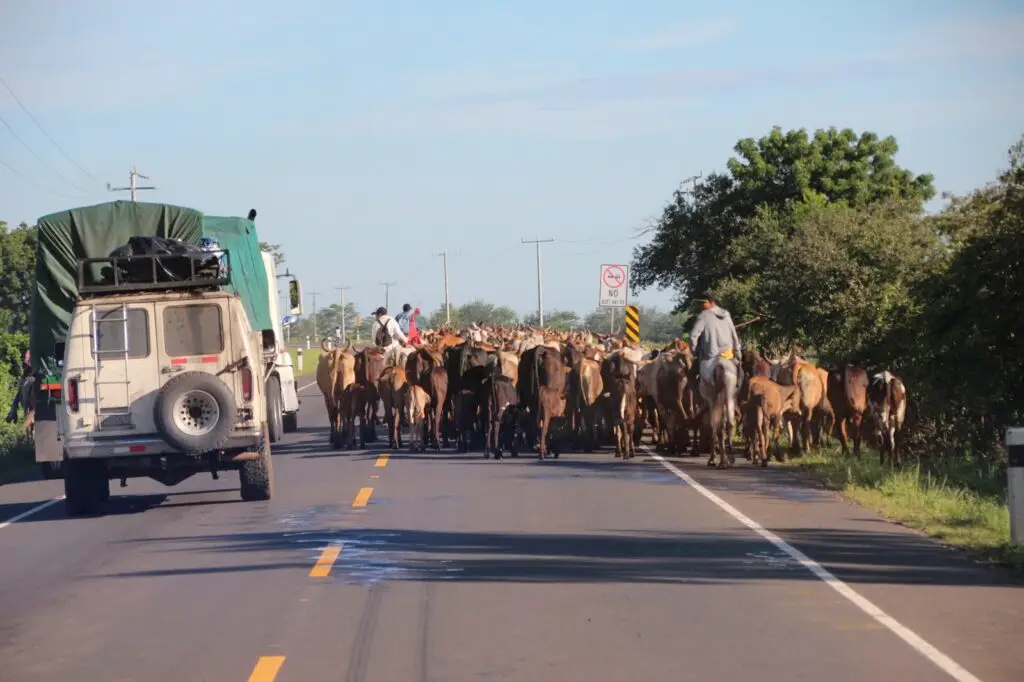
6:30 am – our only roadblocks that day are three herds of cattle, which are quickly gone again. The drive goes smoothly and without any sign of tranques. As always there’s a queue of lorries before the border, and the street vendors are already there too. One tries to tell us that the police probably won’t let us through. But we want to see that for ourselves and, as always, drive past the long queue.

8:09 am – we reach the car park in front of the border building. No police in sight anywhere, neither on the way to the border nor at the border. In fact we didn’t see a single police officer in the whole of Nicaragua, anywhere! Which the Nicaraguans are of course now taking advantage of. A young lad explains to us that they’re all driving without a licence now. Well, if that’s all! The police are under the government’s thumb and are suspected of shooting students and setting houses on fire, which also cost people their lives. So they too are the enemy.

Regen, regen, regen ... – Offroad Travelers

Our conclusion on driving through Nicaragua:

The Nicaraguans went to great lengths for us and were friendly and helpful. We never felt unsafe or afraid. Of course there may be black sheep, like those young men who took over the two police checkpoints. I’ll call them hooligans – and you get those in Germany or Switzerland at football matches, without any revolution. Life here goes on largely as normal. Work continues at roadworks, men put up power lines or mow the verges next to the highways. Heavy traffic is running too, albeit on detours. Neither on entering nor on leaving did we feel that anything was wrong. For weeks beforehand we had monitored the situation, heard and read reports from other travellers, followed newspapers, news and various forums. But in the end it always depends on the people on the ground, because tomorrow everything can be completely different again.