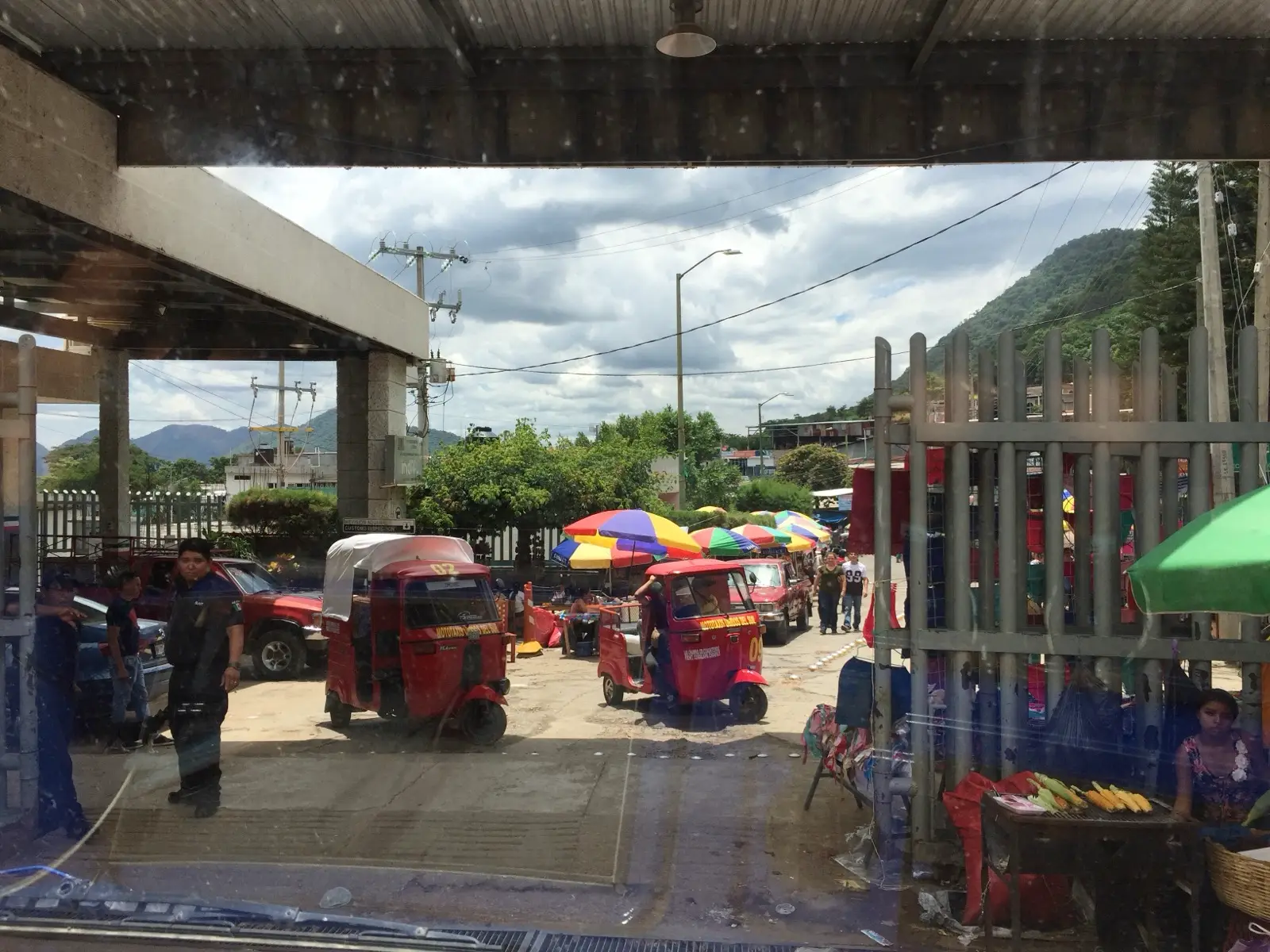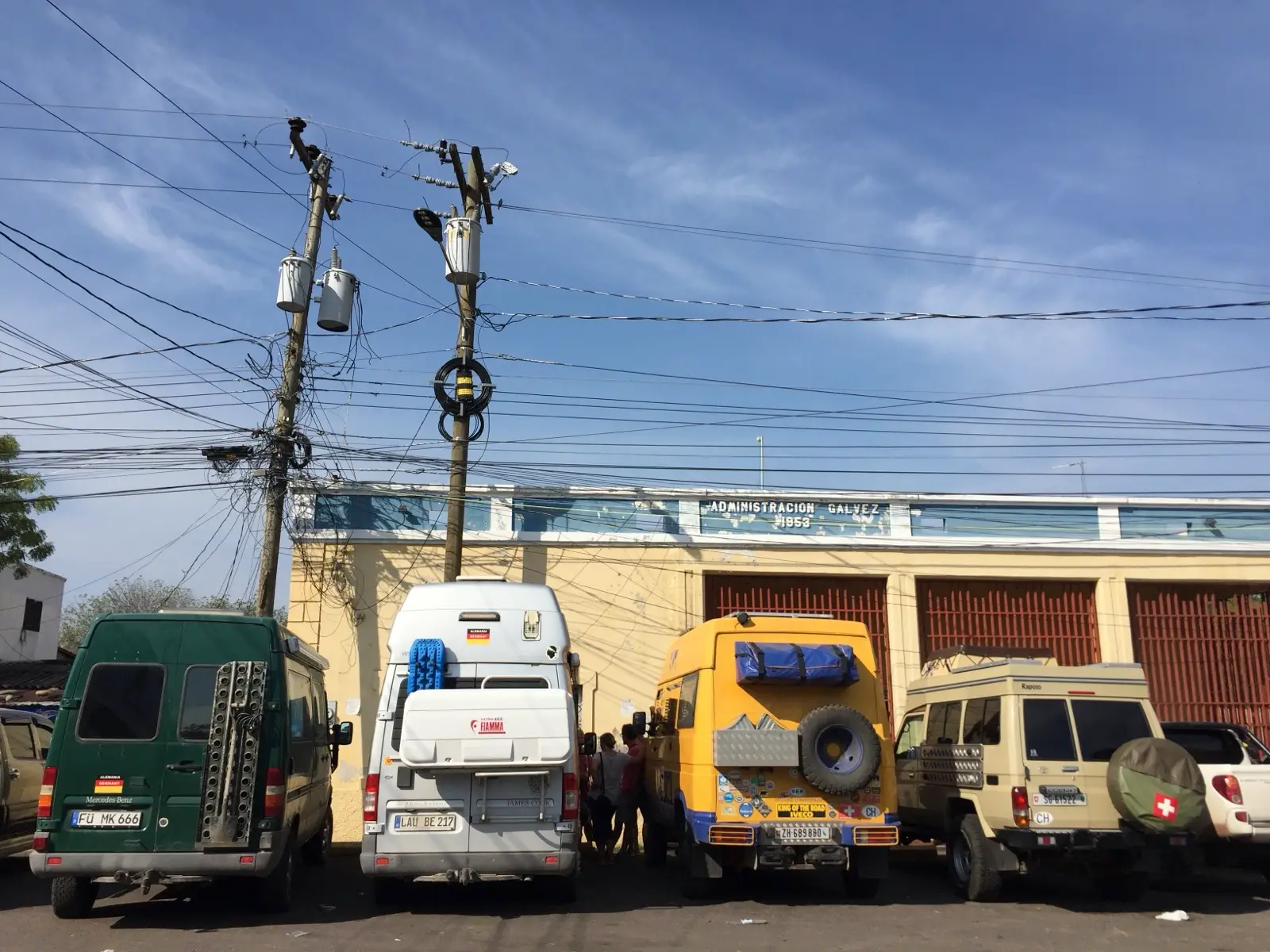
Checking out of Honduras goes smoothly. We park our vehicle in front of a blue building where it is checked out. On the other side of the road we get our exit stamp at immigration. After just 15 minutes everything is done, and we continue towards the bridge. A lorry driver waiting in the queue advises us to simply drive past. That means we first have to cross a small hill and switch to the oncoming lane so we don’t have to wait. An official in front of the bridge checks that we’ve completed all the formalities and that our documents have the exit stamp for us and our vehicle, Muggl.
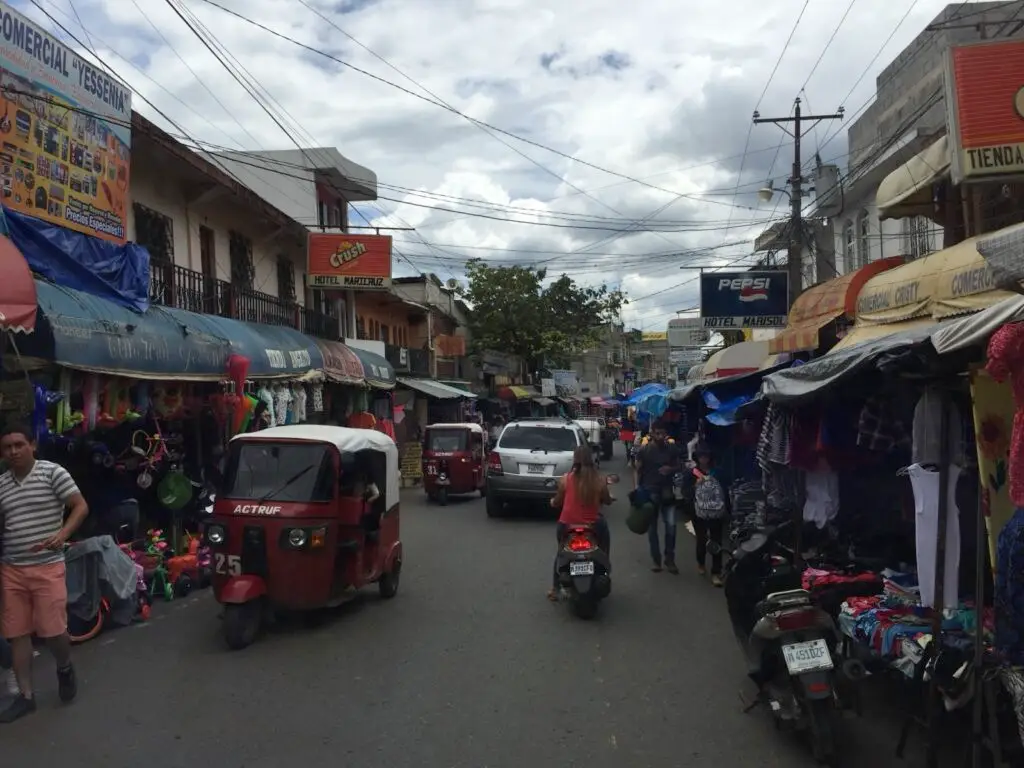
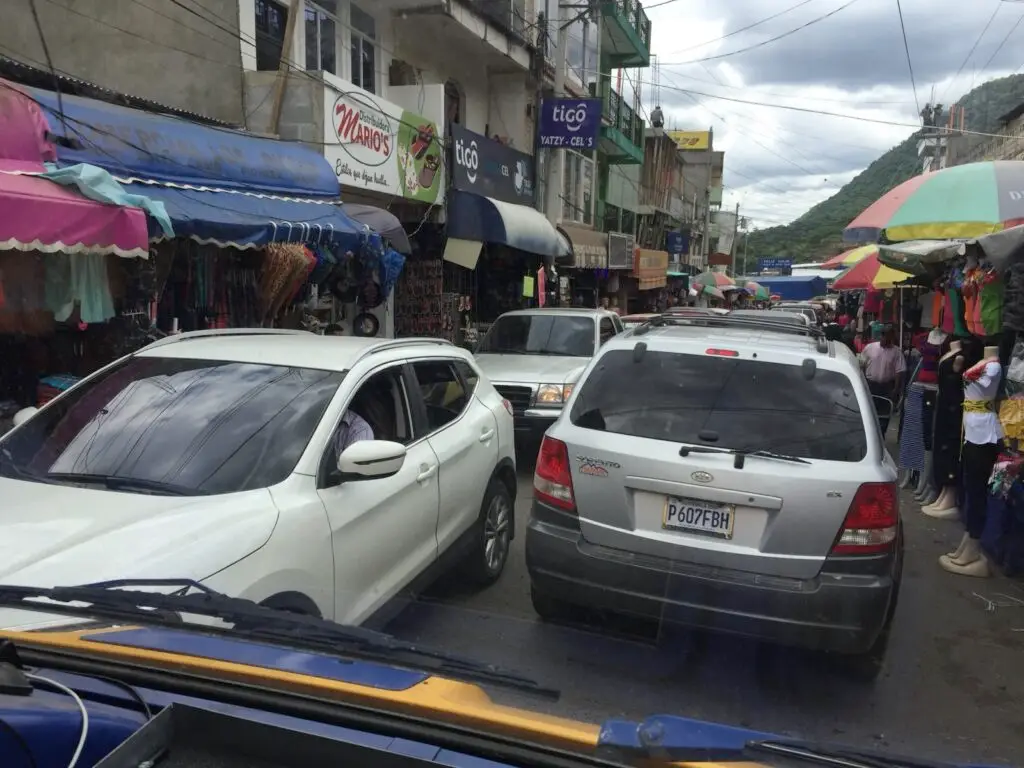
The Nicaraguan side seems chaotic – and it is! First a gatekeeper gives us a declaration document, which is important so that you don’t have to go back to the very start of the queue. An official checks our passports, followed by a female official who asks whether we applied for anything beforehand. We say no, as we didn’t know about anything. Next we go to fumigation, where we pay three dollars and Muggl gets sprayed a little.
Now it gets really exhausting: at immigration we’re dealt with straight away, but need various copies: two of the passport photo page, two of the page with the Honduran stamps, one of the vehicle registration and one of Christoph’s driving licence. We get the copies quickly in a small copy shop opposite. We bring our papers back, hand over our passports and wait. After half an hour another official comes back with our documents and complains that the copies are too small. We had copied both passports on one sheet and cut the pages apart to save paper. In the end he accepts it, but we copied the wrong stamp page of Christoph’s passport, so back to the copy shop.
When I come back, the official is still sorting the papers and staples Christoph’s and mine together separately. Then the questioning begins: occupation, marital status, age, vehicle make and type, colour and number plate, how much cash we have on us (after deducting the immigration fee, 26 dollars), how long we want to stay, where we’re going in Nicaragua and where afterwards. He even wants to know when we left Germany, when we entered the USA and how long we were there. He notes everything on the copies of our passports – now I understand why he wanted so many pages!
After the interrogation he disappears behind a glass door with all the documents, including our passports. He points out our passports to a colleague, who just shrugs. We feel like the first Germans ever to enter Nicaragua – there’s no recognisable system! At some point he comes back with a new form, sits down in an empty customs booth and fills it in. I suspect he’s transferring the answers he first scribbled on the copies of our passports onto the form.
15 minutes later he leads us outside and points to an elderly gentleman in an orange high-vis vest who will inspect our vehicle together with a police officer. He says we’re almost done – I don’t believe him! We wait another 10 minutes until the gentleman is free. At least he has a sense of humour – the first person with a sense of humour we’ve met today. He doesn’t want to check the chassis number; he and a young police officer who has joined us in the meantime are curious. I open the sliding door, the elderly gentleman looks around and asks: “What’s that lying in the hammock?” We have a little pink pig in a hammock above the bed. I say: “Oh dear, it doesn’t have a passport.” He laughs. They want to know whether we have a drone and look at my camera. They ask what Christoph does for a living and whether we’re reporters. The police officer looks in the cool box and the wardrobe and wants to look in the bag under the seat where the Dutch oven is stowed.
Inspection done, but far from finished. 1.5 hours have passed since we first went to make copies. During the waiting times, when the official kept disappearing with our documents, I wrote this report. We went to get money twice, once córdobas and once US dollars – better not tell him that, it would mess up all his notes. We wait another 20 minutes until the official we first saw finally processes our immigration. We pay 24 dollars (12 dollars per person) and after 3 hours we’re done! Wait, no, we still have to go to customs to check Muggl in and to the station where luggage is normally scanned, and explain that we have no luggage.
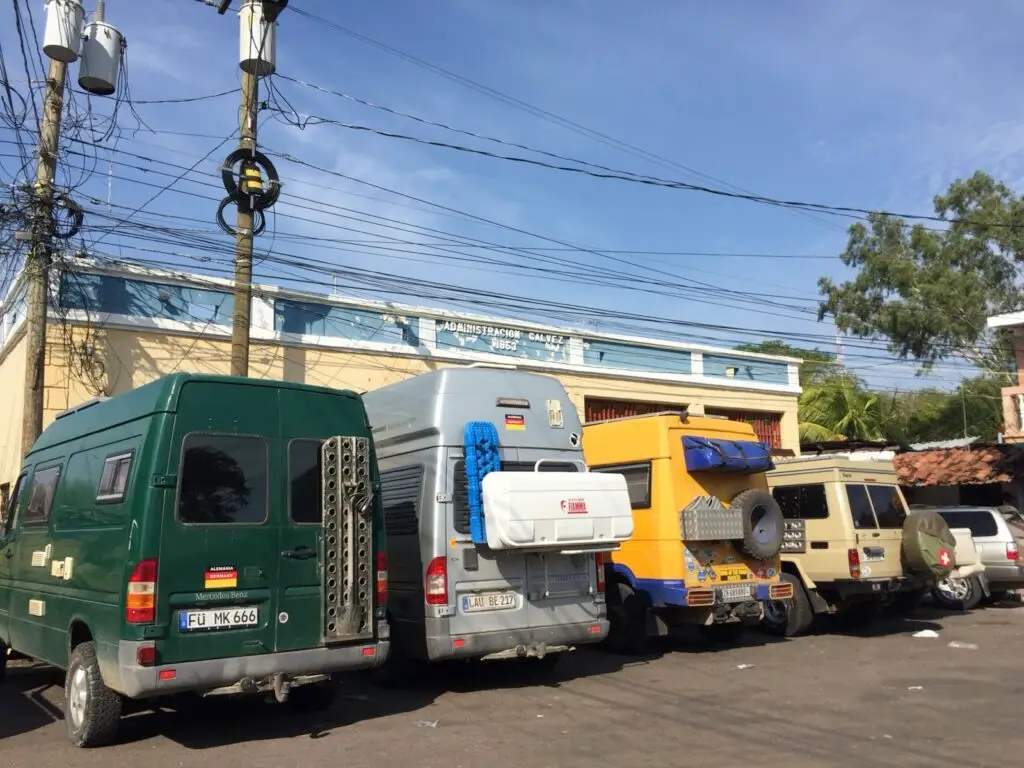
Done? No, because for Nicaragua, unlike Guatemala, El Salvador and Honduras, car insurance is compulsory again. So off to the neighbouring building, where the bank is. There the insurance clerk has simply moved her office outdoors and sits at a small table in the shade. It takes 5 minutes to issue the insurance certificate, and for 12 US dollars it’s valid for 30 days.
Total time: 4 hours and 15 minutes, 3.5 of them at the Nicaraguan border.