Border Crossing from Belize to Guatemala at Melchor de Mencos

Organisation & Planung – Foto 6

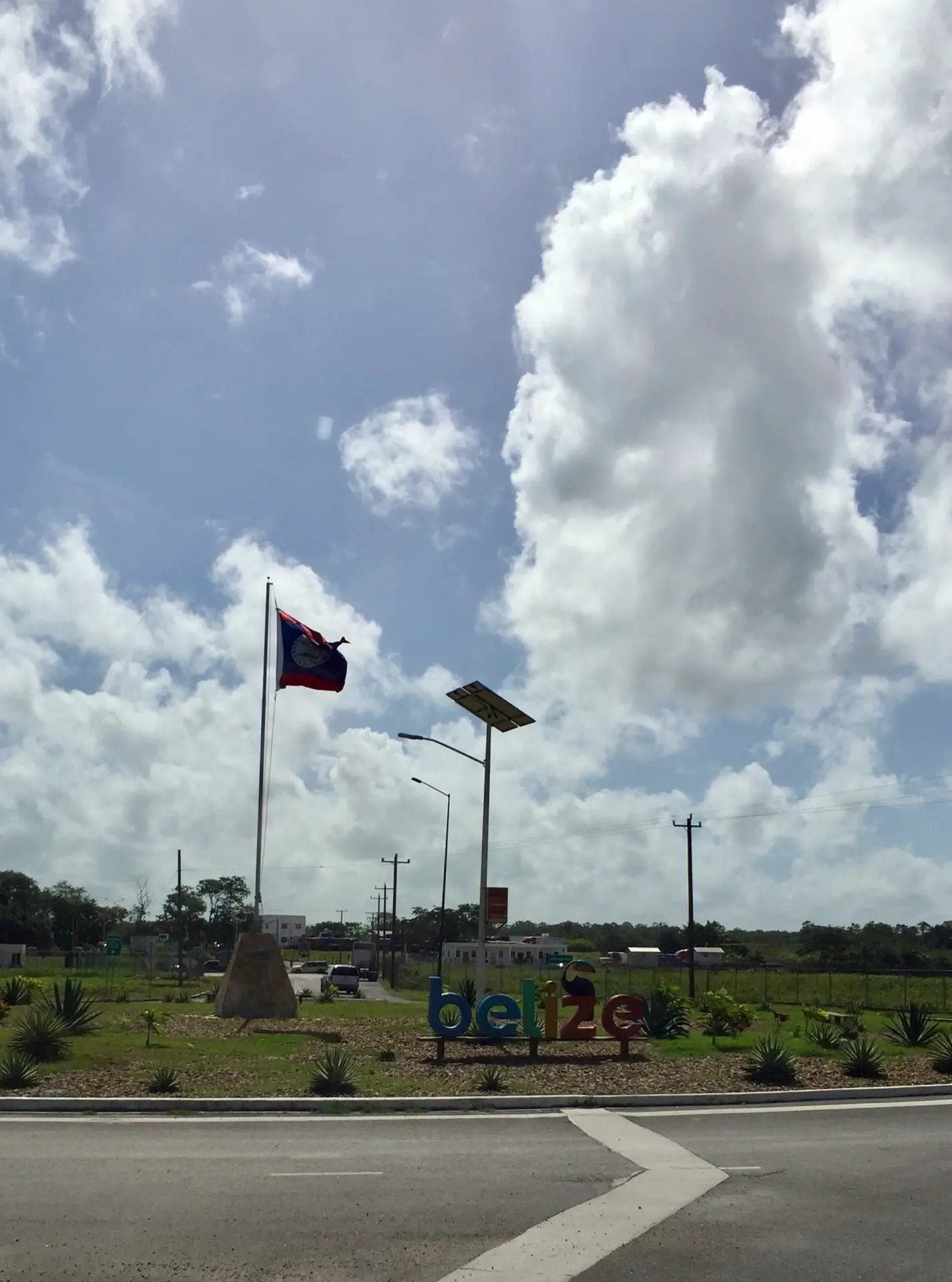
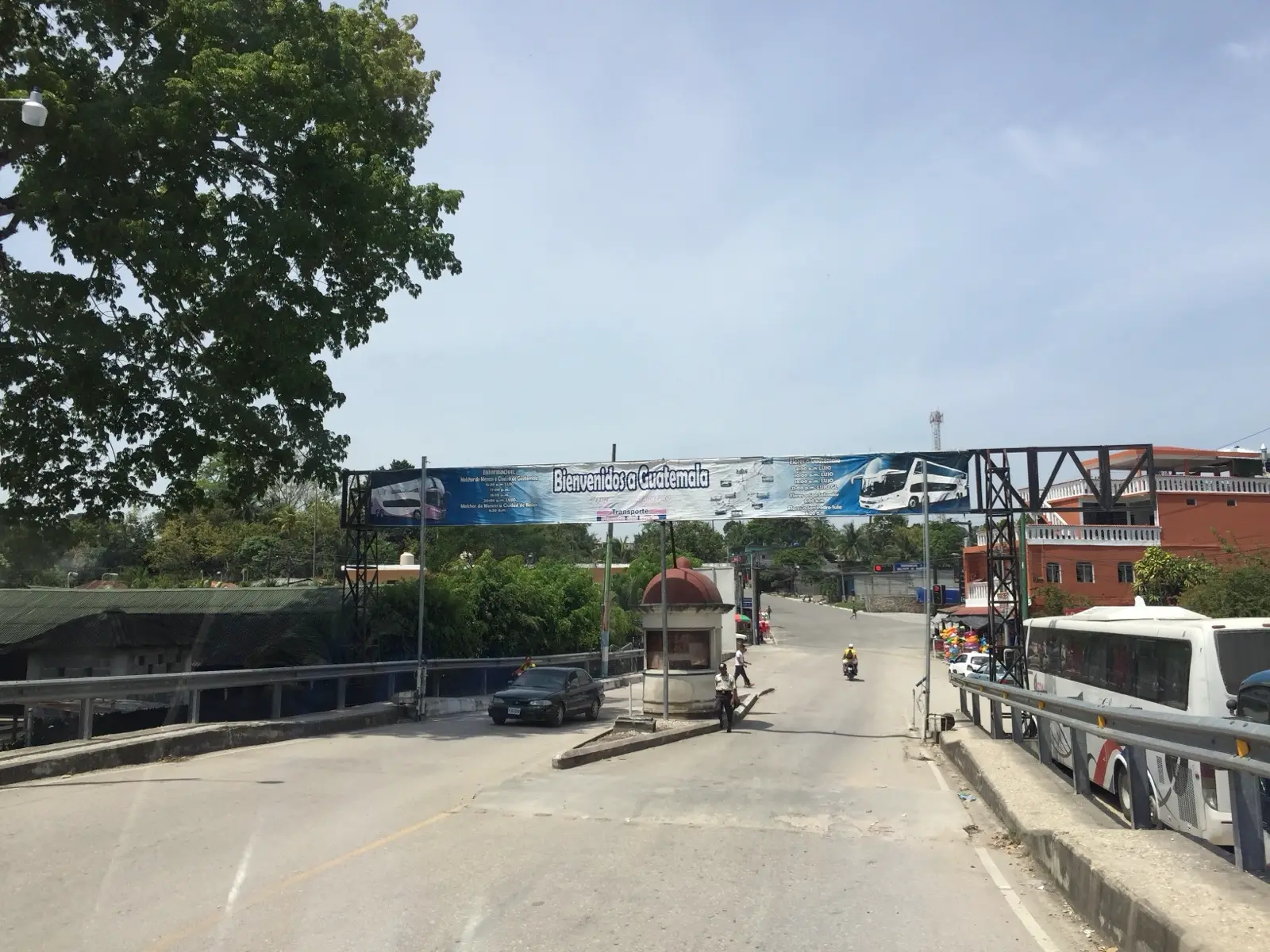
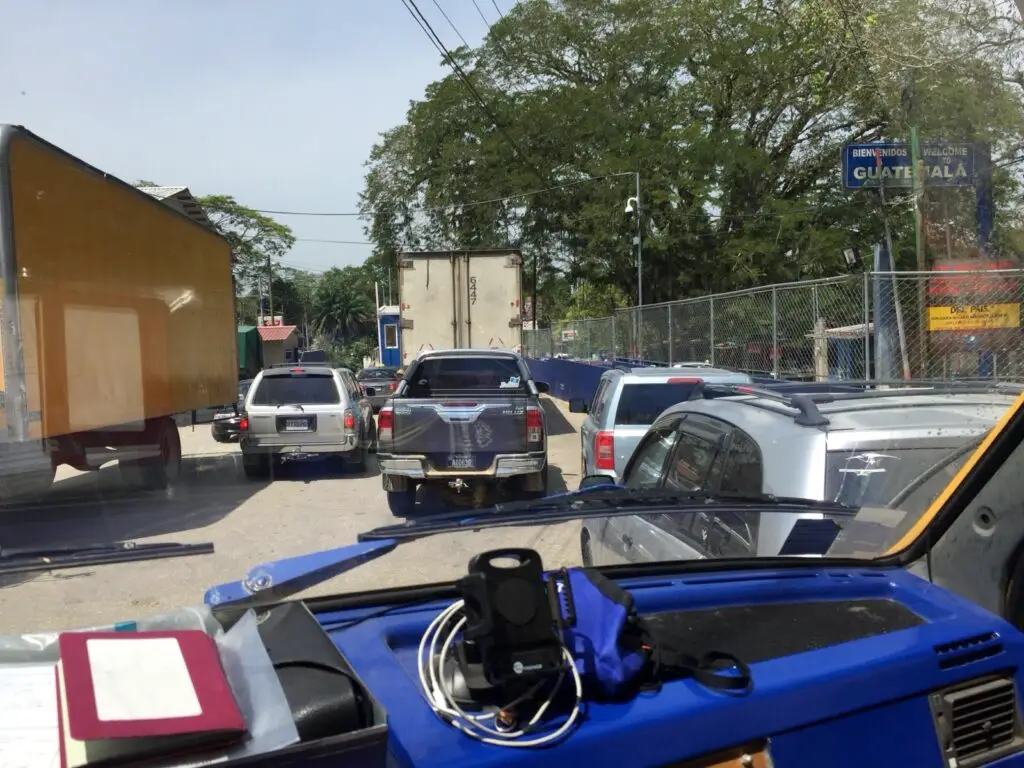
On 19 March we set off from San Ignacio for the Guatemalan border at Melchor de Mencos. The crossing is small and full of cars and small lorries. We park Muggl on the right in front of the building and first fill in a questionnaire: where have we been, where did we stay overnight (hotels or camping), which sights did we visit and how much money did we spend? Then we get our exit stamp at the counter. Christoph still has to go to a room behind the customs booths to check Muggl out, as Muggl is registered in his passport. I wait between the borders, as I’m not allowed back. Hopefully it won’t take long, because Maya is waiting in the car and it’s quite warm. After ten minutes Christoph comes back and we drive on.
Grenzübertritt Belize nach Guatemala bei Melchor de Mencos – Foto 2

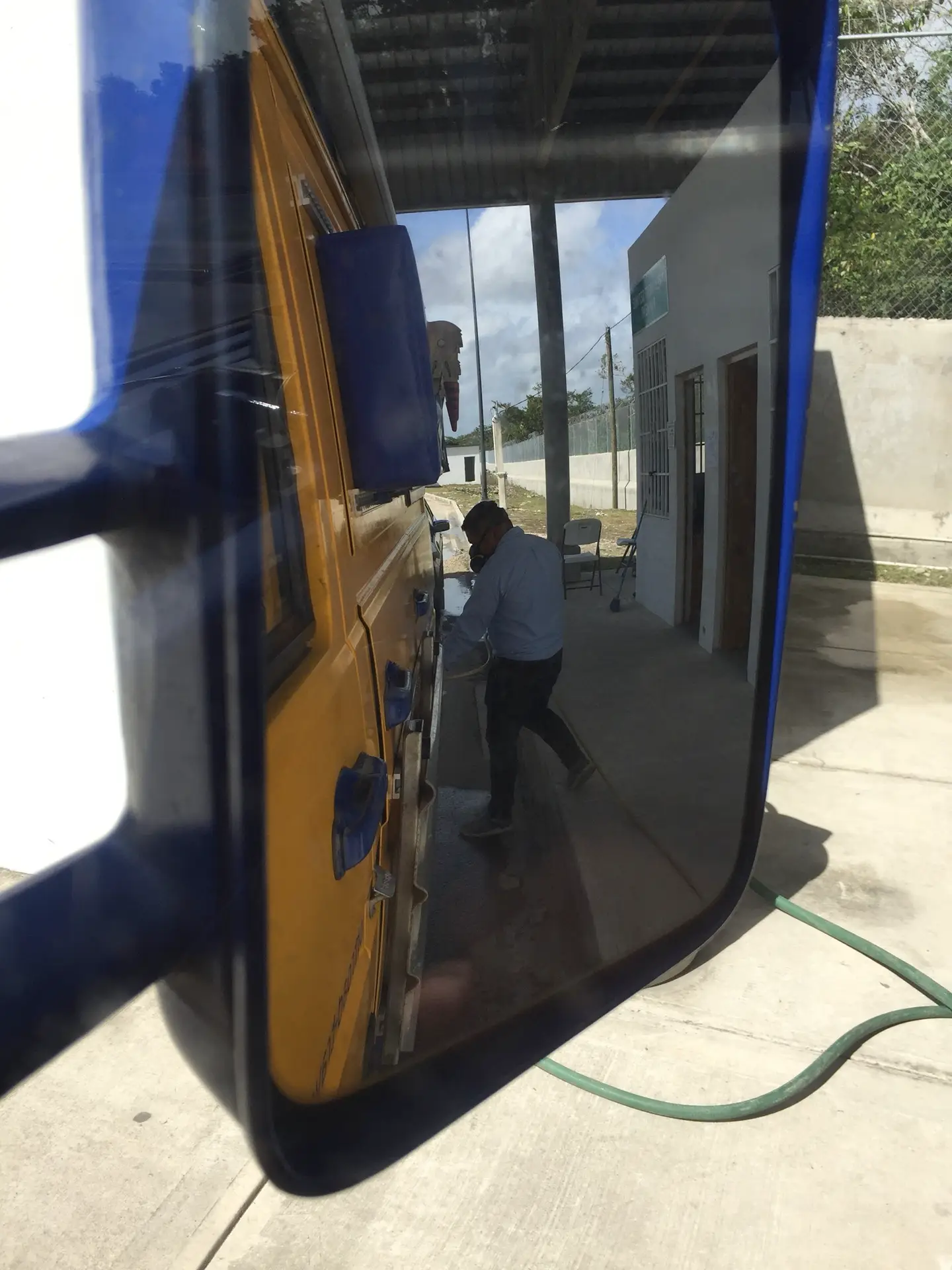
Before checking in to Guatemala we pay 4 dollars and Muggl gets sprayed again. Then we park opposite Guatemalan immigration. The building is open and well laid out: three queues and a cash desk. We check in and get 90 days for the CA-4 countries: Guatemala, El Salvador, Honduras and Nicaragua. Then we pay for Muggl at the cash desk and return to our counter. The official takes a quick look at Muggl, doesn’t want to look inside and doesn’t ask about pets. After 50 minutes in total everything is done and we drive on. We practically smuggled Maya in, even though we had got her travel papers from the vet beforehand. Fine by us.

We can’t find the insurance office that, according to iOverlander, is supposed to be 200 metres after the border on the right. I ask around, but nobody knows it. In Flores we try again and find the office, but it looks as if it has been closed for a long time. As insurance isn’t compulsory in Guatemala, we leave it at that.

Total time: just under an hour!
Grenzübertritt Belize nach Guatemala bei Melchor de Mencos – Offroad Travelers

Border Crossing from Chetumal, Mexico, to Corozal, Belize

Berichte Nordamerika & Mexiko – Foto 4

20.02.2018 Adiós Mexico, welcome Belize. On Tuesday morning we set off from Chetumal for the border. Hardly out of town, we run into a police check. The policewoman explains, laughing, that we were driving too fast. Only 40 km/h applies in town, she says in Spanish. I ask how fast we were going, but get no answer. Great, we think, that’s all we needed on our last day! A colleague joins her and asks whether we speak English. Yes, we answer, and he too explains that we were too fast. He doesn’t tell us our speed either. Somehow they all find it funny, and soon we’re laughing along. Nobody wants money from us; they just tell us to drive more slowly. Then they send us on our way. We suspect they’ve just been given the new laser guns and are therefore having so much fun with them. Mexicans are a bit like big kids.

Grenzübertritt von Chetumal Mexiko nach Corazal Belize – Offroad Travelers

A few minutes later we reach the border. There we check out and have our passports stamped. As we had left Mexico in the meantime and flown to Cuba, we have to pay the tourist fee of 533 pesos per person again. Then we look for the office to check out our camper. But the woman at the counter has no idea what we’re talking about. Within 12 months we have to send a document about the export of our camper to the USA to confirm that we’ve left the NAFTA countries. She can’t issue us a corresponding document.

Well, if she doesn’t know what we want, we’ll rely on the Belizeans. On to the disinfection station. Yes, you read that right: we have to close the windows and Muggl is sprayed with disinfectant. The whole thing costs 10 Belize dollars or 5 US dollars or 100 pesos, and we get a receipt that we have to show later. On to immigration, where a very friendly young border official greets us in the car park with a handshake and the words “Welcome to Belize”. He explains that we can leave the car here and should follow him into the immigration office. There he shows us where to fill in the entry form, get our stamp and where Muggl gets his papers. As soon as we enter the building we’re handed a map of Belize with sights, natural highlights and activities. Very friendly people, the Belizeans.

Grenzübertritt von Chetumal Mexiko nach Corazal Belize – Foto 2

The officer at the immigration counter first asks: “Who is this lucky guy?” In such a serious setting it always takes a moment to get the humour. The officer jokes with us and calls Christoph a “lucky guy” because he’s lucky enough to travel with me. Finally someone recognises it! 😉

He asks where we want to go. We say we want to go to Crooked Tree, a village between Orange Walk Town and Belize City. He warns us about the cashew wine in the area – it gets you drunk. Of course, it’s wine. When you wake up the next day thinking you’ve slept it off, the sun reactivates the alcohol and you get drunk again. That sounds wild. Let’s see whether we find cashew wine somewhere.

We don’t have to give fingerprints or look grimly into a camera. The officer asks how long we want to stay and enters 30 days in our passports. How uncomplicated! At the next counter Muggl also gets his “residence permit” in the form of a paper with his details and the length of stay. Like us he gets 30 days, and this document is now his “passport”, says the officer. It costs 30 US dollars, and I hope it’s enough for the Americans to accept Muggl’s entry into Belize as his exit from Mexico.

Grenzübertritt von Chetumal Mexiko nach Corazal Belize – Foto 3

Next they inspect our fridge. Damn! I forgot to hide the eggs. As we hadn’t heard of anyone having their car searched so far, we had dared to stow food in such a way that you’d have to unpack everything to find it. The fifth official explains calmly: “You know, we once had bird flu, and since then no poultry products may be imported. But don’t worry, we have eggs in Belize.” Well, that’s fine then, and I don’t want to be responsible for a mass epidemic. Nobody would have been interested in packaged sausage, travellers who entered Belize at the same border about two weeks before us had told us. Today it’s different. You have to declare it, but since our pack of salami and the ham have the TIF seal, they turn a blind eye. This seal certifies that the food was inspected and approved in Mexico. Luckily he doesn’t see the cheese sausages right at the bottom of the cool box. They don’t have a seal, and losing them would have been really bad for me personally.

The USDA seal from the USA is also recognised, and food with this seal may be imported but must also be declared. Apart from the cool box they didn’t want to see anything – no cupboard, no drawer. They also ask about alcohol. We have a few cans of beer with us, which is no problem. We say nothing about tequila, rum and wine. To rice, fruit and vegetables I say no. We couldn’t find out exactly what and how much you’re allowed to bring into Belize. As far as we know, you definitely mustn’t bring fruit, vegetables, poultry products such as eggs, chicken and turkey meat, fresh meat, grain, flour or rice. One litre of spirits per person is allowed; I don’t know exactly how much beer per person is allowed. Tinned meat is OK. We can live with the loss of the eggs, and it was our own fault anyway.

So, the border formalities are done. Now we just need insurance and we’re good to go. About 200 metres after the border, in a white square building, is the insurance office. Four weeks of liability insurance for our Muggl costs 60 Belize dollars or 30 US dollars, and we get a sticker that we have to put on the windscreen on the driver’s side.

All done! Belize, here we come……

The Story of Our Brake Discs – an Incredible Ordeal

Berichte Nordamerika & Mexiko – Offroad Travelers

To understand the story, we have to go back in time. Shortly after setting off from San Francisco towards Lake Tahoe, we had another flat tyre. We changed the tyre on the hard shoulder of Interstate 580 heading east, in the middle of rush hour. You can’t choose when you get a flat! With the spare wheel fitted we drove to Manteca and decided to go to a garage the next morning to fix the broken tyre and perhaps fit new tyres straight away. Our mud-terrain tyres had now done 50,000 kilometres, which isn’t much for tyres. But the tread was unevenly worn, as we had mostly driven on paved roads with tyres meant for mud and unpaved tracks.

Die Geschichte unserer Bremsscheiben – eine unglaubliche Tortur

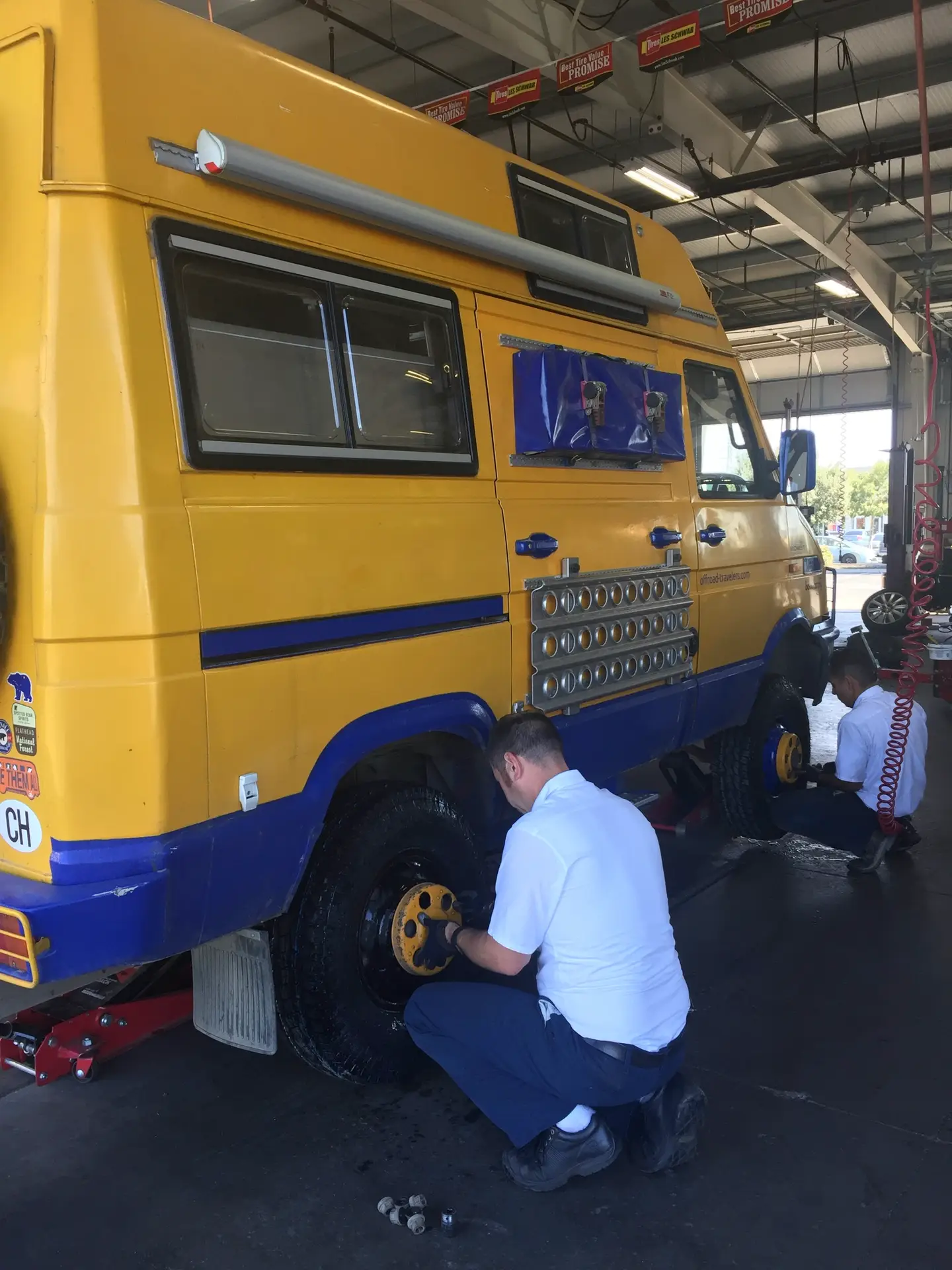
In the USA it’s not easy to find a garage that repairs tyres with inner tubes and split-ring rims. So we ended up at the big chain Les Schwab. There we got good advice and chose the Toyo Open Country tyres. The BF Goodrich All-Terrain is more expensive, has a delivery time and isn’t necessarily better. As we had to change all four tyres, we had the rims balanced at the same time. While the garage fitted the new tyres, we went for breakfast. A good hour later we were able to pick up Muggl again. On we went to Lake Tahoe. After a few kilometres we noticed that the brakes juddered when braking. Christoph suspected that this had to do with the tyre change. In Tahoe we drove to another Les Schwab branch and explained our problem. They turned us away; the shaking had nothing to do with the tyres but was due to the brakes.

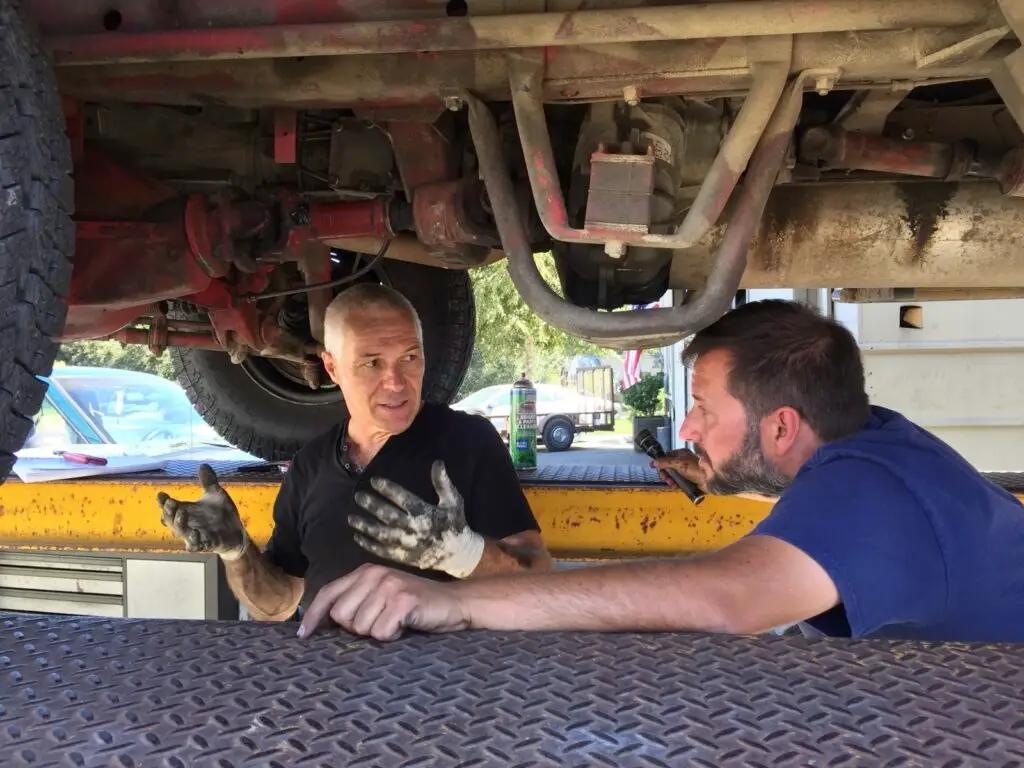
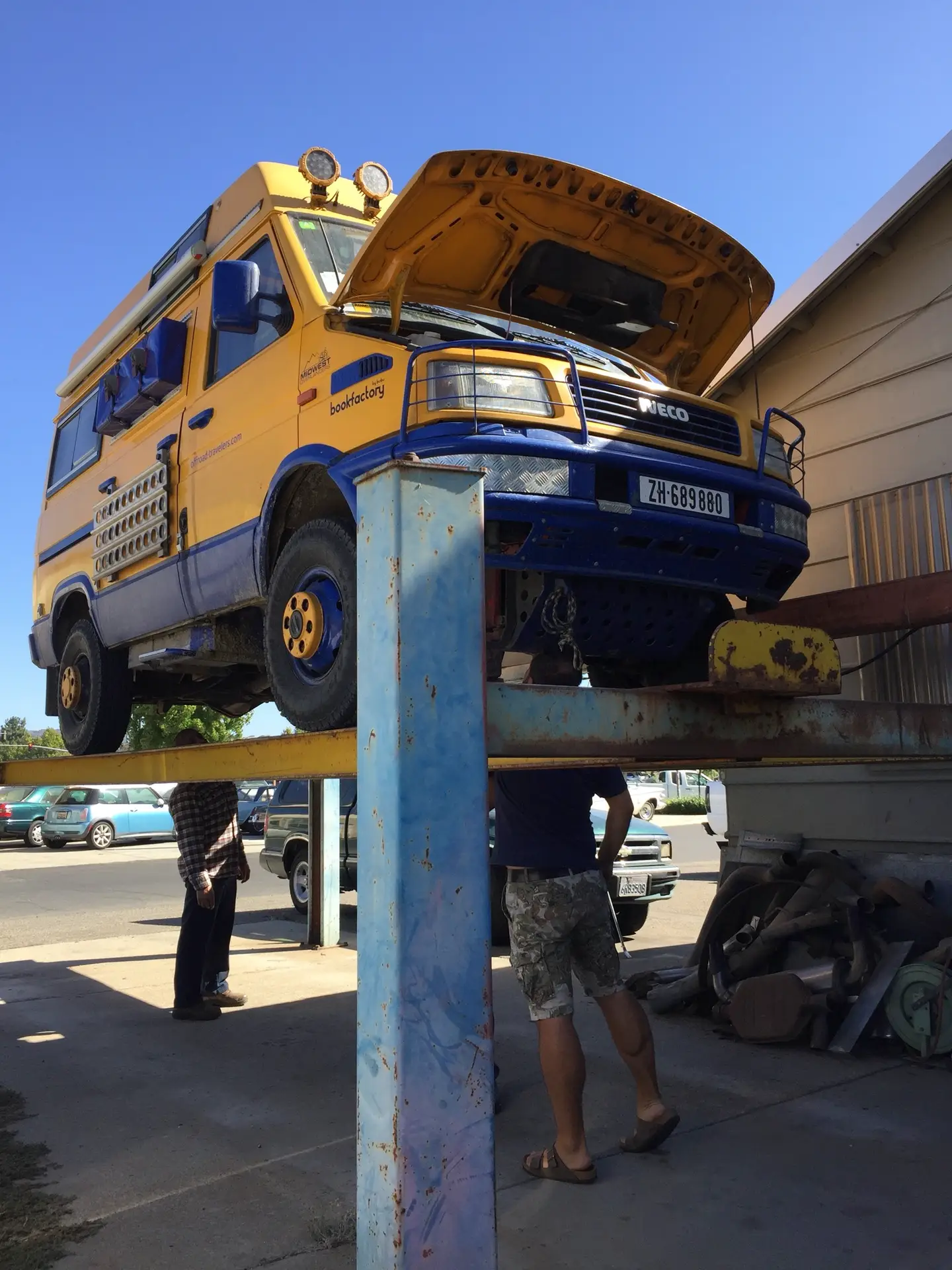
We drove on to Yosemite National Park and then towards Los Angeles. The shaking was with us constantly. As long as the vehicle was cold it wasn’t bad, but when it warmed up it shook badly and you didn’t want to brake too hard. Shortly before Santa Barbara we had an appointment at a garage anyway. Werner, a German, had been recommended to us by Daniel, whom we had met at the Overland Expo in Flagstaff. North American diesel had badly clogged our injection pump, and we had already had a new one sent by our mechanics in Germany. Werner looked at the brake discs and found that they were badly worn. Damn! If we’d known, we’d have ordered new brake discs at the same time. Time was pressing, as our car insurance was about to expire and we had to leave the USA in a few days. The agency wouldn’t extend our policy, and a new six-month policy for 1,700 US dollars was out of the question. We decided to have the brake discs sent to Mexico. We had no idea yet how complicated that would get.

Die Geschichte unserer Bremsscheiben – eine unglaubliche Tortur – Foto 3

We asked the ADAC for support and wanted the discs sent to a cargo office at one of the five international airports in Baja California, where we could pick them up. For days, even weeks, we were in contact with the ADAC. They didn’t give us much encouragement, as it was difficult to send parcels to Mexico and get them through customs. We would need an international customs agent, and even that would be no guarantee. If Mexican customs didn’t accept the delivery, the goods might even be destroyed. We didn’t want to risk that, because it had already been difficult to get brake discs for our Iveco. They’re only produced sporadically and were sold out at the time. Our garage had removed a set from a used Iveco that had only done 5,000 kilometres and was practically as good as new.

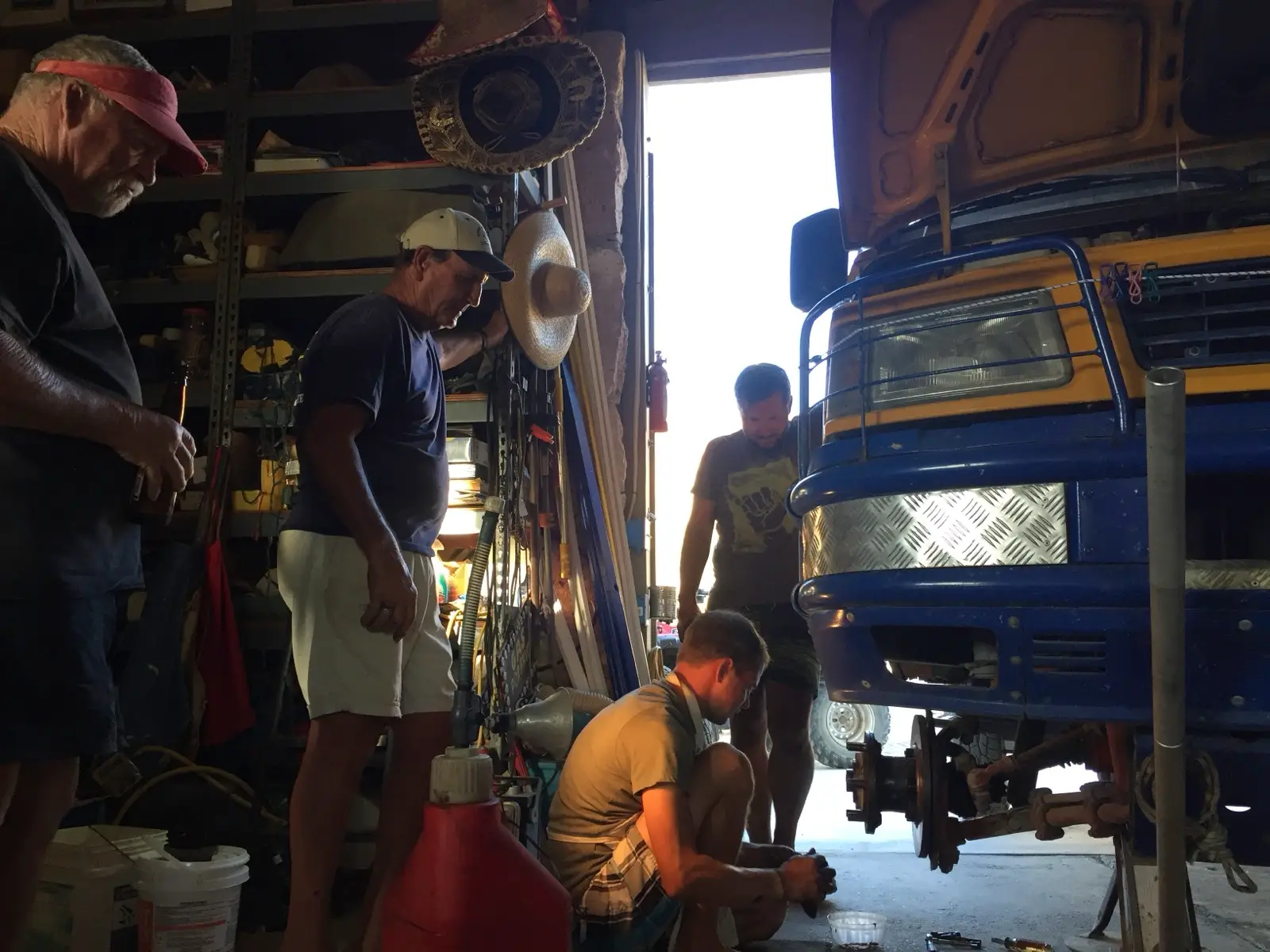
The parcel was ready to ship and waiting at the ADAC for further instructions. In Mexico we met Yasmin and Stefan in their Toyota Land Cruiser (Zebra). We decided to travel Baja together so we could do more off-road driving. The area is sparsely populated, and if you break down you’d have to wait a long time for someone to come by. In Bahía de los Ángeles we came across an American community living in a small bay, where they had their holiday homes and were enjoying retirement. They invited us to camp there and use the internet to solve our problem. I could go into detail, but that would go beyond the scope. In short, we had the ADAC send the brake discs to San Diego, to a friend who came to visit a week later. That was the least complicated way, and we were allowed to stay in paradise all that time, where we snorkelled with whale sharks, used the kayaks and paddled with dolphins, giant turtles and sea lions. Everyone looked after us wonderfully, and we were often invited to dinner in the evening. In the end we were even allowed to use the workshop, where Christoph and Stefan changed the brake discs and pads themselves with the men’s help.

Die Geschichte unserer Bremsscheiben – eine unglaubliche Tortur – Foto 2

Finally it’s done. After two weeks we continue south with mixed feelings. 280 kilometres of gravel track along the Baja 1000 route take us to San Francisquito, where we spend the night, and then on to Guerrero Negro. The last 30 kilometres are paved. But when we brake for the first time, it still judders. So it isn’t the brake discs after all? Did something go wrong during fitting? We want to go into town to buy food and do laundry. The men leave the women at the laundry and look for a garage. But without any Spanish they quickly come back and fetch me. Surprise: a flat tyre! Again! When it rains, it pours. We’re out of luck. Fortunately there are lots of garages in Mexico, and they fix tyres routinely. Our system with inner tubes is impractical, but this time we picked up a rusty nail at the taco stand. The tyre is quickly repaired, and we ask them to check the brakes. Right wheel bearing broken, the mechanic finds. Luckily we have a spare part with us, and it’s changed immediately. The Mexicans work patiently and meticulously, which reassures us. After three hours it’s late afternoon and we haven’t done our shopping yet. We decide to spend the night outside Guerrero Negro at the old shipyard. Relieved that the problem is solved.

The next morning we do our shopping before moving on. Back on tarmac and at higher speed, it shakes when braking just like before. At a loss, we contact our garage in Germany and other travellers with the same Iveco, and even send a video. Everyone suspects the brake discs. Our mechanic thinks they might be sticking slightly; rust or dirt in between could be causing the rattling. In El Marasal we go to the next garage. Christoph and Stefan want to take the brakes apart and clean them thoroughly. I ask whether we can use a space and tools. The boss agrees. The mechanics are helpful, watch us and hand us tools. They suspect it could be the new brake discs. There’s someone in town who can skim them. The apprentice takes the discs to the metal workshop by bike. Five hours later everything is reassembled. Christoph goes for a test drive and comes back dejected. Still the same problem! A mechanic rides along and says it must be the brake discs. We’re in despair. Still dirt in the system? Is something else broken?

Die Geschichte unserer Bremsscheiben – eine unglaubliche Tortur – Foto 4

Christoph is still wondering whether something went wrong during the tyre change. But what? The problem has plagued us ever since. A stupid coincidence or the real reason? Everyone claims it’s the brake discs; we’ve checked everything else three times. No screws or bolts are broken, no bearings defective. The mechanics at the garage are at a loss. We discuss spare parts and repairs to find a solution. They suggest checking everything again tomorrow. What else can we do? The boss asks: “You were at a garage in Guerrero Negro yesterday?” “Yes,” I answer. “That was my brother’s,” he says. We’re known far and wide. We’re to come back at 8 am. In the evening we go to our camp outside town among the cacti and keep discussing. Stefan knows about cars, but even he has no explanation. Christoph insists that the tyre change is to blame, and we want to swap the tyres from front to back. But that fails because the Mexicans tightened the nuts so hard that Stefan breaks a wrench. So tomorrow morning at the garage! The next morning I explain that we’d like to swap the tyres. The mechanic isn’t surprised and gets going. I suggest to the boss that he talk on the phone with our mechanic in Germany, who also speaks Spanish. At some point it had all become too complicated for me, and my Spanish was no longer enough. After the tyre swap Christoph takes a long test drive, and the problem has disappeared! Everyone is so perplexed that nobody can say anything. The workshop foreman drives himself and confirms that everything is fine and the braking performance is right. What still isn’t running true are the rims. Christoph was right: the tyre change at Les Schwab had consequences. We had the rims balanced there, and it went wrong. What an ordeal – we need to digest that first!

How We Almost Ended Up with a Dog

Berichte Nordamerika & Mexiko – Foto 3

At midday on Monday 22 January we set off from Mérida heading south-east, with Tulum as our destination for the next few days. In Mérida we had met an American-Colombian couple: Mariana from Colombia and Eric from Boston, USA. They were accompanied by their dog Marbel, a husky mix. As they were taking the same route as us, we decided to travel together for the next few days.

Wie wir fast auf den Hund gekommen wären – Offroad Travelers

There was a lot to discover on the way to Tulum, above all the many cenotes – sinkholes connected underground by a cave system, some of which reach impressive depths. We started our exploration at the cenotes around Cuzamá. About 200 years ago “green gold” was grown and harvested in this area – a plant whose tough fibres were used to make rope. Today most of the plantations have gone wild, but part of the rail system once used to transport the harvest still exists. Horses now pull visitors from cenote to cenote. At the start of the week it wasn’t particularly busy, and the car park, a large meadow, was almost empty. At the entrance there were toilets and even a shower, and we didn’t have to pay anything to stay overnight.

We parked at the far end of the car park at the edge of the forest, set up camp and decided to visit the cenotes early the next morning. It didn’t take long for the first visitor to turn up – a lady dog, whom we fed straight away even though she didn’t seem to be starving. For a short while now we had always carried a sack of dog food with us. Word got around quickly, and gradually two more lady dogs joined us, one of them a mother who brought her three puppies along too. The little ones were shy at first but curious, and inched closer and closer to us. By the end of the day they still wouldn’t let themselves be caught, but at least they were already lying on our straw mat in front of Muggl. Two of the puppies were white, which quickly looks unattractive on street dogs. The third was black and brown with light-brown paws – all girls. We planned to wash the little ones the next afternoon.

Wie wir fast auf den Hund gekommen wären – Foto 2

The next morning all six dogs got breakfast first. Of course they were awake before us and waiting with wagging tails. They had spent the night in front of, under or behind our campers. We went on our cenote tour and let a horse pull us in a little cart along the rails from sinkhole to sinkhole. When we came back, the mother dog was there with only one puppy, and we wondered where the other two had gone. After almost two hours they still hadn’t turned up, and we began to worry. We started with the remaining puppy, inspected it and found that it had fleas and a few ticks. We removed the ticks by hand or with tweezers, and Mariana skilfully treated a festering inflammation between its toes. She had volunteered at an animal shelter for a few months and was very experienced with dogs. Besides, they had their Marbel with them and therefore medicines and flea treatment too. Then we bathed the puppy in washing-up liquid, which fleas really don’t like, and simply washed the dead pests away. The toilet attendant turned on the water hose nearby for us and watched happily. The little puppy was brave and put up with everything. The mother had watched us at first but had since disappeared. When we were almost finished and I was just drying the puppy – it was shivering quite a bit and I don’t think it had ever been completely wet before – the mother came back with the other two. It almost seemed as if she was bringing them to us so we would look after them too. So we carried on.

Wie wir fast auf den Hund gekommen wären – Foto 3

Hours later all three puppies and their mum were lying in front of our door, totally exhausted from the ordeal but gleaming white – at least two of them. They didn’t leave our side all evening and by now let themselves simply be picked up and stroked. They even fell asleep in our laps, and even when we put them with their mum because we wanted to go to bed, they didn’t wake up. We guessed they were just under two months old, and I asked the toilet attendant whether there were only three and who they belonged to. He said there had been six and they belonged to nobody. If we wanted to adopt one, we were welcome to. The other three had already been taken. The dogs “belonged” to the community – the people who worked at the cenote entrance, the cart drivers, the car park attendant, the people running the food stalls and, of course, the toilet attendant. They looked after them a bit and fed them too. The little ones and their mum were very grateful and really sweet. Unfortunately we couldn’t take one with us. Adopting a street dog isn’t actually that hard. First you have to go to the vet, then the puppies get a vaccination – strong stuff, because they say if they survive the following seven days, everything is fine. Then, shortly before each border crossing (different for every country), you have to go to the vet and have the required vaccinations refreshed or given. That’s all. Still, we didn’t take one, but it was close. Knowing that they have a mum and won’t starve there helped us with our decision. If they had been alone or close to starving, the story would have ended differently.

Tips for a Trip to Cuba

Organisation & Planung – Foto 2

A few things we wish we'd known before our trip to Cuba

Here are some tips we wish we’d known before our trip to Cuba, and how best to organise your trip (as of 2018)

  • Bring small soaps and pens to give away. Carry them in your daypack, because you’ll quickly be asked for them.
  • In Cuba cold fronts can last up to five days. So pack warm clothes, sturdy shoes and a rain jacket.
  • A “casa particular” is private accommodation with Cuban families. Prices for a double room range from 15 to 35 CUC.
  • To find a casa particular, use Airbnb or ask at the bus station. Taxi drivers often know someone who offers accommodation. You can also walk the streets and look for the white signs with blue lettering.
  • A “paladar” is a private restaurant where you can eat authentic Cuban food. They’re often cheaper and the service is friendlier than in state restaurants.
  • The cheapest way to get around is the state bus line Viazul. Buy tickets a few days in advance at the counter or online if the internet is working. Alternatively there are shared taxis and private taxis, where you can negotiate.
  • Haggling is common in Cuba. Tourists often pay more, so ask and negotiate.
  • You can buy water at casas particulares or supermarkets. It’s cheaper in supermarkets outside the tourist centres.
  • Cigar factories close for holidays in July and around New Year. Buy cigars in official shops, not on the street.
  • Cuba has two currencies: the CUC for tourists and the CUP for locals. You can pay with CUC everywhere, but get some CUP too.
  • There are ATMs almost everywhere, except in small towns.
  • There’s no departure fee. We invested our 50 CUC in rum.
  • Swiss and German citizens need a tourist card, which you can buy at the airport for 20 US dollars. It’s a simple formality.

These tips will help you experience Cuba better and make your trip go smoothly.

einige Dinge die wir vor unserer Reise nach Kuba gerne gewusst hätten
einige Dinge die wir vor unserer Reise nach Kuba gerne gewusst hätten – Foto 2

Cuba, Between Concrete Blocks and Palm Beaches – a Journey Back in Time

Zentralamerika – Foto 23

For a long time it was clear that we wanted to take a holiday from travelling somewhere, and in the end we chose Cuba. Our friend Hannes decided to visit us from Switzerland, and Cuba seemed an ideal destination. Some places in the world you should visit soon, and Cuba is one of them. Since we were already in Mexico, we were closer to Cuba than ever before! A flight from Germany or Switzerland takes 8–10 hours, from Cancún only one hour. Actually …

The flight from Cancún to Havana was booked for 18 December. At 6 am the owner of the campsite where we had safely stored Muggl for three weeks drove us to the airport. Everything went smoothly – check-in, security – until we boarded the plane. But then everything changed: on the runway we suddenly turned back! A technical fault forced us back to the terminal and we had to get off. A spare part had to be delivered from Mexico City, or we would get a replacement plane. Neither option promised speed. I wondered whether airports generally keep replacement planes on standby. We landed in Havana six hours late and only two hours before Hannes. So we didn’t get to Cuba that quickly after all …

Kuba, zwischen Plattenbauten und Palmenstränden – eine Zeitreise – Foto 10

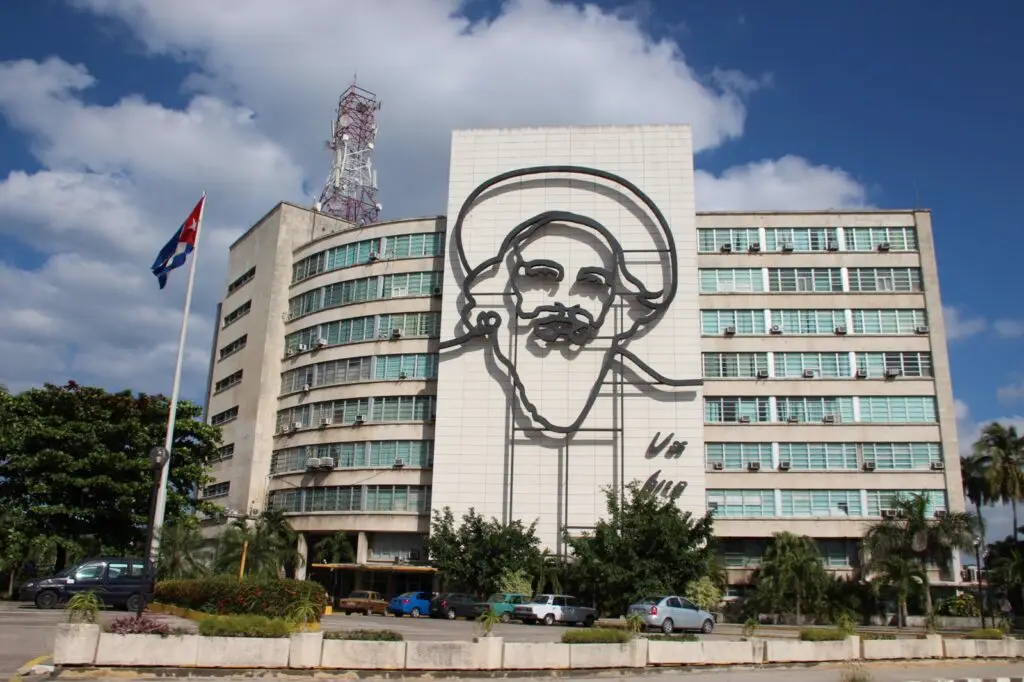
A taxi took us to our casa particular – private accommodation where Cuban families rent out guest rooms. You can often have breakfast or dinner there too. The taxi dropped us next to the Museum of the Revolution in the centre, in front of a huge building that looked like a building site from the street. Great, I thought, that doesn’t look inhabited. But before I could finish the thought, a man with a rubbish bag came towards us. Who or what were we looking for, he asked. Casa de Toni, I replied. He stepped back and shouted loudly “TOOOONNNNIIIII” towards the balcony on the third floor. Yes, that’s where Toni lives with his wife Sonja. He came straight down and let us in through the side entrance. That was easy! Toni and Sonja welcomed us warmly and showed us our room and their flat. Our guest room was accessible via a separate entrance from the stairwell. The entrance area had a mini kitchen; from there you went into the room, to the right into the bathroom, and by the window a small spiral staircase led upstairs. The bed upstairs was bigger, and Christoph and I grabbed it straight away. Hannes slept downstairs, and I thought: beds in Cuba aren’t particularly long, but Hannes is tall. Oh well, he’ll fit – diagonally if necessary.

Toni explained the area to us and gave us our own key. So we set off, explored the neighbourhood and had something to eat while we waited for Hannes. For the next two days we explored Havana, strolled through the colourful streets, admired the old colonial buildings, enjoyed freshly squeezed juices and soaked up the joie de vivre. Toni helped us plan the rest of our trip. He used to be a lorry driver and knew all of Cuba. He knew which places are beautiful and how long it takes to get from A to B. Our next destination was Trinidad, and Toni offered to book a nice place for us there. That’s how it works in Cuba: you’re passed on and given a bundle of business cards to hand in at the next casas particulares. I like this system! After that we wanted to go via Cienfuegos to Playa Girón and from there to Varadero, which is supposed to be very touristy, but we definitely wanted to see the beaches. Finally we wanted to head for the Viñales Valley in the west of the island. With the rough plan in place, off we went!

Kuba, zwischen Plattenbauten und Palmenstränden – eine Zeitreise – Foto 9

Unfortunately the bus was fully booked for the next few days – it was peak travel season! So we asked some of the many taxis in Havana what the 317 km drive from Havana to Trinidad would cost. First I should mention that there are private and official taxis. A private taxi can be any vehicle, while an official taxi is easy to recognise, as it looks rather modern and uniform. A “taxi” sign stands, hangs or is stuck on 90% of all Cuban vehicles. One block from our accommodation, in front of a hotel, there were private and official taxis, and we asked around. Luis, a private taxi broker, quoted us 300 US dollars, which almost knocked me over. He went down to 250, which still didn’t convince me, and the game went on down to 180. Now that’s negotiating! On the spur of the moment I came up with a new trick and explained to him that a Cuban friend had forbidden me to buy anything without his approval. That worked! Luis went down another 20 dollars to 160 dollars. He didn’t push any further and let me get my Cuban friend’s approval. I thanked him and asked whether he would be here all day tomorrow. Then I’d consult my Cuban friend, and if I got the OK we’d come back. Handshake! I hoped that counted in Cuba, because we were still gaining experience.

Back home, we told Toni about our negotiations. He was pleased with us and also interested in a contact to Luis. Well, well … The next morning we booked Luis for the morning after. He said we’d get a classic car, a Chevrolet or something. We were curious whether he’d really come … 10 am was agreed.

Kuba, zwischen Plattenbauten und Palmenstränden – eine Zeitreise – Foto 8

The next morning Toni was the most sceptical of the four of us, because we didn’t have a phone number for Luis – a beginner’s mistake! In Cuba everything works by phone. Yes, Luis could indeed leave us stranded and drive other tourists who were willing to pay 300 US dollars – and there were plenty of those. I asked Toni whether Cubans were reliable and punctual people. “Cubans are a disaster,” he replied. That didn’t exactly encourage me, but to cut a long story short: Luis came at 10:02, apologised for being late and introduced us to our driver Juan in a white and orange Chevy. We were thrilled!


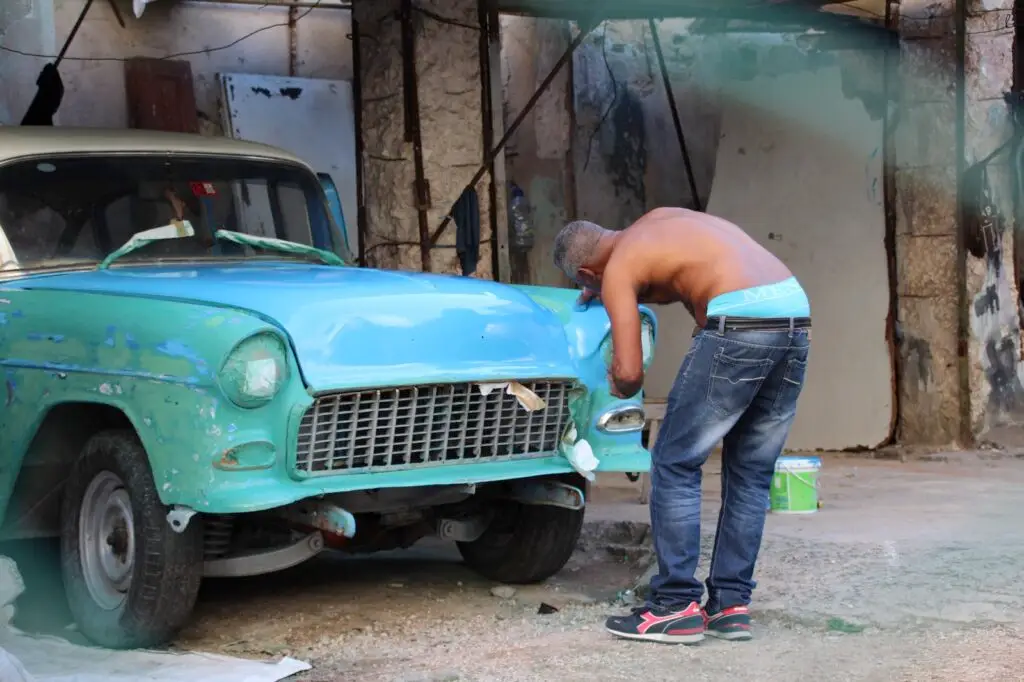
The drive took three and a half hours (with a short break), and Juan got us safely to Trinidad. He didn’t seem to like white cars, because whenever one wanted to overtake us, he floored the accelerator of his 1965 Chevy. We reached a top speed of 140 km/h! What else could we do but trust in life? He proudly told us that he had restored his car himself; he had even sewn the seat covers (also orange and white) himself. Well, if he loves his car that much, he must know what he’s doing. He really did seem to love his car and took good care of it, because when we arrived in Trinidad, the first thing he did was top it up with 1.5 litres of oil!

Kuba, zwischen Plattenbauten und Palmenstränden – eine Zeitreise – Foto 7

We spend four days in Trinidad. We hike to a waterfall and hire a guide to learn more about nature. Joanis, our guide, is actually a university professor of history but works in tourism to earn more money, mainly through tips. In Cuba, a communist country, state employees uniformly earn 27 CUC a month, whether doctor, nurse, professor or police officer. Salaries haven’t changed for decades, while the cost of living has risen sharply. That’s why you see teachers driving taxis or doctors waiting tables. From Joanis we learn not only a lot about life in Cuba but also about Cuban flora and fauna. On the way to the waterfall he explains a few things about Cuba and warns us not to try to understand Cuba – we won’t succeed. That will be difficult for Christoph, as he always wants to understand everything exactly.

On the second day, 24 December, we take a catamaran to the island of Cayo Blanco, home to iguanas and hutias (tree rats). The pictures of the hutias are below. I didn’t know what they were either, but I find them funny. For the first time in a long while this feels like a holiday. It’s no good for snorkelling, as the water is too murky that day, but it’s perfect for swimming, strolling along the beach and lounging in a deckchair. You just have to be careful not to step on an iguana, because they’re everywhere here. The hutias and iguanas were brought here by pirates, who used to eat them. Well, each to their own.

Kuba, zwischen Plattenbauten und Palmenstränden – eine Zeitreise – Foto 6

For the evening we’ve ordered dinner – or rather Christmas dinner – at our casa particular. Our host Señor Soto is a passionate amateur cook and serves us vegetable soup as a starter, a huge chicken (I think it was more of a turkey) as the main course and flan for dessert. At the next table sits a bus driver who drives a tourist bus during the day and is also staying here tonight – alone. We invite him to eat with us; it wouldn’t be nice for him to have to eat alone, especially at Christmas! He’s delighted and joins us without hesitation. We have a very funny evening. Cubans are simply sociable and cheerful people.

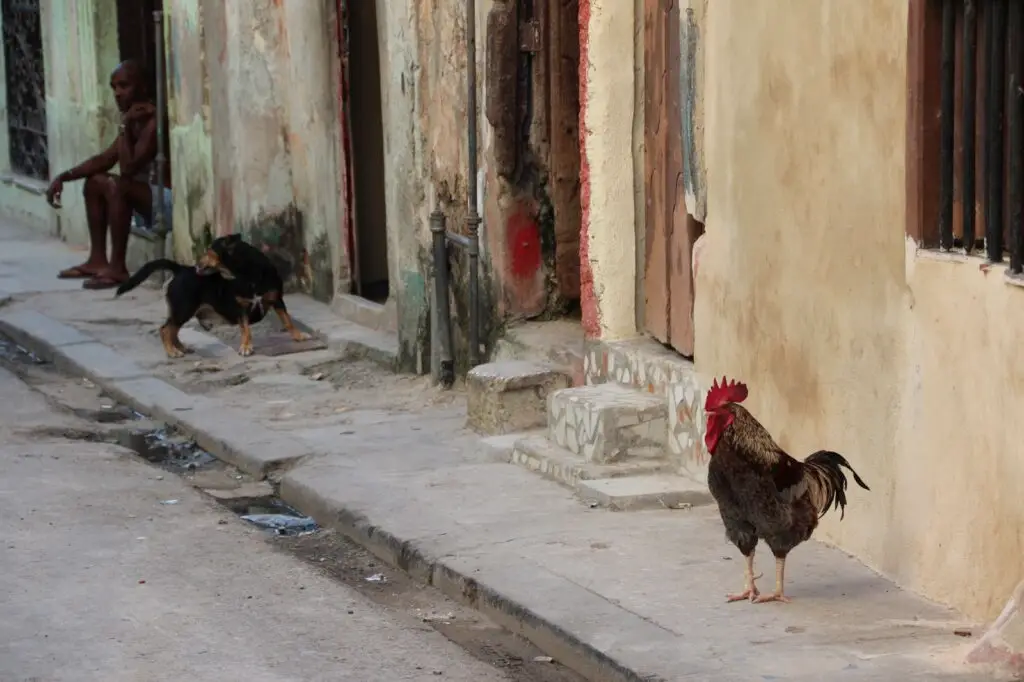
Over the next two days we visit an old sugar-cane plantation, where we also learn a lot about the slave trade. We stroll through Trinidad, including beyond the tourist streets. When an old woman standing at the window of her house with a walking stick begs me for soap, it almost breaks my heart. Yes, that’s the system. It may once have worked, but now it seems completely outdated and is leaving its mark. I have to admit I wasn’t prepared for Cuba. In the USA I missed buying a guidebook, and in Mexico there were none to be had.

Kuba, zwischen Plattenbauten und Palmenstränden – eine Zeitreise – Foto 5

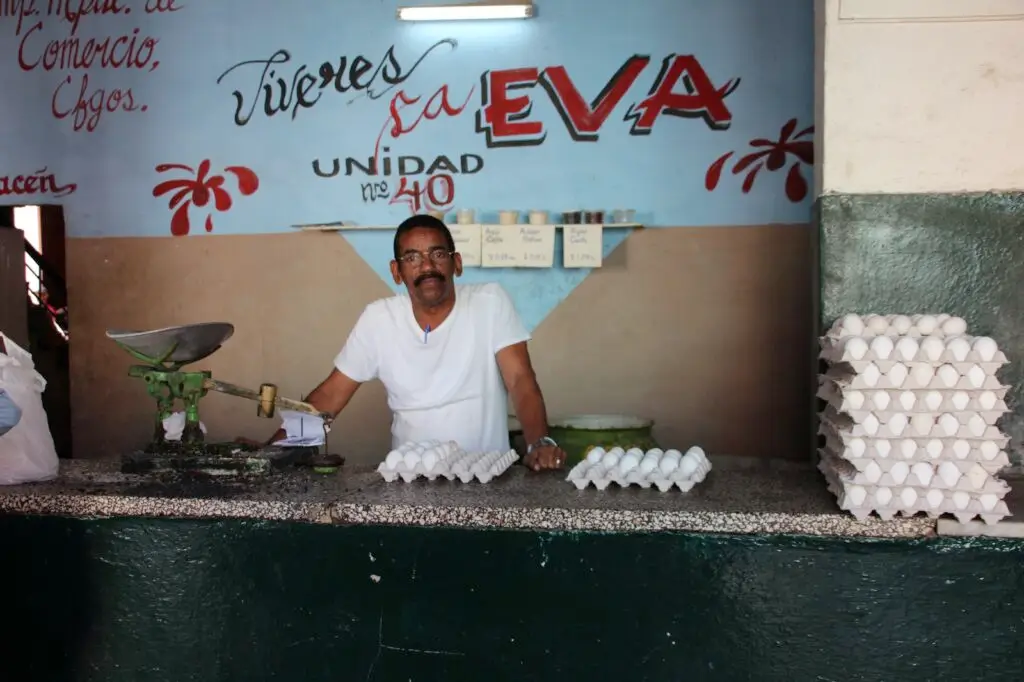
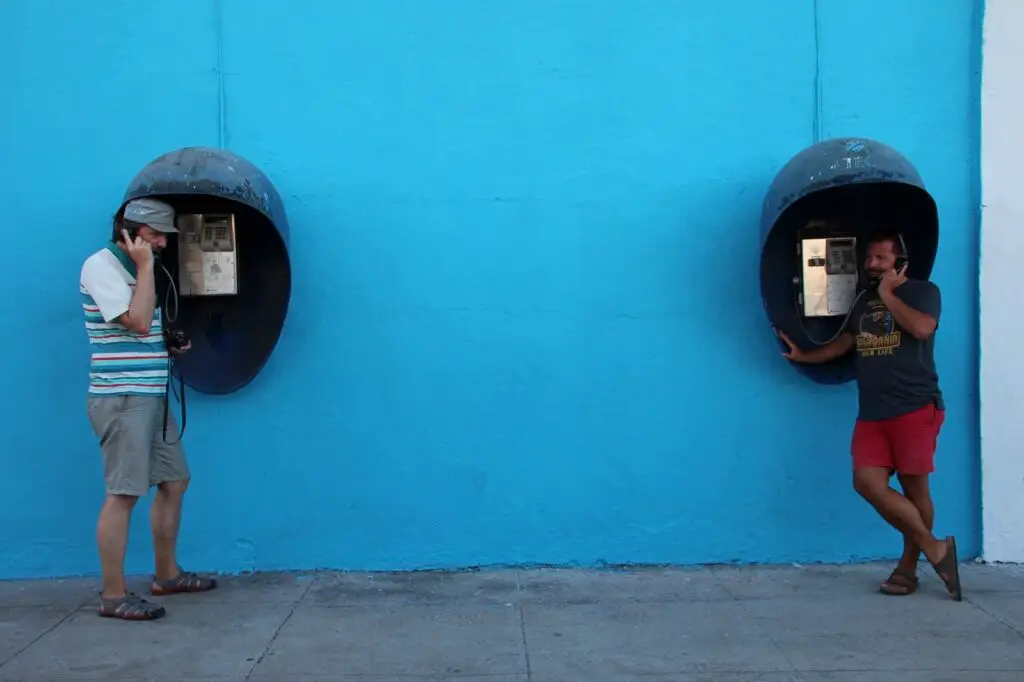
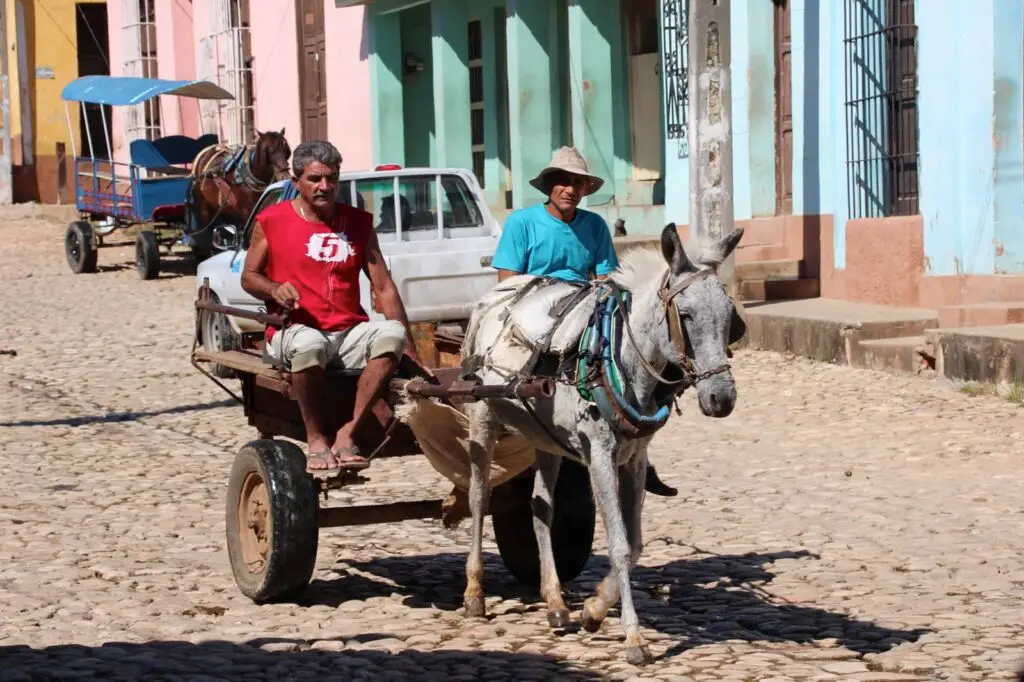
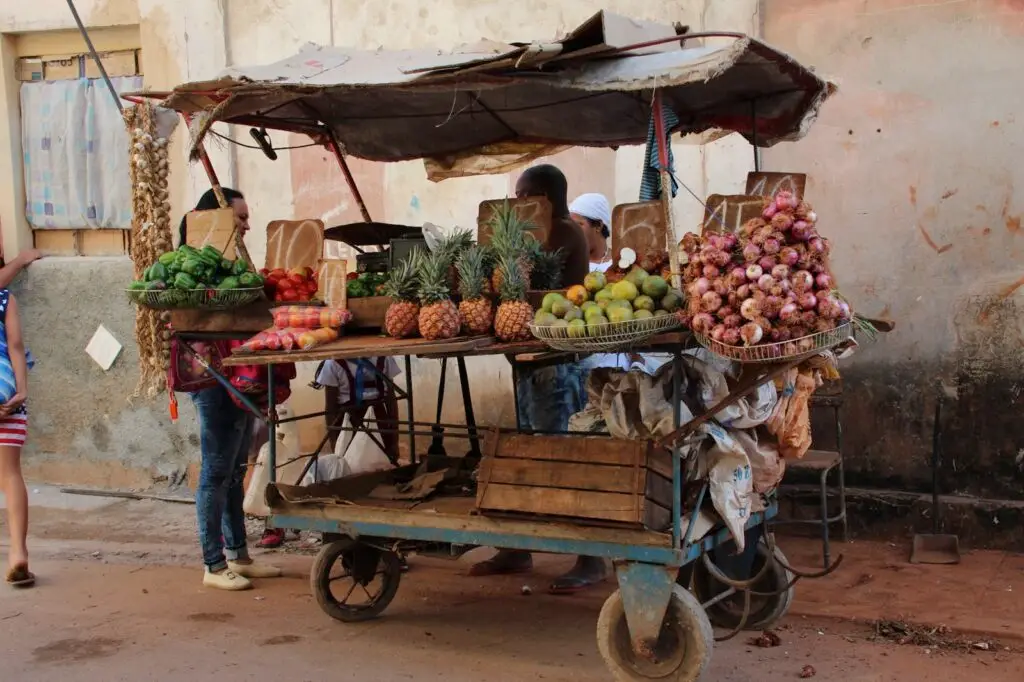
You feel a little as if you’ve gone back in time – not just because ox carts, horse-drawn carriages and the vintage cars so often printed on postcards still drive here, but also because the old buildings, the sparsely stocked “supermarkets” and people’s simple lives give the impression of having travelled into the past. There’s hardly any internet, and if there is, then only in hotels or in a few public squares at tourist hotspots. There you can buy a credit card for 1.50 CUC and surf for an hour. The first time I wanted one of these cards, I found a colourful crowd of people at the door of the office in question. I must have looked desperate, because an older lady immediately spoke to me and explained that she would help me. In Cuba you don’t queue in order; you ask who’s last and then wait. That worked quite well – you just have to know it.

From Trinidad we continue to Cienfuegos, where we only stay two nights. Cienfuegos is a clean, tidy town, well restored in the centre, with a small old theatre and some very beautiful colonial buildings. By chance we find the world’s best cocktails in Punta Gorda, at the southernmost tip of Cienfuegos, in a small bar in the park. If any of you are ever there, you absolutely have to try them! The barman spoke to us and claimed he made the best cocktails in the world, and if we didn’t like them we wouldn’t have to pay. Challenge accepted – and anyone who knows Christoph knows how critical he is. The upshot was that we were already tipsy by 2 pm. The barman didn’t promise too much; the cocktails were really unbelievably good, and now I can never drink another piña colada. It was also a pleasure to watch him. He’s a barman with real passion, and I’ve never seen anyone muddle mint for a mojito for so long.

Kuba, zwischen Plattenbauten und Palmenstränden – eine Zeitreise – Foto 4

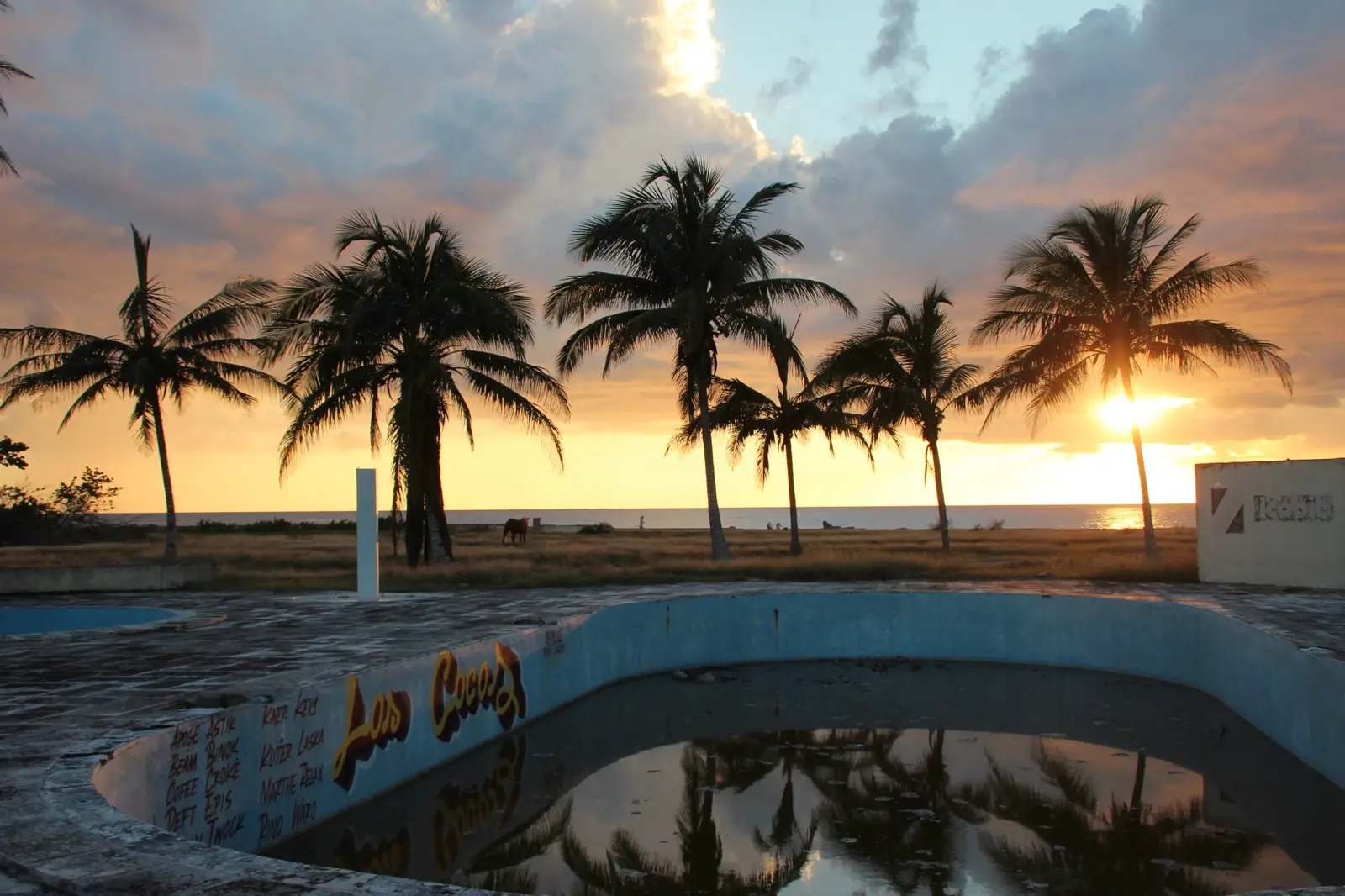
Our next destination is Playa Girón, where there’s lots of beach. We stay two days with Zoila, who makes us the best breakfast with fresh pineapple, guavas, papayas, fresh pineapple juice, eggs, cheese, ham and even pancakes with guava jam. We chill on the beach, snorkel at Caleta Buena, which means something like “beautiful cove”, and sip cocktails, none of which are as good as the ones in Cienfuegos, unfortunately. Along the beach promenade stand abandoned, overgrown concrete bungalows and an empty pool sprayed with graffiti – remnants of times past when communist tourism was still booming here. I suspect a hurricane once destroyed the holiday village and it was never rebuilt. Before we go to the Viñales Valley, we want to visit Varadero. Although it’s supposed to be quite touristy, with hotel after hotel along the beach, it’s said to be one of Cuba’s beautiful beaches. Yes, the beaches are beautiful, but we’re not in the mood for foam parties on the beach and tourists already drunk at midday, and we quickly make ourselves scarce.

It’s 31 December, and we’re staying very close to Varadero in Santa Marta with Barbara. When we come back late in the afternoon from our package-tourist trip to Varadero, she takes us to her neighbour, who is also her brother and has his birthday on top of that. Traditionally there’s a pig on the grill, along with yuca, also known as cassava (a potato-like root), rice and beans. People drink beer and of course rum, and after the meal you go round visiting the neighbours to wish them a happy new year. There’s even more rum and beer there, but mostly rum. A few houses further on we meet Sandra and Daniel, who have lived in Germany for more than 20 years and are visiting home. As everyone has been celebrating since midday, we first have to catch up. There’s dancing, and of course Cubans have rhythm in their blood, which doesn’t diminish with age either. Christoph and Hannes have to serve as dance partners for Sandra’s great-aunt. That gave me a lot to laugh about, believe me.

Kuba, zwischen Plattenbauten und Palmenstränden – eine Zeitreise – Foto 3

As we hadn’t actually planned a big New Year’s Eve party, we had booked a bus to Viñales for 8 am on 1 January. Pretty stupid, we now think. Who’s daft enough to voluntarily take a bus at 8 am on New Year’s Day? Yes, we were pretty tired when we set off for the bus station on New Year’s morning. When we arrived in Viñales, our luck with the weather ran out too. We stay four days; it’s unusually cold, about 16 to 18 degrees during the day, and it rains every now and then. The first day is the best. We rent bikes and explore the area, visit a tobacco plantation, see rock paintings that hippies painted in the 1960s, and a cave where Che Guevara supposedly hid. At the end of the day we happen upon a small roadside hut where Alberto Vitamina offers his delicious cocktails. In a coconut or bergamot (similar to grapefruit, but not as sour) he mixes rum, honey and fresh pineapple juice. Very tasty! The wall behind him is decorated with newspaper articles. “You’re famous,” I say. “Yes, a little,” he says. A few weeks ago Swiss television was here, he tells us, while cutting mini bananas and a fruit unknown to us, which he calls Mayan pineapple, into bite-sized pieces for everyone. We leave Alberto that evening with an overdose of vitamins, and afterwards I actually googled Alberto Vitamina. You do find a few things.

The next day we drive north to the beach at Cayo Jutías. A white sandy beach with turquoise water awaits us. It’s windy and a little chilly. Christoph and I are a bit spoiled by Mexico’s dream beaches. Hannes, who flew out of cold Switzerland in the snow, thinks it’s great, can’t be stopped and swims his laps. We’re spared the rain today.

Kuba, zwischen Plattenbauten und Palmenstränden – eine Zeitreise – Foto 2

During the night it rains heavily, and in the morning we’re undecided about what to do. In town we meet Andy, our neighbour at the casa particular. He’s from Alaska and travelling with his son Robert, who is feeling a bit poorly today and sleeping in the room. Andy asks whether we’d like to go on a little hike with him. Of course! We hike towards the rock faces where climbers are at work and pass through the Cueva de la Vaca, a cave that brings you out on the other side of the rocks. Inside there’s a squeaking, and it takes us a while to find the reason. Tiny bats are hiding between the stalactites hanging from the ceiling. Cuba is said to have the smallest bats in the world. Whether these are the ones we found here, I can’t say for sure. On the other side, the landscape is an impressive sight. The earth is red, which makes the green of the plants really glow. In between, huge limestone rocks rise vertically up to 400 metres. These so-called mogotes were formed around 170 million years ago through erosion and the collapse of the limestone. Since 1999 the area has been a UNESCO World Heritage Site. You can’t hike on the mogotes, though, as there’s still a risk of collapse.

So we continue hiking on the “ground”, and the red earth gets muddier and muddier because of the night’s rain and the past few weeks. Each of us sinks in at some point, and within no time we look like pigs, but it’s fun. Andy is a few years older than us, but pretty fit, and we have to work hard to keep up with him. We hiked almost ten kilometres through rough terrain until we came to the tarmac road that took us the three kilometres back to Viñales. As if sent from heaven, there’s a kiosk by the roadside. We’ve honestly earned that cold beer now!

Kuba, zwischen Plattenbauten und Palmenstränden – eine Zeitreise

On our last day in the Viñales Valley, with no improvement in the weather, we decide to make a trip to María la Gorda in the south-west of the island. There are supposed to be beautiful beaches, black coral and colourful fish, and it’s said to be a very beautiful diving area. Only we don’t dive, unfortunately. It has tempted me for quite some time, but the opportunity hasn’t come up yet. So we set off with our snorkelling gear and enjoy our last beach day in Cuba. If you don’t dive, one day in María la Gorda is quite enough, as there isn’t really much else going on.

The next morning we head back to Havana and to Toni and Sonja again, where we have one more day before returning to Cancún. Hannes has two more days before he has to go back to Switzerland and to work. Oh, we’ve got it good! We stroll through the corners of Havana we haven’t seen yet and at sunset watch the tourists on the Malecón getting splashed by the waves crashing against the concrete wall of the promenade. Until it gets us. A little wet, we sit down in a paladar on the promenade and enjoy Cuban cuisine for the last time. Oh, I’ve just realised I haven’t told you yet what a paladar is. Paladar means “palate”, and they’re small private restaurants, mostly family businesses, where you can eat cheaply and authentically. The service is always very friendly compared with the state restaurants, and you meet warm-hearted people who welcome you into their casa. The toilet is in their private bathroom, with toothbrushes and shampoo standing around. Proud of the little they have, they then show you the whole flat as well.

That was Cuba, and our recommendation is: see Cuba while it’s still the way it is. I think a lot will change there in the coming years.

How We Ended Up at the Party Finca of the Mexican Patrones

Berichte Nordamerika & Mexiko – Foto 2

There are travellers who plan everything down to the last detail: when they should be where, where they’ll sleep and eat. And then there are travellers who plan nothing at all and just set off. We’re somewhere in between.

This Thursday we want to drive from Cabo San Lucas along the Camino Cabo Este, north-east along the coast, and then look for a nice spot on the beach to spend the night. We’re running late before we’ve even properly set off, because we still have to fill up with diesel and water. Diesel is no problem, as there are petrol stations everywhere. Water is trickier, especially when the attendant quickly goes off to get cigarettes. We don’t know where he wanted to get them, but he didn’t show his face for the half hour we waited in front of his shop. That’s Mexico! Then someone else gets the business. Finally we’re on the Camino Cabo Este. Here you can drive the first stretch on the gravel track right along the coast or on the graded route a little further inland. We choose the first option, let some air out of the tyres, lock the free-wheeling hubs and off we go. Five months ago a hurricane hit the southern tip of the Baja peninsula hard. The extent is still clearly visible here: a washed-out gravel track repeatedly cut through by dry riverbeds.

Wie wir in der Party Finca der Mexikanischen Patrones gelandet sind

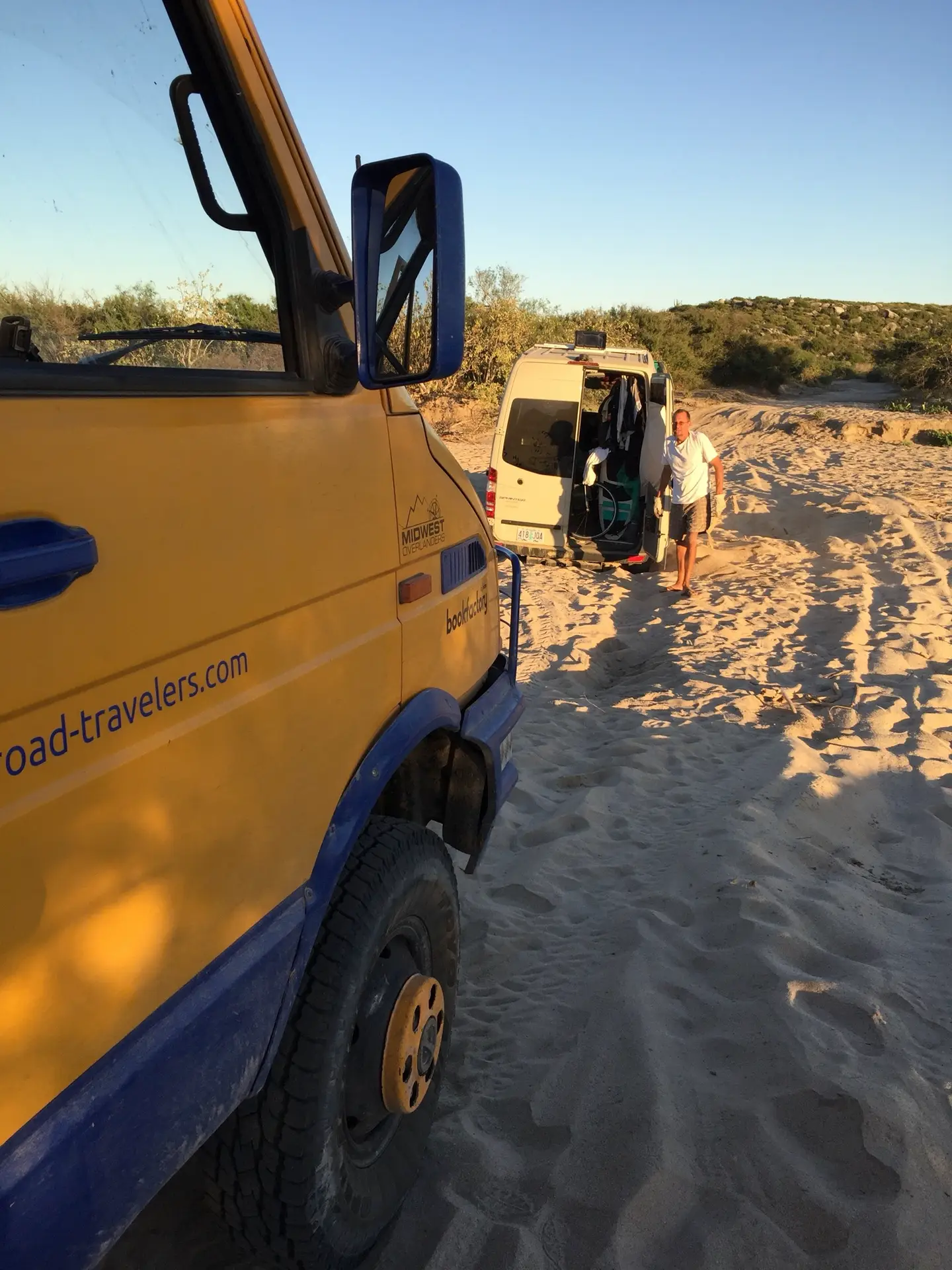
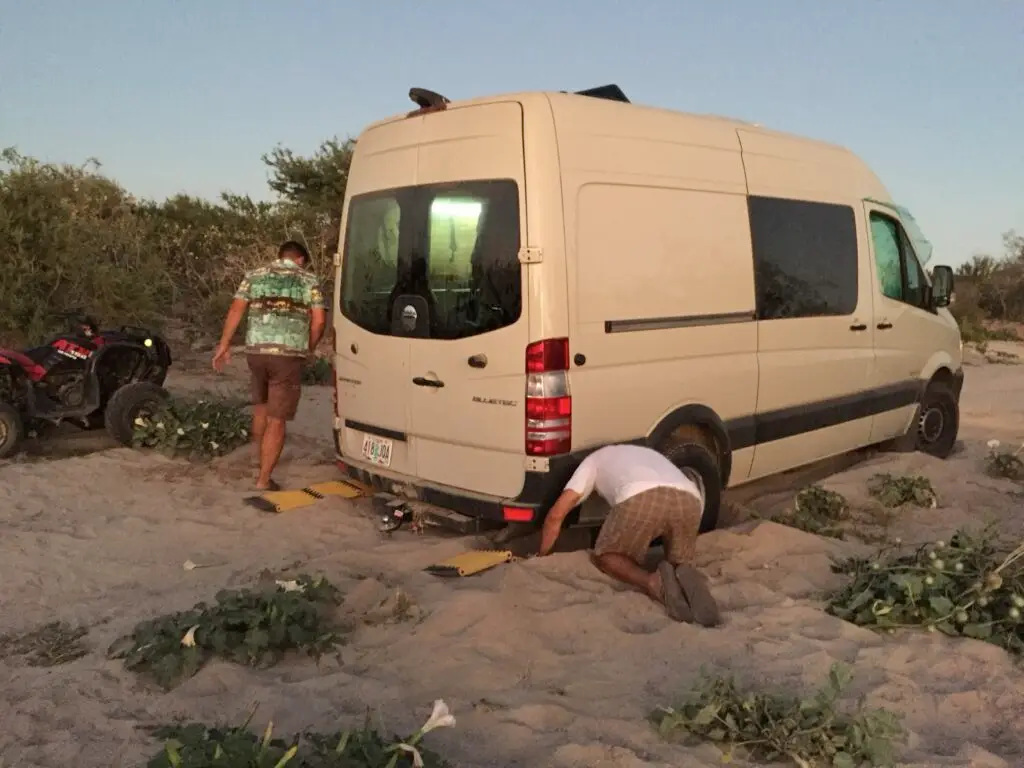
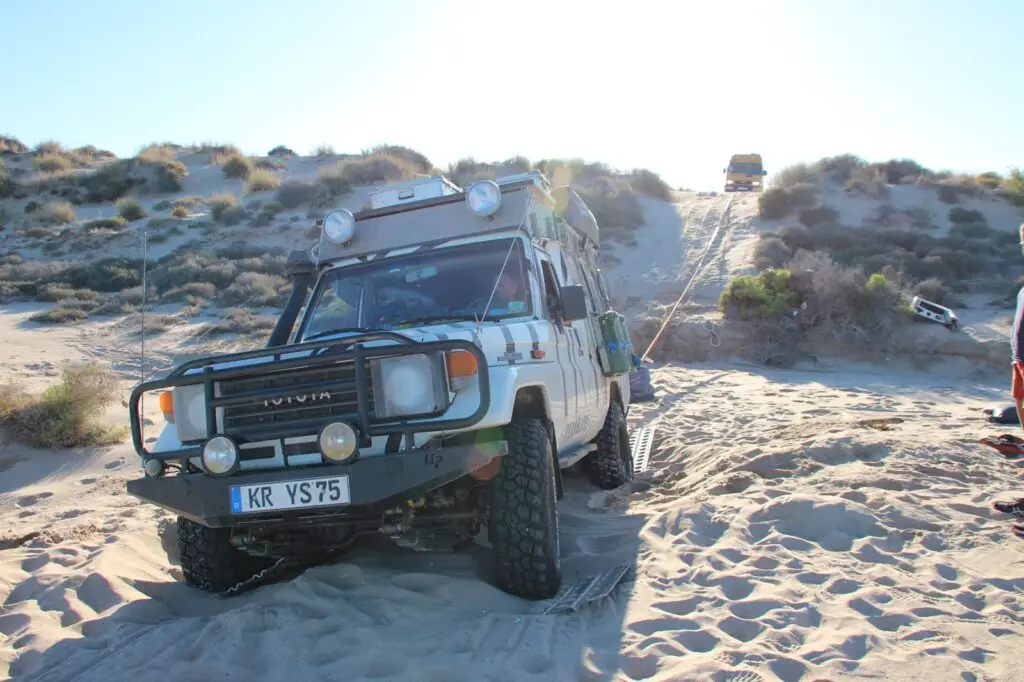
Someone is stuck in one of these riverbeds! Greg from Oregon is desperately trying to dig out his Sprinter with a cooking pot. He’s been digging for quite a while and in the meantime has even walked three kilometres in the scorching heat to the next village to get help – all without success. Fine, then we’ll pull him out. Greg’s Sprinter doesn’t have four-wheel drive, only rear-wheel drive, and he hasn’t let his tyres down. So, hitch up the Sprinter and pull it out. That was quick! But Greg doesn’t have much experience driving on sand yet and immediately buries himself again. So all over again: unpack the tow rope and sand ladders again. Meanwhile it’s getting dark, and I imagine the beautiful sunset on the beach we’re missing. So spotlights on and pull again! Fermín, a Mexican who lives two kilometres further on in a small caravan, comes by. He helps dig and knows all about the sandy ground. Going any further is out of the question for Greg anyway, as the road keeps getting worse. We walk ahead a bit and decide to turn the Sprinter around. The road is narrow, single-track, bumpy and sandy. Fermín finds a spot where the Sprinter can be turned safely, and in the end Christoph reverses Greg’s Sprinter and turns it so that Greg can safely drive back to Los Cabos.

Wie wir in der Party Finca der Mexikanischen Patrones gelandet sind – Foto 2

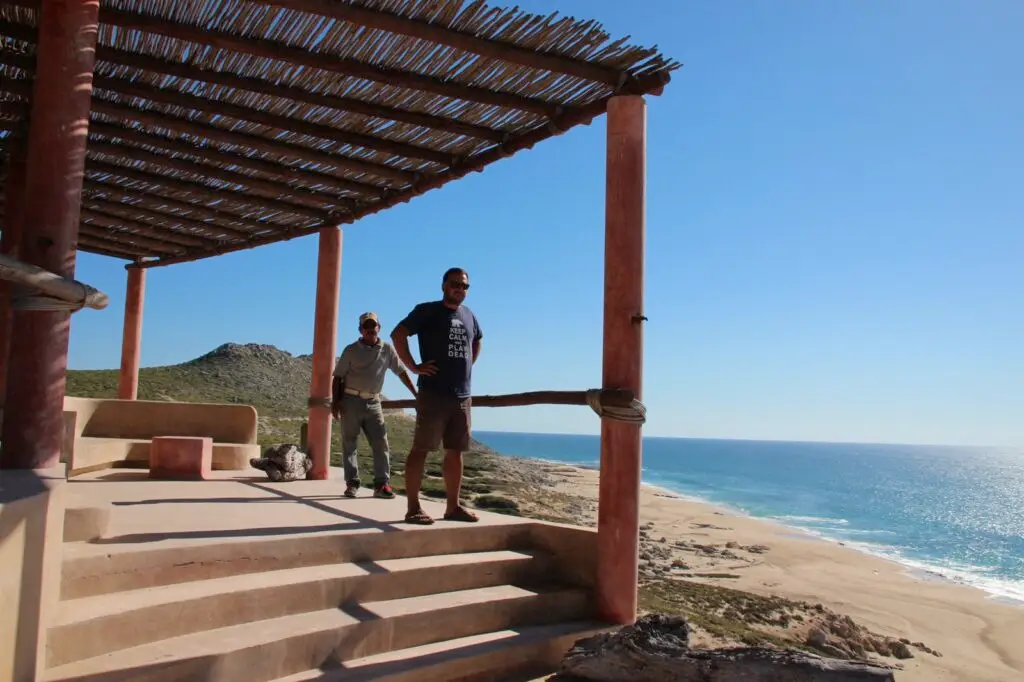
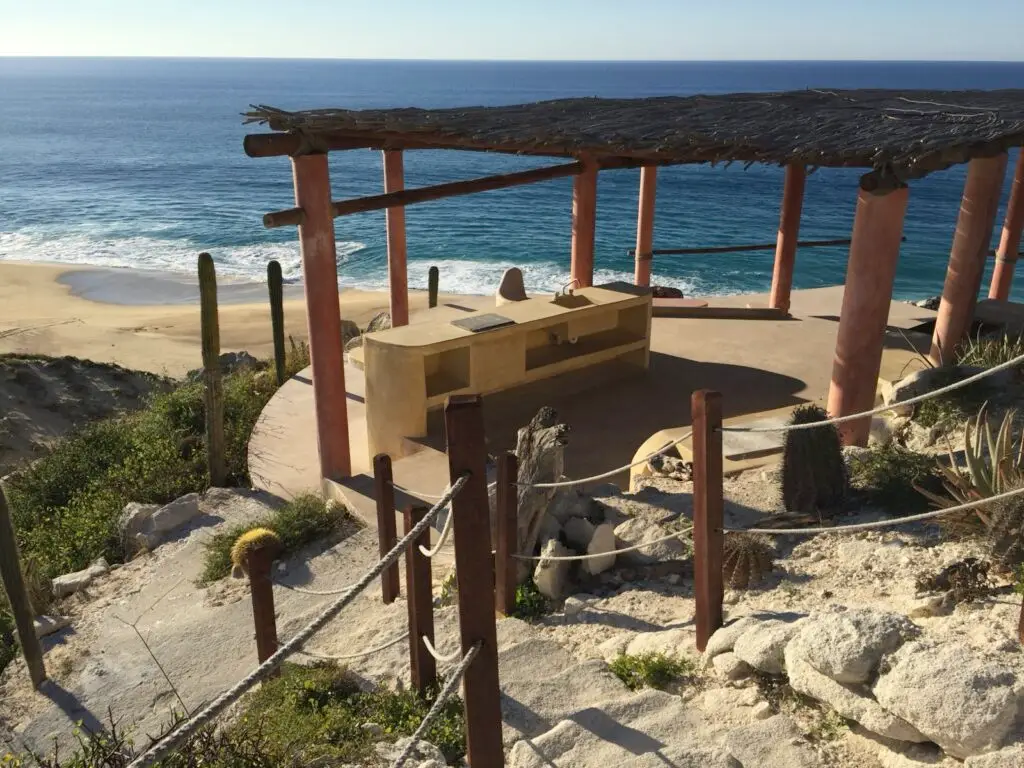
We wonder where to go. We won’t find a beach in the dark anyway, so we’ll set up camp here off the track. Fermín invites us to camp at his place and have a shower. A shower! After that action, absolutely! We follow Fermín on his quad along the bumpy road. He shows us his caravan, but then jumps back on his quad and drives on. We’re briefly puzzled and follow him. He takes us behind a barrier about 300 metres from his caravan. We’re to park here, and then he leads us up a narrow concrete path between giant cacti onto a hill. It’s very dark, the moon is only just waxing again, the night is clear and starry, and with our torches we can only partly see where we are. In front of us the coast; below we hear the waves breaking. This is the fiesta residence of the Mexican patrones, says Fermín. Now I really want to know what he means by patrones! They’re local politicians, not drug lords. There’s a toilet and a shower here – we don’t need more today. We cook for all of us, and Fermín is thrilled with the cold beer. Picture the shining eyes of a child who’s just been handed an ice cream – and I’m not exaggerating!
Wie wir in der Party Finca der Mexikanischen Patrones gelandet sind – Foto 4

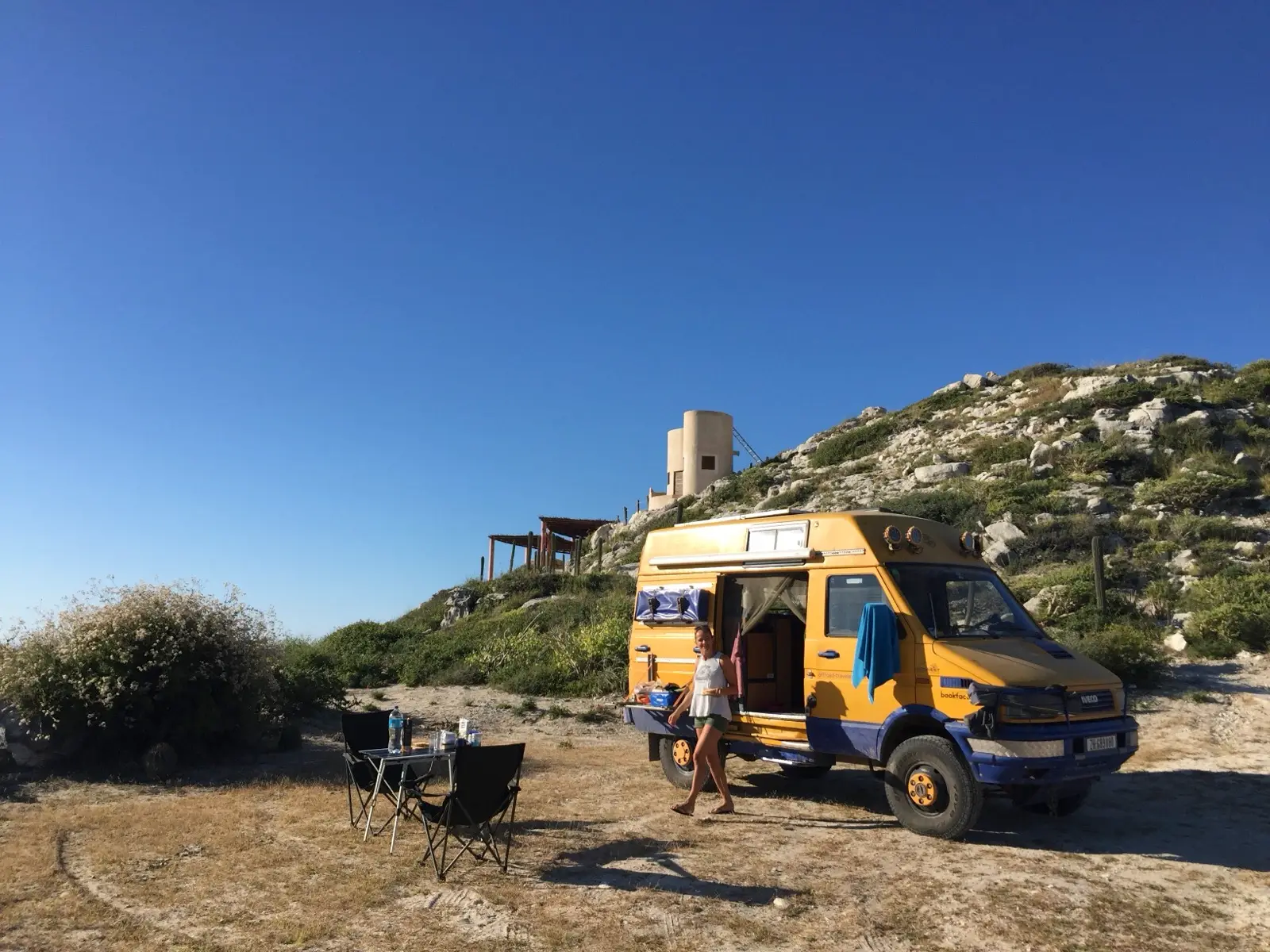
The next morning we take a closer look at our night-time residence. It’s simple, but beautiful and practical. A terrace on two levels, an outdoor kitchen, two showers – one outside and one inside – a toilet and stairs down to the beach. The view is breathtaking, but see for yourself in the photos.

Wie wir in der Party Finca der Mexikanischen Patrones gelandet sind – Foto 3

Bienvenido a México: Off-Road Tracks, White Beaches and Starry Skies

Informationen zu Mexiko – Foto 25

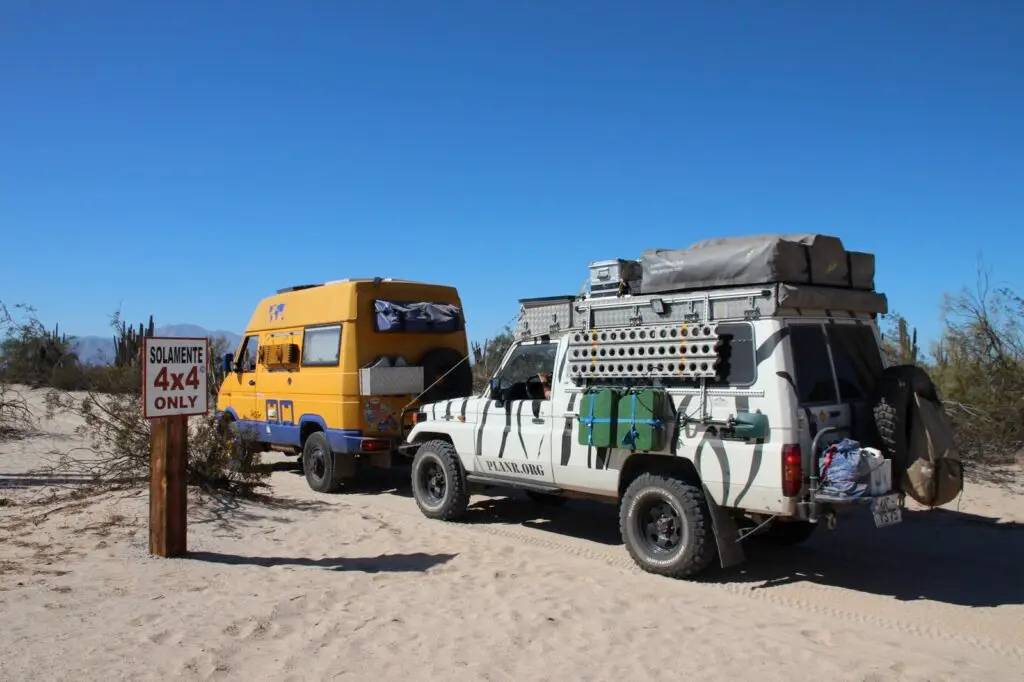
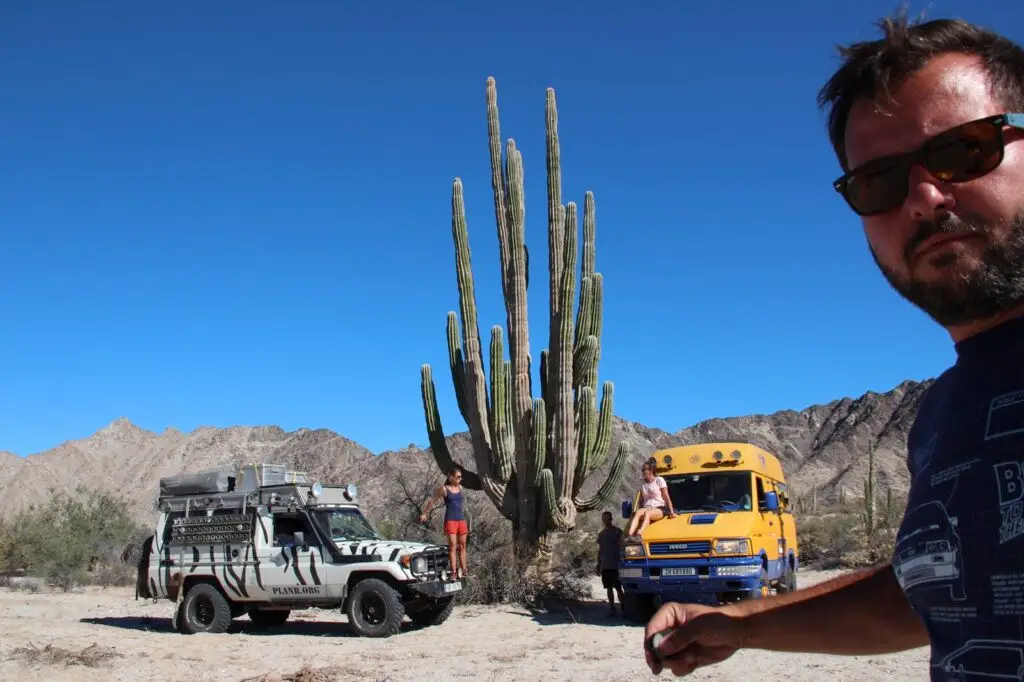
It’s time to leave the USA! We’ve covered 35,000 kilometres so far, and now we’re ready to discover something new. On 9 October 2017 we cross the border into Baja California, Mexico, at Tecate. Our first stop is Ensenada, where we meet Yasmin and Stefan. They’re travelling in the Zebra, a 1992 Toyota Land Cruiser, and have similar plans to ours. They started in Halifax and have two years in total. Christoph and Stefan had already been in contact via Facebook, as our travel plans matched. Until now our paths hadn’t crossed, but now the time has come, as our car insurance policies expire at the same time. We decide to travel together for a while, which is an advantage on sparsely populated Baja with its poor road conditions.

In Ensenada we stock up on food and move on south. Shortly after Ensenada we turn onto a gravel road to look for a place to sleep and come across the route of the Baja 1000 rally, which runs 1,000 miles (1,600 km) from Ensenada to the tip at La Paz. Since we’re already there, we let some air out of the tyres and stay on this route. We find a spot for the night in the middle of nowhere, under a sparkling starry sky and in the company of wild horses.

Bienvenido a Mexico: Offroad-Pisten, weiße Strände und Sternenhimmel

The next day we head for San Felipe, where we land in the middle of filming for a BF Goodrich commercial. Dune buggies race across the terrain, and we position ourselves behind a crest to watch the action and wait until filming is finished. After all, we don’t want to get in the way, as we’re not exactly fast – we’ve got our house with us. The route is well marked with green and orange signs, but we still take a wrong turn once and pass a somewhat run-down rancho. Suddenly two pick-ups follow us determinedly. “You can’t go any further here!” the men say firmly. “The road ends!” We turn around, and one of the men drives ahead and the other behind to escort us back onto the right track. What might we have found? We’ll leave that to your imagination.

Having arrived in San Felipe, we look for a place to spend the night on the beach. That’s not so easy, as there are no detailed maps and the GPS doesn’t know any route. The tracks leading in the right direction are either fenced off or filled in. Just as we’re about to give up, a fisherman on a bicycle crosses our path and says: “Follow me!” We follow him, curious where he’ll lead us. As fast as he’s pedalling, he must know the way, and he skilfully navigates us through the maze of tracks. We would never have recognised the right way. He leads us to a small cove, where the last part of the track is steep and rocky. When we’re almost at the bottom, he asks whether we have 4×4 – better late than never. His name is Daniel, and he fishes here illegally. Sometimes the police come and he has to hide quickly, but we shouldn’t worry, they leave tourists alone. He helps us collect firewood, and we invite him for a beer.

Bienvenido a Mexico: Offroad-Pisten, weiße Strände und Sternenhimmel – Foto 2

The first beach spot wasn’t easy to find, and the second attempt was to fail. A little south of San Felipe we look for our next spot for the night. Muggl was actually supposed to lead that day, but as the Zebra is closer to the turn-off, it drives down the narrow track towards the sea first. The track is sandy, and suddenly the Zebra disappears in front of us, sinking down behind the dune. There it sits, sunk in the sand. We walk around to see whether there’s a way out over the beach, but it doesn’t look good. The Zebra has to go back up in reverse! We shovel and dig to free the tyres and first try to pull it up with Muggl. But as Muggl also has sand under his feet up on the hill and threatens to dig himself in, we stop. In the end we dig even more and lay all six sand ladders we have one after the other, again and again, to create firm ground so the Zebra can free itself under its own power. Two hours of sweaty work, it’s slowly getting dark, and we still don’t have a place to spend the night. The next campsite is closed, the one after that pretty expensive, so we simply park in the desert and sleep among the cacti in the middle of nowhere – also nice.

The Baja 1000 route runs partly on tarmac, but mostly through the backcountry. The road and track conditions are varied: sometimes sand, sometimes stones, sometimes rock, through the desert with cacti (I didn’t know there were so many different kinds!) and through dry riverbeds – there’s everything. Above all, you keep finding beautiful places to spend the night, sometimes on the beach, sometimes under giant cacti or in the Calamajué Canyon, where we wake up in the morning with a flat tyre! How did that happen? Everything was fine the day before?! First we pump it up again and wait. It only seems to be losing air slowly, so we carry on with an “injured foot”. The route gets demanding, and we check the tyre pressure regularly. Strange, hardly any air is escaping – but all the better! We make the 54 kilometres to Bahía de los Ángeles and only have to pump in a little air twice.

Bienvenido a Mexico: Offroad-Pisten, weiße Strände und Sternenhimmel – Foto 3

Having arrived in Bahía de los Ángeles, it’s tacos first. With Gina’s taco stand we’ve found the best one in town straight away, and there’s no point looking for a garage when you’re hungry. Then it’s off to the supermarket – and how handy, right opposite is a garage that seems to do everything. We put our name down but first restock our supplies at the supermarket. In the supermarket Dennis and Rainy speak to us; they had been sitting at the table next to us at the taco stand. They ask what we’re doing and whether we’re looking for a campsite. Yes, in fact, for once we actually wanted to go to a campsite because we need internet to contact the ADAC. Our brake discs seem to be worn out, and the car shakes badly when braking. Dennis says: “Come with us – you can camp on the beach, shower at our place, use the kayaks and sort things out with the ADAC.” They’re expecting more visitors in the late afternoon anyway, because they’re planning a quadruple birthday party for the coming week. Then we won’t stand out. He explains where we have to go, and the directions are adventurous. Finally he places an arrow in the middle of nowhere on the map on my phone. “That’s where we live,” he says. I’m curious whether we’ll find it.

Once our tyre is patched and we’ve done everything, we head south. We have to turn off twice; somewhere a tyre lies at a fork, where we have to go left, and suddenly there’s a Sprinter in front of us. When it stops, we ask whether they’re going to Dennis and Rainy’s. “Yes!” say Don and Susy, “we’re just waiting for friends who’ve never been there and don’t know the way.” How handy – we don’t know the way either and probably would never have found it if we hadn’t met them. So we drive into the bay in a convoy of four, where Dennis and Rainy and a few others have their holiday homes. We’re welcomed very warmly, shown the way to our camping spot and the way to Jeff and Susan’s, where there’s dinner in the evening. We can’t believe it – we’ve landed in paradise! The people are so helpful and open, all of retirement age but still so young at heart and full of joie de vivre. In the end we stay there for two weeks. Alan, a friend of Jeff’s, picks up our brake discs at the international airport in San Diego and brings them with him. He comes to Bahía de los Ángeles with his wife Jen a good week after we arrive. There’s a separate report about the brake discs!

Bienvenido a Mexico: Offroad-Pisten, weiße Strände und Sternenhimmel – Foto 4

In those two weeks we experience so much that I can only summarise it briefly. We snorkel with whale sharks, paddle with dolphins and see tarantulas for the first time. Every day someone different comes to us and asks whether we need anything from town. Jeff and Susan take us to the laundry, the supermarket and to collect firewood. We spend many evenings at Dennis and Rainy’s over delicious food, cooked by someone different each time. We make a small contribution too, and Christoph and Stefan cook Käsespätzle. When the day of the big party arrives, we offer to help. We set up tables and chairs, decorate and hand out cake. But there’s still time to join in the celebrations and dance. The Mexicans from the village are invited too and turn up in large numbers. Gina makes tacos, a Mexican band plays, and a piñata is hung up for the village children to knock down. A lovely party where we met many interesting people, such as Dave and Debbie, with whose help we later buy a solar panel in La Paz.

On the second-to-last evening we’re invited to dinner at Jeff and Susan’s. Alan and Jen have arrived with our brake discs, and Alan tells us how the customs officer questioned him about the vehicle and he didn’t really know what an Iveco was. He then steered the conversation to his classic car. On our last day, a Sunday, Christoph and Stefan fit the new brake discs. Dennis has a superbly equipped garage with all kinds of tools that we’re allowed to use. Dennis’s workshop and his house are somehow the centre of this community and a meeting point at any time of day. So the boys are in the best company, accompanied by the technically savvy retirees who help out with advice and a hand – cerveza in hand. We leave the following Monday with mixed feelings. On the one hand we’re happy to have new brake discs and finally be able to move on; on the other hand we’re sad to have to leave these lovely people.

Bienvenido a Mexico: Offroad-Pisten, weiße Strände und Sternenhimmel – Foto 8

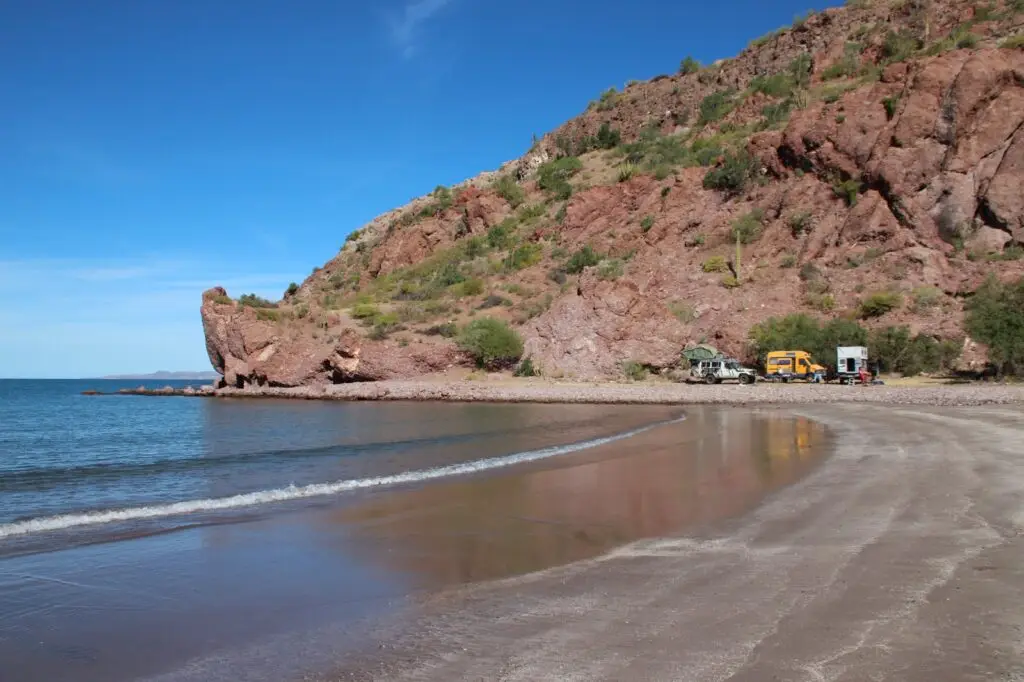
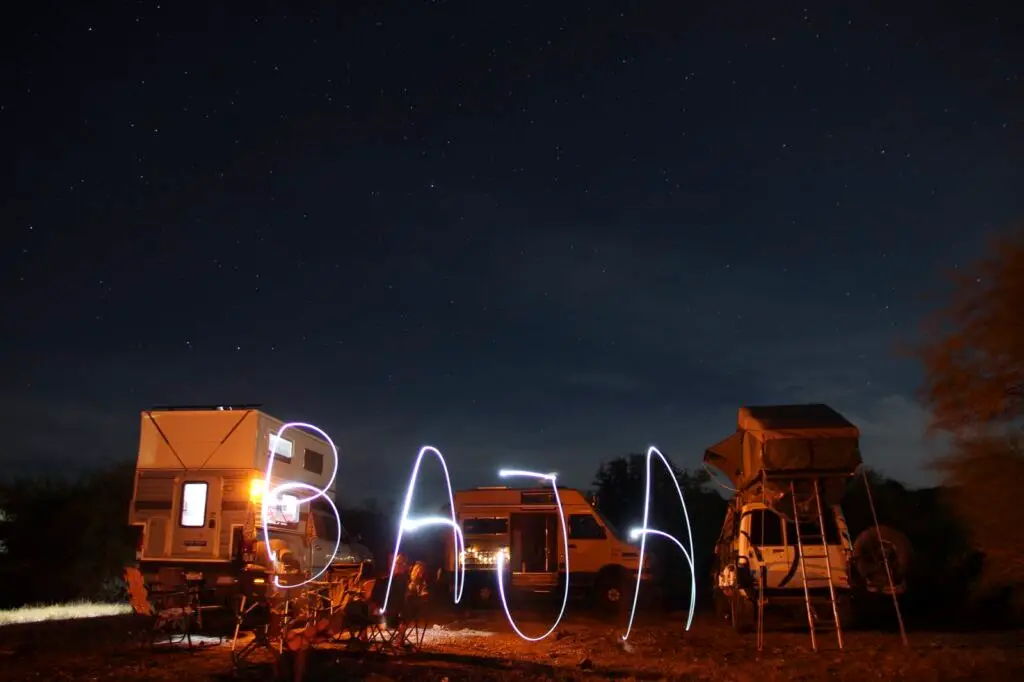
We continue south, literally over hill and dale along the Baja 1000 rally route. In Santa Rosalía we meet Shay and Monika from Vancouver, Canada, who are on a five-week holiday on Baja. As we’re taking the same route, they spontaneously join us and we travel on as three couples. The further south we get, the more beautiful the beaches we find to spend the night, and the roads there often lead over gravel, sand, dry and not-so-dry riverbeds. However, when we look for a beautiful beach on the opposite side of Bahía Concepción, it turns out to be a bit difficult. All three couples have information about this spot from different sources. The Zebras read about it in a blog, the Canadians got the info from locals, and we got the tip from other travellers who were there the year before. So, as explained in the directions, we open the gate that goes off left onto the gravel road after the bay and drive into the rancho. Horses and cows look at us in disbelief, a road is hard to make out, and we remember Jeff’s words: “On Baja you have to keep this in mind: follow the most travelled road!” So that’s what we do, but progress is very slow, as it’s one of the worst trails we’ve ever driven. It gets dark, the beach isn’t particularly nice and is stony, but we settle down and set up camp anyway. We spend a lovely evening, cook a vegetable stir-fry with chorizo, bake cinnamon rolls in the Dutch oven and take photos of an incredible starry sky above us. We’re so far off the beaten track that there’s practically no light pollution here. Because we’re on a roll, we also start writing in the air with torches. The results – “Baja” and “Mexico” – are pretty impressive.

The next morning we see how far we can get and suddenly find ourselves facing a rock face. Well, if there ever was a beautiful beach somewhere here, it has disappeared, or a landslide has buried the access so that it can’t even be recognised any more. So we turn around! We decide to meet at the exit, i.e. where you get back onto the highway. Somehow, though, we come out at a different place from where we went in. The Zebra and Muggl arrive at the same time, but the Canadians have fallen behind. We start pumping air back into the tyres and discuss how to find them when they finally arrive too – apparently they, like us, took a wrong turn somewhere. Great joy – all the greater when Monika comes towards us with our roof hatch! Yes, you read that right, we lost our roof hatch, turned Muggl into a convertible and didn’t even notice! Apparently a branch brushed us somewhere and ripped the poor hatch off the roof!

Bienvenido a Mexico: Offroad-Pisten, weiße Strände und Sternenhimmel – Foto 6

The next beach spot is already waiting, and we find a snorkelling paradise with fine white sand. Here we first remove the bush from our wardrobe and fix the roof hatch so that it holds for a while. After two days of relaxing on the beach, where we can snorkel brilliantly and have lots of fun playing UNO, we move on to Loreto. A sweet little town with a beautiful historic centre that we really liked. From there it’s back onto the track to Agua Verde – and “track” isn’t an exaggeration here. A very narrow gravel road winds steeply down in hairpin bends. At the bottom, though, a quiet bay with a small rocky island in the middle awaits us – another snorkelling paradise with great coral.

The next morning it’s time to say goodbye to the Canadians. They need to get a move on – after all, they only have five weeks and have to go all the way back too! We, the Zebra and Muggl, start a little later. But it doesn’t take long before we find the Canadians at the roadside with their camper jacked up. A nut had come loose on the right front wheel, and the bolt had worked so far out that the wheel had come away from the suspension and simply buckled! It happened on an incline, but on tarmac and just a few kilometres after the steep, winding gravel track. The nut was gone, of course, and we searched Muggl and the Zebra for a spare nut – nothing! Stefan patches up the damage temporarily, and we can send the two of them to the next garage like that.

Bienvenido a Mexico: Offroad-Pisten, weiße Strände und Sternenhimmel – Foto 7

We continue towards La Paz, where after almost five weeks we also say goodbye to the Zebra. We’ve decided not to travel all the way down to Argentina, but only to Panama. There’s so much to see and discover, and we don’t want any stress. A year and a half seemed a lot at the beginning, but once you’ve been on the road for a while, you realise it’s not enough. So now we have more time and can dawdle a bit on Baja. First we get ourselves a new solar panel, as the old ones aren’t as efficient any more. Then we have Muggl checked by a diesel specialist, because the new injection pump is already causing problems again. “He has rust in the tank, and the single-filter system can’t cope with that,” the Mexican explains. He cleans our tank quite thoroughly, and we’re curious whether it’ll help. My technical Spanish for car repairs is getting better and better.

We enjoy the “lower loop” of Baja, as we call it, to the full. Todos Santos is one of our favourite little towns on Baja. In Cabo San Lucas we treat ourselves to a hotel for two nights. You can read about the consequences in the next report. Nothing bad – that much I can say already. We have a delicious meal at “Mi Casa”, a somewhat touristy but very tasty restaurant with a mix of modern and traditional Mexican cuisine and a huge collection of Catrinas. These are the skeleton figures you can buy in Mexico mainly for the Día de los Muertos (Day of the Dead) or All Saints’ Day. There’s also a boat tour around the tip of Baja California off Cabo San Lucas, where we look at the rock formations, beaches and sea lions. A bit of tourist programme is allowed too – after all, we’re on holiday, and besides, it’s the low season. It’s best to get price information from locals and then ask tour operators for the local price. That actually always works.

Bienvenido a Mexico: Offroad-Pisten, weiße Strände und Sternenhimmel – Foto 5

Via the Camino Cabo Este we head back up the other side towards Cabo Pulmo and Los Barriles. There we were held up for a while, and there’s a separate report about that: “The days that take an unexpected turn.” From Los Barriles we try our off-road luck one last time on Baja and want to drive along the coast to La Paz. The road is marked on the map and Google knows it too, so off we go. The first few kilometres are even paved, then only gravel, and finally it gets quite bumpy and narrow. After almost 40 kilometres a cyclist from England comes towards us and doesn’t know what to make of us at this spot. His face is a mixture of astonishment and delight. “If you want to keep going that way, you’re crazy. The track gets even worse, narrower and steeper.”

Camping in the USA & Canada

Organisation & Planung – Offroad Travelers

Before we left, one question kept us busy: where will we find places to sleep? In the long run it’s expensive and impractical to stay at campsites all the time. Prices vary: state-run sites (National Forest or State Park) cost between 10 and 40 USD, private ones like KOA are more expensive. State-run sites often have no showers or Wi-Fi, while private ones have clean showers and fast Wi-Fi. But campsites aren’t ideal, as you’re parked between huge motorhomes that often have bigger TVs than at home. The atmosphere is like a trailer park or an all-inclusive hotel, which doesn’t suit our travel style. National Forest and State Forest sites offer more privacy and are often nicely wooded. We prefer to look for free spots where we feel comfortable and can stay longer to recover from travelling.

Camping in den USA & Kanada – Offroad Travelers

There are various ways to find such places:

  1. iOverlander app: this free app for Android and iOS shows nearby places to sleep, even offline. Users can rate places and add new ones, so the app keeps improving thanks to the participation of many travellers. [iOverlander](http://ioverlander.com) 

  2. Free Campsites website: this site lists campgrounds and their costs. However, it can’t be used without internet access. [Free Campsites](https://freecampsites.net)
     
  3. Supermarket car parks: overnight stays are allowed in most Walmart car parks, with few exceptions. Safeway and Cabela’s also offer this option. [Walmart](https://www.walmart.com), [Safeway](https://www.safeway.com), [Cabela’s](http://www.cabelas.com) 

  4. Truck stops or travel centres: these are noisy, as lorry engines often run all night. But they offer showers and laundries. Showers usually cost 10 USD, but nobody minds if two of you use one.

  5. KOA (Kampgrounds of America): these luxury campgrounds offer Wi-Fi, showers, often a spa and laundry. Electricity and water are included. [KOA](http://koa.com) 

  6. State Park campgrounds: these state-run sites cost 15–25 USD and often have showers. Wild camping is prohibited, but rangers are sometimes lenient. [State Parks](http://www.camping-usa.com/stateparks/) 

  7. National Forest campgrounds: these offer self-registration and allow dispersed camping if your vehicle is suitable. There are rarely showers, but the toilets are usually clean. [National Forest](https://www.forestcamping.com) 
  8. BLM land (Bureau of Land Management): this land is open to everyone; sometimes a permit is required. Information is available at visitor centres. [BLM](https://www.blm.gov/programs/recreation)
     
  9. Social media: contacts via Instagram and Facebook often lead to invitations to stay in someone’s garden or guest room. The hospitality in the USA and Canada is impressive.

  10. Just ask: if all else fails, it often helps to ask someone for permission to stay on their property. Americans and Canadians are open and helpful.

  11. Another helpful site with information on where you can stay and for how long: [Your RV Lifestyle](https://www.your-rv-lifestyle.com/how-to-find-free-rv-camping-sites/) 
Camping USA & Kanada – Offroad Travelers

Diesel in Canada and the USA

USA & Kanada – Foto 36

Every European traveller with an older diesel vehicle in North America soon wonders why the car is blowing black smoke and cold starts are more sluggish than usual. That’s what happened to us when we picked up the car in Baltimore. At the time everything was still fine, because the tank was full of German diesel. The first few days went smoothly, as temperatures were high – over 30 degrees Celsius – and we were at sea level.

But when we drove higher and temperatures dropped, the problem began. Our Iveco started badly in the mornings. I often had to crank the engine brutally, which was painful. This procedure took 10 to 15 seconds until the engine ran. Then the car smoked black, grey and white for a minute. I was seriously worried that something was broken.

Today I know that this isn’t unusual for older diesel engines. Diesel in North America is of a different, poorer quality than in Germany, Switzerland and other Western European countries. The magic words are “low-sulphur diesel”. This diesel lubricates less and has a lower cetane number, which means lower combustion quality and performance.

Diesel in Kanada und den USA – Offroad Travelers

What you can do

You can’t eliminate the problem completely, but some measures mitigate it. Choose your petrol station carefully; the cheapest isn’t always the best. Here’s a list of petrol stations and their cetane numbers:

Canada:
– Petro-Canada (45–52)
– Sunoco Gold (45–50)
– Shell V-Power Diesel (no figure given, but one of the best)
– Husky Diesel Max (42–45)
– Autogas/Cascadian Biofuels, BC only (45–50)
– Red River Co-op (41–44)

USA:
– BP – Amoco branded (51)
– Chevron (49, with Techron 51)
– ConocoPhillips (48, in California 48–53)
– Petro-Canada (47–51)
– Shell (46)
– Sinclair (46)
– Marathon (45)
– Exxon/Mobil (43–46)
– BP (40–42)
– Hess (40–45)

((All cetane figures without guarantee)

Advantages of diesel with a higher cetane number:
– Lower consumption
– Quieter engine
– Good cold-start behaviour
– High power/torque
– Low emissions

A low cetane number has the opposite effects. In Europe the cetane number starts at 58; in the USA it can drop to 40, which causes problems.

Useful links:
– [Best Diesel Fuel Additive](https://autofella.com/best-diesel-fuel-additive/)
– [Cetane number – Wikipedia](https://de.wikipedia.org/wiki/Cetanzahl)
– [Diesel fuel – Wikipedia](https://de.wikipedia.org/wiki/Dieselkraftstoff)

Avoid filling up in national parks, as the diesel there has often been in the tank for a long time and can have a high water content. Also avoid petrol stations where a tanker is currently parked or has recently been, to avoid sediment from the tank. Fill up before longer stretches to avoid dubious petrol stations. It’s a myth that you won’t see a soul or a petrol station for 500 km on the Alaska Highway, but I’d rather play it safe.

Gib hier deine Überschrift ein – Offroad Travelers

Diesel additive

Many travellers use a diesel additive to combat the problem of poor diesel. The additive is poured into the tank before filling up. It increases lubrication and the cetane number, which is good for the engine.

We use the product from STANADYNE Fuel Systems, Diesel Fuel Additive (blue label). It’s recommended by Bosch Service and many travellers are happy with it. One bottle is enough for about 1,000 litres and costs around 25 US dollars. Alternatively, there’s the Lucas product, available at every Walmart.

STANADYNE is available at:
– NAPA Auto Parts
– AutoZone
– O’Reilly Auto Parts
– Tractor Supply (similar to Landi or BayWa)

In states like Oregon and Montana there’s no sales tax, so you should stock up on STANADYNE there if you have enough space.

Have a good, smoke-free drive! 😉

Diesel Additiv – Offroad Travelers